

He Xiaopeng, CEO of the Chinese electric vehicle manufacturer Xpeng, shared his vision for the future of China's automotive industry, stating that in the long term, only five Chinese automakers will be able to grow to generate annual revenues of "one trillion yuan," with profits reaching hundreds of billions of yuan—levels comparable to current global automotive giants. This statement was made during He Xiaopeng's participation in the "Dialogue" program on China Central Television (CCTV), alongside Li Bin, co-founder and CEO of Nio. Both exchanged views on the direction of the electric vehicle industry and the future of Chinese companies on the global stage.


The Xpeng CEO noted that for Chinese automakers to reach revenues of one trillion yuan, they would need to sell approximately more than 7 million vehicles annually, though this figure depends on the average selling price of each model. Currently, only a few global automakers achieve such revenues, including Toyota, Volkswagen Group, Kia-Hyundai, Stellantis, and General Motors. Although he did not specify which five Chinese companies will reach this level, recent revenue data clearly reflects the competitive landscape: BYD leads with 803.9 billion yuan, followed by SAIC with 646.1 billion yuan, Geely at 345.2 billion yuan, Chery at 300.2 billion yuan, and Great Wall Motor (GWM) at 222.8 billion yuan.


Beyond market outlooks, the Xpeng CEO also highlighted a major challenge facing China's automotive industry, which he termed "involution"—an excessive internal competition where manufacturers launch a vast number of new models without truly innovative differentiation. He cited the example of the Beijing Auto Show 2026, where nearly 150 new models were unveiled simultaneously, reflecting the intense competition in the market. He added that if the number of new model launches decreases one day, it would indicate the industry is entering a more stable development phase. In such a scenario, companies like Xpeng, Nio, and Li Auto could achieve annual profits exceeding 50 billion yuan.

He Xiaopeng also praised Nio for significant transformations over the past year and its ability to adapt quickly. However, the two executives differed in their views on EREV (Extended Range Electric Vehicle) technology. Xpeng sees EREV as a "necessary transitional step," given the uneven global energy infrastructure and charging networks. In contrast, Li Bin affirmed that Nio focuses solely on pure battery electric vehicles (BEVs) to directly pursue the industry’s ultimate goal.

Regarding sales, data from China EV DataTracker shows that Xpeng delivered 94,693 new energy vehicles worldwide from January to April 2026, a 27.4% decline compared to the previous year. This partly results from a slowdown in China’s auto market as the government phases out new energy vehicle subsidies. Nevertheless, the company targets annual sales of up to 600,000 units this year and plans to launch the new large SUV, the Xpeng GX, to boost sales and strengthen competitiveness in the increasingly selective electric vehicle market.
Overall, this interview reflects that China's electric vehicle industry is entering a phase of consolidation where only the strongest players will remain. The market is shifting from many competitors to a few large companies dominating, competing globally in technology, innovation, and long-term profitability.

The design mastermind behind the XPENG X9 is JuanMa Lopez (Juan Manuel Lopez), a renowned Spanish automotive designer who has contributed to supercar brands like Ferrari—working on models such as the LaFerrari and SF90 Stradale—and previously served as design director for Lamborghini and Genesis. Currently, Juan Manuel Lopez is the Vice President of Design at XPENG.


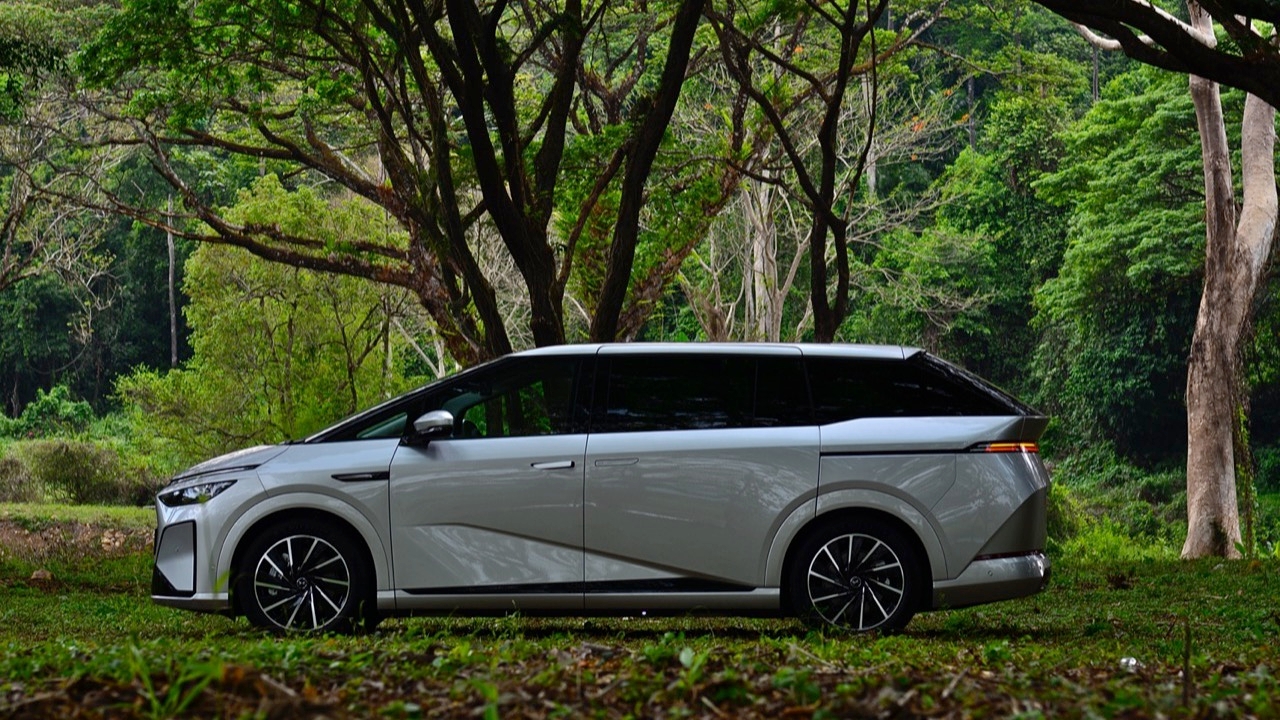
The design concept of the XPENG X9 is intriguing and breaks conventional MPV norms with the "Starship of Tomorrow" concept. JuanMa Lopez and the XPeng design team aimed to discard the traditional boxy MPV shape, drawing inspiration instead from advanced technology and spacecraft aesthetics. The wedge-shaped design is a key feature, employing sharp, sloping lines to reduce aerodynamic drag and thus improve electric efficiency. The A-pillar is angled sharply at 21 degrees, and the rear windshield at 23 degrees, uncommon for typical electric vans. Aero-efficiency was a major focus—not just for aesthetics but to achieve a very low drag coefficient of 0.227, enabling quieter, longer-range driving.


With the philosophy "Start from People," JuanMa Lopez emphasized that design must begin with real daily user needs (user-centric). The team aimed to break stereotypes by transforming the MPV image from a typical utility or shuttle vehicle into a sporty, modern MPV to attract new generation families. Smart cockpit integration blends AI and sensors, such as LiDAR, seamlessly into the design to avoid appearing out of place.

The interior combines luxury with warmth through the "Interior Zen" concept, focusing on zero-gravity comfort. Natural-touch materials like Ayous wood create a relaxing atmosphere akin to a living room rather than a typical car cabin. XPENG’s recruitment of a supercar designer explains why the X9 sports a sleek, coupe-like character within a 7-seat van body.


The XPENG X9 is a 7-seat electric MPV with a futuristic Starship-style design that blends versatility with aerodynamic and physical design details. Its wedge shape features sharp, sloping lines, particularly the highly inclined windshield, reducing the drag coefficient to an impressively low 0.227 for a large MPV. The front lighting includes full-width LED Star-ring daytime running lights and separated headlights that seamlessly incorporate LiDAR sensors. The rear is styled as a fastback-MPV with a unique, elegant design distinct from typical luxury MPVs, featuring through-type LED tail lights that prevent the vehicle from looking bulky.


The XPENG X9’s body measures 5,293 mm in length, 1,988 mm in width, and 1,785 mm in height, with a wheelbase of 3,160 mm, built on the SEPA 2.0 platform offering spacious interiors. The Premium performance model features large alloy wheels designed for stability and electric vehicle load capacity—20-inch multi-spoke aero wheels to reduce aerodynamic drag.It is equipped with Michelin e-Primacy tires sized 235/50 R20.The special suspension features dual-chamber air suspension and an active rear-wheel steering system that achieves a tight turning radius of just 5.4 meters, ideal for urban driving and U-turns. Although an MPV, its body structure uses integrated die-casting front and rear for high rigidity and excellent vibration control.


The XPENG X9’s doors are fully electric for convenience and multiple control methods. The front doors are smart electric doors operable via buttons on the outside door handles, central touchscreen, or a "Kick-to-open" function on certain trims. Soft-close technology ensures doors close gently and quietly without force. Obstacle detection sensors prevent doors from opening if there is an obstruction, protecting against damage.


A key feature of a luxury MPV is the power sliding doors on the middle row, which the X9 executes smoothly. The wide-opening doors facilitate easy access to the second and third rows. Controls include handles inside and out, buttons on the B-pillar, voice commands, remote key fob, or mobile app. One-touch open/close is available on the touchscreen. For safety, the doors feature an anti-pinch sensor sensitive to touch, protecting children, elderly passengers, and pets.

The Smart Power Tailgate is designed to complement the sloping roofline while maintaining full functionality. It includes a free-stop feature allowing adjustable opening height for low ceiling parking, hands-free access via a kick sensor under the rear bumper for when hands are full, and soft open/close for smooth operation and minimal vibration.
The "Smart Command" system centralizes door controls within the vehicle’s operating system. A Rest Mode lets users close all doors and sunshades simultaneously with a single click from the touchscreen.
Voice commands such as "Open the left sliding door" or "Close all doors" operate the system without taking hands off the wheel. Since most doors are electrically controlled, in emergencies or power failures, manual mechanical override mechanisms are conveniently accessible to ensure maximum safety per international standards.


The exterior equipment and additional features of the Xpeng X9 Premium are on par with luxury European vehicles, with notable highlights as follows.
The LED Auto-Sensing Lighting System not only automatically turns headlights on and off but also adjusts high and low beams to prevent dazzling other drivers and enhance visibility in darkness.
Privacy glass is applied from the second row to the rear window, providing enhanced privacy and better heat reduction from Thailand’s sunlight compared to standard window tinting alone.
The rain-sensing wiper system automatically adjusts wiper speed based on rainfall intensity, allowing the driver to keep both hands on the wheel.
Smart digital doors and tailgate systems provide convenience and sophistication.
The Power Soft-Closing Front Door system, usually found only on top-tier luxury sedans, allows front doors to close quietly and securely without forceful slamming.
The electric tailgate works in conjunction with rear suspension height adjustment, greatly improving ease of loading and unloading cargo.
The electric charging port cover opens and closes automatically, adding a modern touch and reducing direct contact with the vehicle body.

Lifestyle and exterior features enhance the vehicle’s aesthetic and functional appeal.
A panoramic glass roof with an electric sunshade is especially important in Thailand, as many EVs have large glass roofs but lack sunshades, leading to heat buildup inside the cabin.
The Vehicle-to-Load (V2L) system allows the car to supply power to external devices—such as coffee makers or camping equipment—drawing energy from the main battery.
The 20-inch multi-spoke wheels are designed for beauty and stability at high speeds.

A standout practical feature is the dual soft-close front doors combined with an electric sunshade for the panoramic roof. While most MPVs only offer power sliding doors and simple sun protection films, the X9’s detailed attention to the front doors enhances the premium feel. Together with the 101.5 kWh battery and V2L system, the vehicle acts as a large mobile power bank, ideal for travelers stopping at parks or places without electricity.

The Xpeng X9 Premium rear-wheel-drive (RWD) model emphasizes extra-long driving range.
Technical specifications.
Performance and drivetrain.
Maximum motor power: 235 kW / 320 PS.
Maximum motor torque: 450 Newton-meters.
Top speed: 200 kilometers per hour.
Acceleration 0-100 km/h: 7.7 seconds.
Battery and driving range.
Battery cell type: Lithium-ion NMC (Nickel Manganese Cobalt).
Battery capacity: 101.5 kWh.
Maximum range (NEDC): 715 kilometers.
Maximum range (WLTP): approximately 570 - 610 kilometers (estimated per European standard, closer to real-world usage).
Charging system.
Maximum AC charging power: 11 kW.
AC charging time (5-100%): about 10 hours.
Maximum DC charging power: 542 kW (using 5C technology on an 800V platform).
DC charging time (10-80%): 12 - 20 minutes (depending on charging station power).
Chassis technology.
Intelligent Dual-Chamber Air Suspension: a smart air suspension with two chambers that automatically adjusts damping and ride height, offering finer shock absorption than single-chamber systems and lowering the vehicle at high speeds for stability.

Active Rear-Wheel Steering System: a highlight feature allowing a vehicle over 5.2 meters long to have a tight 5.4-meter turning radius—comparable to compact cars—making U-turns and parking in malls easier.
The Xpeng X9 Premium focuses on efficiency and comfort, combining a 101.5 kWh NMC battery with an 800V system to be one of the best long-distance EVs currently. Rear-wheel steering offsets the large body size, making city driving in narrow streets like Bangkok manageable.

The vehicle uses an 800V Silicon Carbide (SiC) electrical platform.
Being a full 800-volt system means key components like the motor, air compressor, and energy management are designed for high voltage, resulting in less heat buildup, smoother current flow, higher efficiency, lighter weight, and the ability to use smaller cables while delivering the same power.
5C Ultra-Fast Charging technology.
The 5C rating represents a very high charge rate relative to battery capacity. Supporting up to 542 kW, the X9 can charge 2-3 times faster than typical EVs, reaching 10-80% in just 12 minutes—comparable to a quick bathroom break or coffee stop—eliminating long charging waits on long trips.
Energy efficiency: On long drives both city and highway, the X9 consumes 17.1 kWh per 100 km, an excellent figure for a large MPV with high aerodynamic resistance. This results from SiC motor technology and aerodynamic design (drag coefficient of 0.227 Cd).


The range is 519 kilometers per the CLTC standard. Combined with the large battery and efficient energy management, this comfortably supports intercity travel in real use.To achieve the 542 kW charging speed or 10-80% in 12 minutes, a supercharge station like the Xpeng S5 is required, as it supplies very high current. Using typical DC chargers in Thailand, which usually output 120-180 kW, charging speed is limited by the station's power.In Thailand’s hot climate, the battery cooling system works harder during 5C charging, but the 800V platform enables more effective thermal management than standard 400V systems.

The Xpeng X9 Premium models sold in Thailand emphasize high-precision processing and sensors to support the XPILOT autonomous driving system.
Computing and sensor systems.
Processor chipset: Dual NVIDIA DRIVE Orin-X.
This provides a combined processing power of up to 508 TOPS (Trillion Operations Per Second), sufficient to process real-time data from all sensors around the vehicle for maximum safety.
Millimeter-wave radar: 5 units detect distance and speed of surrounding objects, effective even in poor weather like heavy rain or dense fog.
Ultrasonic sensors: 12 units detect nearby objects, especially useful for parking and tight-space driving.
Cameras: 12 units including high-resolution surround-view 360°, rearview, and lane/sign detection cameras.
LiDAR sensors: 2 units mounted in the front bumper provide precise 3D mapping for accurate detection of complex-shaped objects, surpassing cameras or radar alone.


The dual Orin-X chips combined with comprehensive sensors, especially the two LiDARs, give the X9 Premium superior processing capability compared to similar EVs. This enables smooth lane-keeping assistance (LKA) and adaptive cruise control (ACC), reducing front-end nosedive braking and sensor glitches when close-cutting vehicles appear.

Advanced driver assistance systems in the Xpeng X9 Premium.
This suite is the core of the XPILOT system, working with NVIDIA Orin-X chips and surrounding sensors to provide a relaxed and safe driving experience.

Advanced Driver Assistance Systems (ADAS).
SR Environment Simulation Display shows a real-time 3D representation of the surrounding environment on the driver’s screen, including various vehicle types, pedestrians, bicycles, and even traffic cones, assuring the driver that the system accurately perceives surroundings.
Adaptive Cruise Control (ACC) maintains set speed and safe distance from the car ahead by automatically accelerating or braking, down to a full stop.
Lane Centering Control (LCC) assists steering to keep the vehicle centered in its lane, working well on highways or roads with clear lane markings.
Adaptive Turning Cruise (ATC) calculates appropriate speed when entering curves under cruise control, gently reducing speed to ensure safe, stable cornering with minimal centrifugal force, enhancing handling smoothness.
Active Lane Change (ALC) enables automatic lane changes when the driver signals, verifying safety via sensors and cameras before executing the maneuver.
Intelligent Speed Limit Assist (SLA) detects road speed limit signs and alerts the driver or adjusts vehicle speed automatically to comply with local regulations, preventing speeding.
When combined—especially LCC, ACC, and ATC—these functions reduce fatigue on long drives, allowing the vehicle to follow traffic flow, negotiate curves, and change lanes with human-like smoothness. The SR Display reassures the driver that the vehicle 'sees' what the driver sees, boosting confidence in these technologies.

The Xpeng X9 Premium’s parking assistance system is one of the brand’s strongest features, effectively addressing concerns about maneuvering a large 5.2-meter-plus MPV.
Intelligent parking and visibility features.
Enhanced Auto Parking Assist (EAP) is an advanced automatic parking system with high accuracy, capable of detecting various parking spaces including perpendicular, parallel, or unmarked spots with vehicles already parked. It controls steering, gear, and braking automatically.
Auto Exit Parking Assist (AEP) helps the vehicle exit tight parking spaces by calculating and steering to a safe position for continued driving.
Remote Parking Assist (RPA) allows the driver to park or retrieve the vehicle remotely via smartphone, useful in tight spaces where door opening is difficult.
Remote Vehicle Summon (RVS) enables forward and backward straight-line movement of the vehicle via remote control or app, allowing the car to come to or be sent into a parking spot without occupants inside.
360° high-resolution cameras provide a bird’s-eye view around the vehicle, eliminating blind spots.
Transparent Chassis simulates a view beneath the car using front camera imagery to reveal obstacles like manhole covers, stones, or curbs, protecting the battery and wheels.


The vehicle’s large size is mitigated by the combination of RPA and active rear-wheel steering, enabling easy maneuvering in tight spaces better than pickups or typical vans. The smooth surround-view system aids precise spatial judgment, reducing concerns about curbs or low obstacles. XPILOT Assist Safety integrates smart software and high-precision sensors to minimize accident risks in all directions.
Active safety and collision avoidance systems.
Forward protection includes Forward Collision Warning (FCW) and Automatic Emergency Braking (AEB) to alert the driver and apply brakes automatically if collision risk is detected and the driver does not respond in time.
Following Distance Monitoring (FDM) constantly measures distance from the vehicle ahead for accurate safe spacing.
Lateral and rear protection.
Blind Spot Detection (BSD) warns of vehicles in blind spots, complemented by Blind Spot View (BSV), which displays the blind spot camera feed when the turn signal is activated, enhancing lane change safety.
Lane Departure Warning (LDW), Lane Keeping Assist (LKA), and Emergency Lane Keeping (ELK) alert the driver and steer the vehicle back into lane if unintentional lane departure is detected. ELK activates rapidly if risk of running off road or collision with oncoming traffic is sensed.
Rear Cross Traffic Warning (RCW) and Rear Cross Traffic Alert (RCTA) monitor behind the vehicle during driving and reversing, alerting the driver to fast-approaching vehicles to prevent rear-end collisions.
Driver support and monitoring systems.
Driver State Monitoring (DSM) uses an interior camera to detect driver fatigue or distraction, such as prolonged gaze away or drowsiness, issuing immediate warnings.
Traffic Sign Recognition (TSR) and Speed Assist System (SAS) read road signs like speed limits and display them on the screen, with SAS able to adjust vehicle speed automatically according to detected limits.
Intelligent High Beam (IHB) automatically adjusts high and low beams to optimize visibility without dazzling other drivers.
Parking safety and recording features.
Door Open Warning (DOW) alerts if a door is about to be opened while a vehicle or cyclist approaches from behind, preventing 'dooring' accidents.
Drive Video Recorder (DVR) is factory-installed dashcam recording surroundings immediately without additional installation.
The X9 Premium’s safety suite emphasizes proactive systems like ELK and DSM to compensate for human error, enhanced by BSV’s blind spot imagery, which is especially valuable for a long-body vehicle to ensure confident lane changes in urban traffic.


The cabin of the Xpeng X9 Premium in Thailand is designed as a Smart Living Room powered by advanced processing technology for smooth operation comparable to flagship smartphones.
Computing and connectivity use the Qualcomm Snapdragon 8295 chipset, the most powerful current automotive processor in Generation 4, enabling fluid multi-tasking and complex 3D graphics without lag. The digital instrument cluster is 10.25 inches, displaying driving data, battery status, and the SR Display environmental simulation clearly. The central control touchscreen measures 17.3 inches, serving as the command center for vehicle functions. The rear passenger entertainment screen is a 21.4-inch foldable touchscreen mounted on the ceiling, adjustable electrically for a private cinema-level experience.
Access and remote control features include the Mobile Phone Bluetooth Key, a digital key system that uses the smartphone’s Bluetooth to unlock and start the car without carrying a physical remote.
Mobile phone app remote control allows operating the vehicle remotely, such as pre-cooling the cabin, checking battery status, or controlling parking assistance from outside the vehicle.
The Voice Assistant System (activated by "Hey XPENG") supports continuous voice commands and can differentiate the speaker’s seat position to control functions accurately within that area.
Over-The-Air (OTA) software updates enable adding new features or improving driving performance wirelessly without visiting service centers.
Infotainment and user experience.
Supports both Apple CarPlay and Android Auto smartphone connectivity, mostly wireless.
Application Library allows downloading additional apps—such as maps, music, or video players—directly into the vehicle’s system.
Supports Digital Audio Broadcasting (DAB) and traditional FM radio with high clarity.
Welcome function includes preset seat and steering wheel adjustments along with greeting graphics on the screen when entering the vehicle.
Choosing the Snapdragon 8295 chipset is a game-changer, enabling the massive 21.4-inch rear screen and the 17.3-inch front screen to operate simultaneously without interruption, whether navigating up front or streaming high-resolution content in the rear—ideal for modern families.


Comfort and luxury features elevate the Xpeng X9 Premium to a first-class lounge level, offering the best travel experience for all family members. Vision and ambience include a Windshield Head-up Display (W-HUD) projecting speed, navigation, and intelligent driving status onto the windshield to keep drivers’ eyes on the road, enhancing safety on long trips. Multi-color dynamic ambient lighting creates moods that adjust with driving modes or music to relax or energize passengers.


The premium audio system, XOPERA Audio System, features 27 high-fidelity speakers around the cabin, delivering a realistic soundstage so every seat hears full, rich sound details.
Climate and air quality management.
Intelligent 5-Zone Automatic Air Conditioning System allows independent temperature control for five zones: driver, front passenger, left and right second row, and third row, so everyone can set preferred comfort precisely.
A hot and cold refrigerator in the cabin can both chill and warm beverages or food, supporting temperatures from approximately 0°C to 50°C.
Health and clean air systems.
CN95 cabin air filtration captures bacteria and pollen at the highest filtration standards.
Real-time PM2.5 monitoring and intelligent air quality system (AQS) automatically switches air circulation modes when external pollution is detected.


The Xpeng X9 Premium combines a pleasurable sound environment with health-conscious air quality features, addressing urban pollution challenges by blending luxury and wellbeing.


Seats are designed for first-class comfort using premium materials and ergonomic adjustments. The front seats use full-grain Nappa leather, offering softness and superior breathability critical for interior luxury. Power adjustments include 8 directions with 4-way lumbar support to reduce fatigue on long drives. All seats have heating, ventilation, and massage functions for comfort in Thailand's climate. Memory and welcome functions record seat positions and automatically move seats outward on shutdown for easy entry and exit.


The middle row and console focus on comfort with zero-gravity seats offering massage and ventilation similar to front seats, plus dual 50W wireless chargers with cooling systems to prevent phone battery degradation during fast charging. Combined with Nappa leather and the 5-zone climate control, the cabin becomes a perfect relaxation space. The 4-way lumbar support locks occupants’ posture, significantly reducing fatigue on long trips.
The core luxury of the Xpeng X9 Premium lies in the second-row seats, designed as a mobile private lounge. The Sofa and Grand Sofa variants cater to different needs. The Sofa model features electrically adjustable 14-way seats with a 180 mm center aisle for easy access to the third row, ideal for families with children or elderly needing frequent seat adjustments. The Grand Sofa is a large luxury seat with 18-way adjustments including footrest and calf support for maximum comfort.
Zero Gravity Position Adjustment reclines seats to a weightless angle, evenly distributing pressure for deep, comfortable rest during travel.
Full Grain Nappa Leather offers the finest quality, soft, and luxurious touch.
High-quality foldable tables behind the front seats provide sturdy surfaces for laptops or children’s meals.
Heating, ventilating, and massage functions comprehensively reduce fatigue from long sitting periods.
Convenience features in the seating zone.
Dual 50W wireless chargers in the second row, separated left and right, prevent competition for charging.
Window sunshades increase privacy and block heat from Thailand’s strong sunlight effectively.
Position memory and welcome functions recall preferred seat settings and slide seats back to ease entry and exit. The second-row seats bring business-class airplane comfort to the vehicle, with a spacious 180 mm aisle in the standard Sofa model offering versatile usage. The Grand Sofa’s 18-way adjustments provide superior privacy and grandeur, perfect for VIP guests or restful journeys.

The third-row seats of the Xpeng X9 Premium represent an innovation in modern MPVs, designed for comfort and flexibility with full electric controls. The Magic Storage system allows one-touch flat folding, automatically retracting seats into the floor for a flat cargo area without removing seats. The electric foldable 60:40 split allows independent adjustment of seat backs and cushions, enabling flexible passenger and cargo arrangements.

Rear passenger comfort includes seat heating—rare in third rows—providing warmth on cold days or trips. Armrests and cup holders are thoughtfully included to ensure rear passengers are not neglected on long journeys. Utility features include a luggage compartment suspension adjustment switch that lowers the rear air suspension when loading heavy items or large bags, easing access. The third row transcends traditional MPV limits by integrating full electric folding, temperature control, and collaborating with adjustable air suspension for versatile utility and comfort.
The 2026 Xpeng X9 in Thailand features revised pricing and upgraded technology, especially incorporating the latest generation processing chips.
Official prices updated as of May 2026 have been lowered with additional trim levels to cover a broader customer base.
X9 Premium (Standard Range): 2,399,000 baht.
Range: 610 km (NEDC) / single motor FWD.
X9 Executive (Long Range): 2,599,000 baht.
Range: 702 km (NEDC) / single motor FWD / enhanced interior features.
X9 Luxury AWD (High Performance): 2,799,000 baht.
Range: 640 km (NEDC) / dual motors with 537 hp / Grand Sofa 18-way seats.


Highlights include driving dynamics comparable to smaller cars despite the 2.4 million baht price tag. Smooth comfort and sufficient power for overtaking with 0-100 km/h in about 7 seconds is impressive for the size and weight. The active rear-wheel steering system is a key asset, making the 5.3-meter-long vehicle as maneuverable as a pickup, with a tight 5.4-meter turning radius, easing urban use in Bangkok. The upgraded 2026 Turing AI Chip delivers 750 TOPS, tripling prior power, enabling unmatched responsiveness in XPILOT and touchscreen interactions. The practical third-row electric folding seat (Magic Storage) allows seamless switching between family van and cargo modes, a refinement not matched even by Alphard or Denza D9.


Drawbacks include charging infrastructure limitations. Although the vehicle supports 5C Ultra-Fast Charging at 542 kW, most chargers in Thailand currently deliver only 120-180 kW, so full 12-minute charging speed is unavailable until Xpeng’s own S5 stations are widespread. The fully electric systems—from drawers to third-row seats—offer convenience but may pose higher maintenance risks over 7-10 years compared to mechanical systems. The design is futuristic, elegant, and spaceship-like, appealing to tech enthusiasts and projecting a modern business image, contrasting with traditional boxy combustion-engine vans. Undeniably, the Xpeng X9 Premium drives excellently: exceptionally soft yet firm, providing confident lane changes and a desire to own one. It is a strong contender for the Best Electric MPV of 2026.
Arkom Ruamsuwan.
. E-Mail.chang.arcom@thairath.co.th.
Facebook.https://www.facebook.com/chang.arcom.
https://www.facebook.com/ARCOM-CHANG-Thairath-Online-525369247505358/