

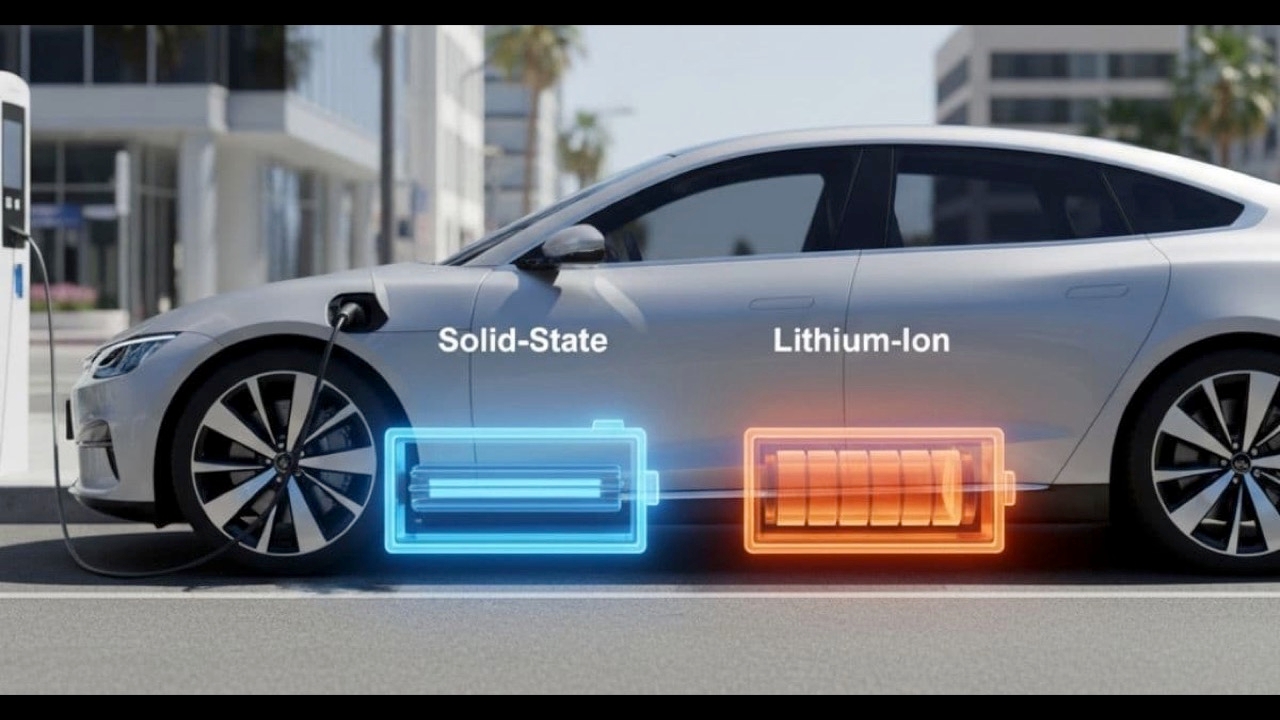
News about solid-state batteries revolutionizing the world has been talked about for almost ten years, but so far, we are still waiting in vain. As of 2026, we have yet to see ordinary electric cars use this type of battery 100%. The delay is mainly due to technical barriers and enormous costs, which have proven more challenging than researchers initially expected.

The issue of solid interfaces: In traditional batteries, acid or liquid electrolytes permeate every pore of the electrode, facilitating easy electron flow. But with solid-to-solid contact, the interface is not perfectly tight like with liquids. This causes very high internal resistance, reducing efficiency over time or during fast charging. Materials may also expand or contract, causing cracks in the battery structure.

Lithium dendrite formation: Originally, solid-state batteries were hoped to prevent dendrites—sharp lithium spikes that penetrate from one electrode to another causing shorts. However, lithium dendrites can still grow through tiny cracks in ceramics or solids, meaning the claimed safety against explosions is not yet fully realized. More research is needed to definitively solve this and meet high safety standards.

Extremely high cost: According to the latest 2026 automotive industry data, the production cost of all-solid-state batteries is still 6-8 times higher than conventional lithium-ion batteries. Materials like sulphide or lithium foil are very expensive, and manufacturing requires completely dry rooms and extremely high pressure to bond solid materials tightly. This forces carmakers and battery producers to invest in entirely new factories worth billions.

Nearly all production facilities must be rebuilt: Existing lithium-ion battery plants worldwide cannot quickly switch to solid-state production. New machinery, high-pressure technology, and more rigorous environmental controls are required. Automakers are reluctant to abandon recently built factories that cost tens of billions.

Current situation (Update 2026): Although progress seems slow, clear advancements are steadily emerging.
Toyota remains the patent leader with over 1,000 patents and plans to start limited pilot production for luxury or special model cars around 2027-2028.
Chinese brands such as Chery, BYD, and Nio have begun using "semi-solid-state" batteries (part solid, part liquid) as a stopgap, which offer higher capacity but are still easier to manufacture than fully solid batteries.
Experts predict that solid-state batteries will only exceed a 1% global market share in electric vehicles by 2030 or later. This new technology shift from lab research to industrial-scale production is much more difficult and complex than expected.

Understanding the difference between current lithium-ion batteries and future solid-state batteries can be considered by their core components and performance as follows.
Starting with the internal components (The Core Difference): The main difference is the state of the electrolyte, which allows ions to move between positive and negative electrodes. Lithium-ion batteries use liquid or gel electrolytes with separators to prevent electrode contact. Solid-state batteries use solid electrolytes such as ceramics or glass, which function both as ion conductors and separators.

Comparing lithium-ion and solid-state batteries, lithium has a lower energy density (requiring more space for the same power), while solid-state batteries have much higher energy density, allowing more power in the same size.
Regarding safety, lithium-ion batteries risk fire if leaking or overheating, whereas solid-state batteries are safer, non-flammable, and more heat-resistant.
Charging speed: Lithium-ion batteries can charge relatively fast but are limited by heat buildup. Solid-state batteries charge much faster without losing stability.

Lifespan: Lithium-ion batteries degrade with charging cycles, especially frequent DC fast charging, reducing capacity over time. Solid-state batteries last longer due to more durable solid materials.
Production cost: Lithium-ion batteries are cheaper due to mature technology, while solid-state batteries remain costly and rare. The Chinese car brand Changan plans to start using solid-state batteries in 2027.

People often wonder why solid-state batteries are considered the automotive industry's hope, yet have not been widely produced despite promotion for over 6-7 years.
Longer range: Higher energy density enables electric vehicles to almost double their driving range without increasing battery size.
Superior safety: Without flammable liquids inside, even if the battery is violently impacted or short-circuited, the chance of explosion or fire is greatly reduced.
Solving charging time: The goal is to enable battery charging close to the speed of refueling with gasoline—about 10-15 minutes.

Overall, the advanced solid-state battery is the leading hope in nearly every performance aspect, but lithium-ion remains dominant due to stable production and lower cost. We expect to see solid-state batteries in flagship cars or specialized devices within a few years.