

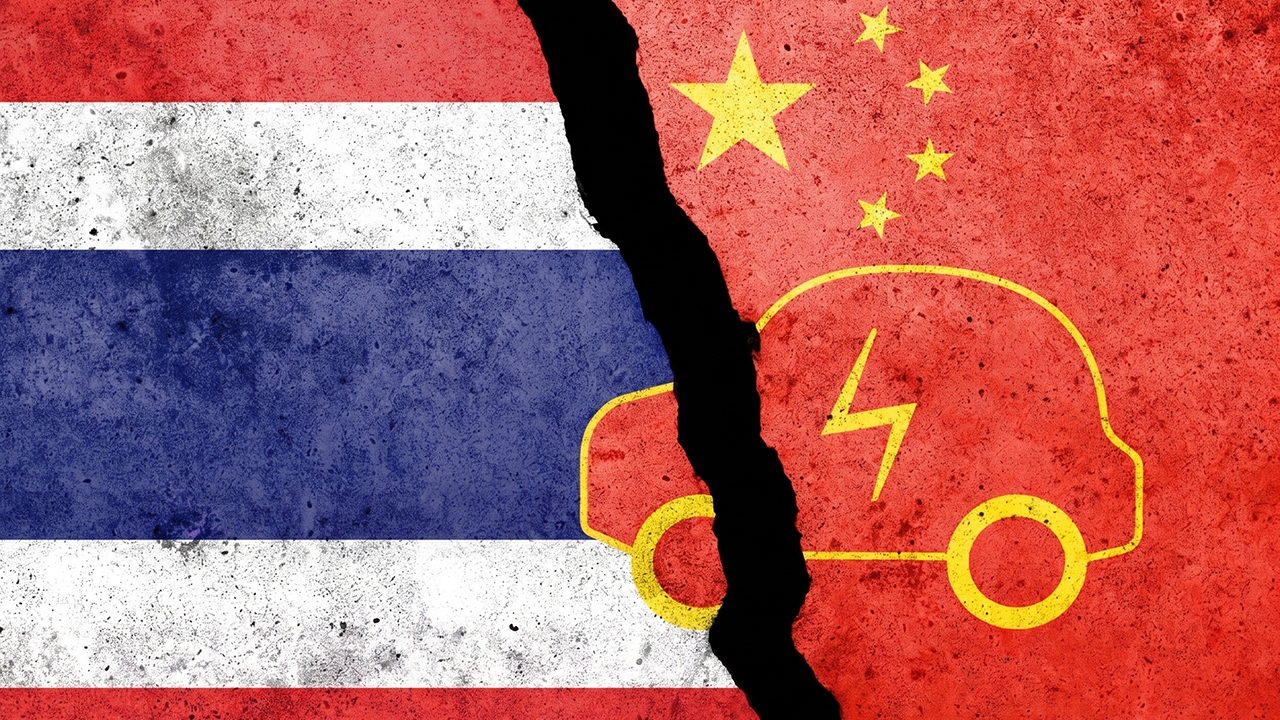
A group of 10 Thai automotive industry associations has submitted eight urgent measures to the government, proposing reforms to local content tax and technology transfer. Their goal is to create fair competition between genuine local producers in Thailand and importers of fully built-up vehicles from abroad. They fear that once the EV 3.5 incentive measures expire, there will be an influx of imports that could impact the Thai economy and entire supply chain system.
On 14 May 2026, Mr. Suroj Saengsanit of the Electric Vehicle Association of Thailand (EVAT) said the proposal is not intended to block imported electric vehicles or cause unnecessary price hikes that harm consumers. Instead, it calls for government policies to foster fairer market competition between companies that truly invest and produce locally using domestic parts and supply chains, and those that focus on importing fully built-up vehicles for sale.
These imports do not clearly add value within the country. The measures aim to protect the Thai automotive and parts industry, which has been severely impacted during the transition to electric vehicles, and to ensure sustainable growth of the Thai automotive industry. These steps are not trade barriers but efforts to maintain balance and protect the nation's economic sovereignty for a sustainable future for all Thais.
Currently, Thailand's automotive industry is facing a critical crisis due to the transition to electric vehicles (EVs), with the following impacts:
1. Loss of production base
Automakers have begun shifting strategies to import fully built-up EVs (CBU) from China, taking advantage of 0% tax incentives instead of manufacturing in Thailand.
2. Crisis for Thai parts manufacturers
Thai operators are experiencing severe order losses and face the risk of supply chain collapse.
3. Industry cliff in 2027
When the EV 3.5 support measures end in 2027, there will be no domestic production offset commitments or government subsidies. This could lead automakers to import vehicles from China at a 0% tariff instead of producing locally.
The 10 Thai automotive associations urge the government to swiftly implement concrete measures to protect Thai operators and maintain economic sovereignty. They want the government to decide whether Thailand will remain merely a market for cheap imported EVs or retain its position as a stable global automotive production hub. They have requested an urgent meeting with the Prime Minister to present details and discuss solutions.

The coalition has proposed eight key strategic emergency measures covering the following areas:
1. Reform excise taxes to create a clear tax differential between imported and locally produced vehicles, and implement a real investment-for-import quota system.
Set a significant excise tax difference between domestically produced vehicles and imported CBUs to incentivize local production (currently, the difference is only 8%, which is insufficient). They also request the government to consider quota systems based on domestic production volumes and investments in infrastructure such as public charging stations, R&D centers, and battery recycling centers, in exchange for reduced import quotas with lower tax rates.
2. Revise duty-free zone regulations and raise the local content value-added criteria.
While the current 40% local content requirement is adequate, counting methods should be improved to reflect reality, with stricter verification and increased requirements for Thai material content to ensure genuine use of domestic parts and manufacturing.
3. Promote the use of common parts.
Automakers must procure common parts—components used in both EVs and internal combustion engine vehicles—that Thai manufacturers can produce, especially high-value parts like chassis and bodywork made in Thailand, to qualify for excise tax reductions.
4. Improve investment promotion policies (BOI).
To protect Thai operators, the BOI should stop incentives for sectors where domestic manufacturers have sufficient capacity, except for joint ventures with at least 40% Thai ownership. The BOI should strictly monitor compliance post-promotion, including labor and machinery conditions, and revoke incentives immediately if conditions are violated.
5. Address raw material cost issues.
Conduct government-to-government negotiations to manage quotas and upstream raw material prices equitably and control exports of valuable metal scraps.
6. Enhance product origin certification (Certificate of Origin).
Trace back to at least Tier 3 suppliers to prevent product misrepresentation and protect Thailand's export reputation.
7. Promote technology transfer.
Set measurable KPIs and enforce open interfaces allowing Thai software developers to participate.
8. Promote domestic testing and upgrade ADAS safety standards.
Mandate testing and tuning of technologies to suit Thai driving conditions, emphasizing local testing laboratories to foster advanced knowledge transfer.
The signing involved the Electric Vehicle Association of Thailand (EVAT) together with nine other Thai industry associations related to automotive and parts sectors, representing over 1,500 members. They jointly issued this historic statement to submit urgent policy proposals to the government aimed at maintaining stability in this key economic pillar, including:
Mr. Sompol Thanadamrongsak, President of the Thai Automotive Parts Manufacturers Association (TAPMA)
Mr. Chanin Khaochan, President of the Thai Subcontracting Promotion Association (THAI SUBCON)
Ms. Porntip Nimitruprat, Executive Committee Member of the Thai Printed Circuit Association (THPCA)
Mr. Chatchai Phonmul, Vice President of the Thai Automation and Robotics Association (TARA)
Ms. Oranong Jaiyen, President of the Thai Composites Association (TCA)
Mr. Wirot Sirithanasart, President of the Thai Die and Mold Industry Association (TDIA)
Assoc. Prof. Wirun Siribanjong, President of the Thai Embedded Systems Association (TESA)
Dr. Nattachai Khunanasorn, Vice President of the Thai Energy Storage Technology Association (TESTA)
Mr. Nithipoom Pongkiatyos, Vice President of the Thai Foundry Association (TFA)