

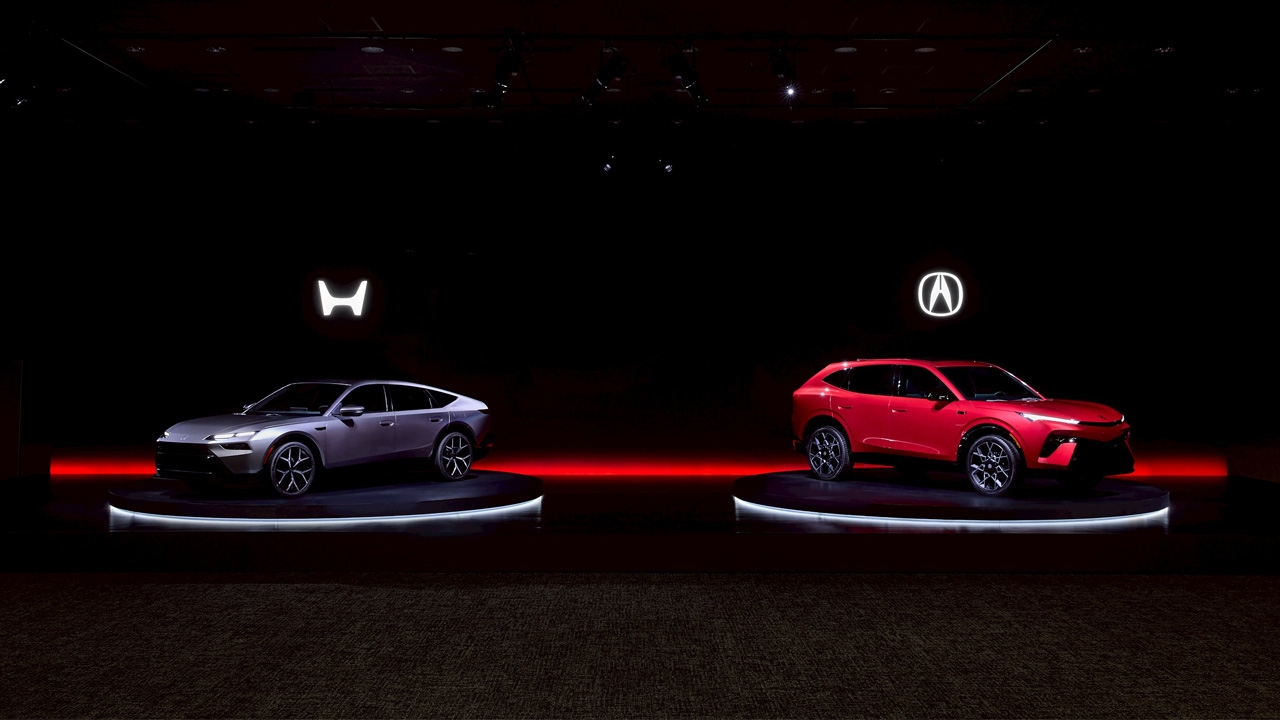
Honda revealed its 2026 business plan involving a major restructuring of its automotive division, focusing on expanding the global hybrid car market. It plans to launch 15 new-generation hybrid models worldwide by 2030, while advancing ADAS and AI technology development alongside software investments amid fierce competition and industry transformation.
On 14 May 2026, Toshihiro Mibe, Director, Representative Executive Officer, President, and Global CEO of Honda Motor Co., Ltd., outlined Honda's operational status, upcoming automotive business restructuring, and future strategic direction, highlighting five key points.

Amid rapid changes in today’s business environment, Honda aims to enhance competitiveness across multiple areas—including cost restructuring, improving development efficiency, and strengthening product lineups—by strategically allocating corporate resources to key regional markets to achieve these objectives.
Honda will prioritize automotive business restructuring over the next three years, targeting consolidated operating profits—including motorcycle and financial services businesses—exceeding 1.4 trillion yen, a new record, by the fiscal year ending 31 March 2029.

Honda has defined three key operational strategies as follows:
2.1. Strategic allocation of corporate resources
- Reviewing the powertrain portfolio to meet future demand trends

- Strengthening product lineups in key regions
Honda designates North America, Japan, and India as critical growth markets, focusing resource allocation accordingly. Beyond North America, Honda will drive strategies in Japan, India, and China to comprehensively enhance competitiveness.
Japan Honda will expand its electric vehicle (EV) lineup focusing on small vehicles, particularly Kei cars, including launching the N-BOX EV in 2028. From 2028, Honda will gradually roll out new-generation hybrid vehicles equipped with next-generation ADAS technology.
The all-new Vezel will be the first such model. Additionally, Honda plans to increase value through special editions like Sport Line and Trail Line, aiming to boost new vehicle sales and strengthen its domestic business foundation.

India Honda will tailor vehicle specifications to Indian consumer needs, preparing to launch new models specifically developed for India in 2028 under two product categories: vehicles under 4 meters in length and midsize vehicles.
Honda will leverage its strong motorcycle business in India—selling nearly 6 million units annually—to meet consumer demand shifting from motorcycles to cars and sustain business growth.
Under this strategy, Honda established Honda Digital Innovation India as a digital platform and plans to boost sales through services such as a new in-house financing company in India, scheduled to start operations before the fiscal year ending 31 March 2027.
China Amid rapid changes in China's business environment, Honda aims to enhance product competitiveness and cost efficiency by using standardized parts and next-generation technology sourced locally, alongside launching new energy vehicles (NEVs) developed on platforms co-created with Chinese partners.

2.2. Comprehensive strengthening of production capabilities
Honda will drive strategies in three key areas: structural cost reduction, comprehensive development efficiency enhancement, and building a flexible production infrastructure ready to respond to business environment changes.
Structural cost reduction To manage external parts costs, Honda will improve global cost structures by reviewing its unique standards and increasing use of standardized parts, while leveraging competitive advantages of local suppliers in China and India.
Enhancing comprehensive development efficiency Honda will concretely improve development efficiency by thoroughly reviewing engineering chain management using the "Triple Half" concept, aiming to halve 1) development costs, 2) development time, and 3) development workload compared to 2025.

Beyond optimizing design, testing, and early production stages through digital simulation and AI technologies, Honda will reform the entire development process—from technical requirements review and product planning to development management.
This approach will enable Honda to reduce development time for minor model changes by half starting this fiscal year, with full model changes also halving development time beginning with projects entering development in 2028.
Building a flexible production infrastructure to handle changing business conditions Honda aims to improve production efficiency by approximately 20% within five years through efficient capital investment and resource allocation for new vehicle models and equipment.
2.3. Strategic use of external resources
Honda plans to flexibly and strategically utilize external resources, leveraging cost competitiveness, speed, and standardized parts from local suppliers in China and India.
Regarding battery strategy, Honda will not fully in-source production but will maximize L-H Battery's plant capacity to prepare for future EV demand growth. It will improve operations by producing batteries for high-demand hybrid vehicles and other applications, focusing battery procurement efforts mainly on enhancing competitiveness in the North American market.
Honda has indefinitely suspended its comprehensive EV supply chain project in Canada and is continuously reviewing procurement strategies. The company will focus on integrating core Honda-developed technologies with external resources to enhance competitiveness amid uncertain business environments.
Honda remains committed to achieving carbon neutrality by 2050 as a leader in comprehensive mobility. It will carefully assess market environments and regional demand trends while accelerating diverse initiatives to achieve carbon neutrality targets, covering electric vehicles, hybrids, carbon-neutral fuels, and carbon offset technologies.
For electric vehicles (EVs), Honda will continue laying the foundation for competitive EV hardware platforms to meet future market demand at the right time, alongside research and development of all-solid-state batteries. Honda will also apply its ASIMO OS operating system not only to EVs but also hybrids to enhance driving value and offer new travel and cabin experiences through increasing intelligent technologies.
Regarding electrical and electronic (E&E) architecture, Honda has adopted a domain-based architecture enabling flexible adaptation to country-specific differences, evolving customer needs, market conditions, and external resources. Through efficient development with unified software architecture, Honda will promptly deliver new customer value while building flexibility and competitiveness.
Over the next three years, Honda will focus on restructuring its automotive business. In the subsequent two years, after solidifying the business structure, it will flexibly launch new products to drive sustainable and rapid automotive business growth.
Honda expects to fully address losses related to its electric vehicle (EV) business by the fiscal year ending 31 March 2029. Combined with restructuring and strengthening product lineups, this will significantly improve automotive business profitability.
Additionally, building on strong profitability from motorcycle and financial services businesses, Honda aims for consolidated operating profits exceeding 1.4 trillion yen—a historic record—and targets a long-term ROIC (Return on Invested Capital) of 10% by the fiscal year ending 31 March 2031.
Honda will review and improve its corporate governance structure, particularly increasing the proportion of independent directors to a majority on the board, restructuring subcommittees, and strengthening overall board oversight and operations. These measures aim to ensure effective and continuous implementation of business strategies, facilitating courageous and transparent decision-making.