

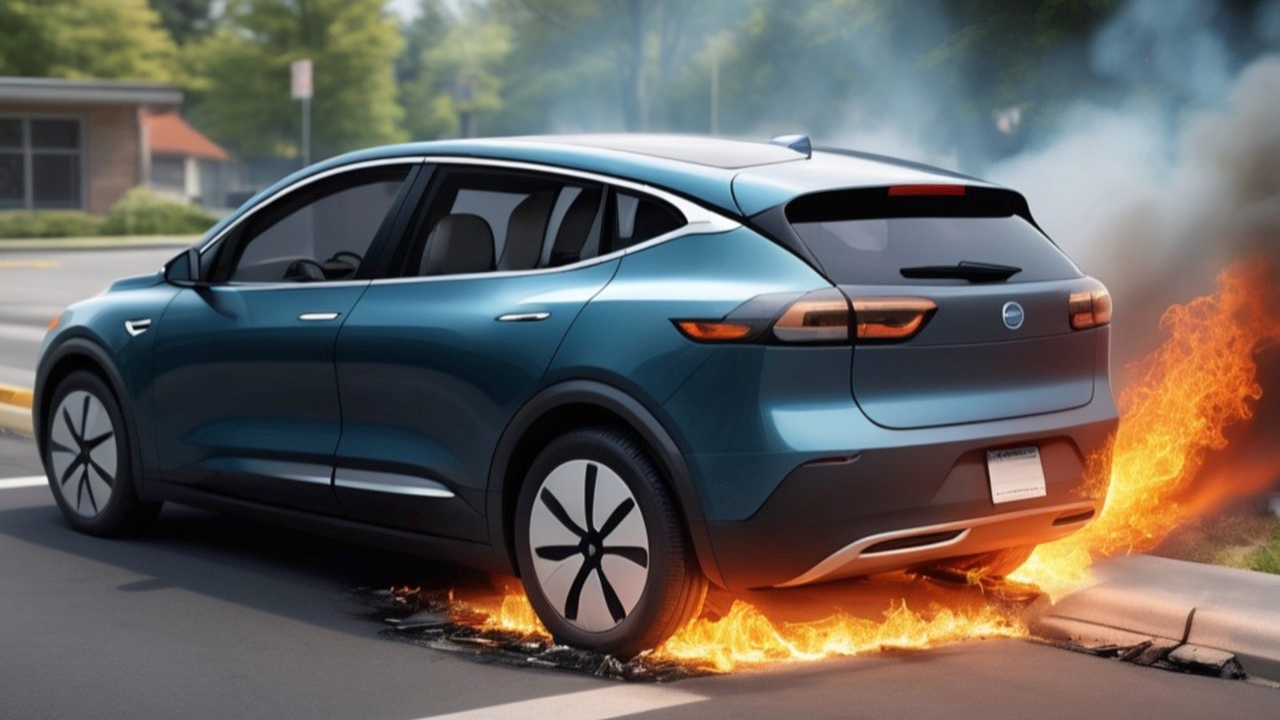
The main cause of the Volvo EX30 fires, according to the official statement from Volvo Cars (Thailand) and global recall data, is not software-related but stems from manufacturing defects in the battery pack—specifically battery cell defects. This issue affects specific batches (years 2022–2023) of the Single Motor Extended Range and Twin Motor Performance models, which use NMC (Nickel Manganese Cobalt) batteries supplied by a Chinese manufacturer.

In engineering terms, batteries have separators that keep the positive and negative electrodes apart for safety. However, in the problematic batches, repeated use or charging causes the battery cells to deform, developing sharp edges that pierce these separators, leading to direct contact between positive and negative electrodes inside the cell, triggered by high voltage and charge levels.

A key factor causing excessive heat and ignition is charging beyond 70%. When the battery has high voltage and energy density combined with an internal short circuit point, heat accumulates rapidly, overwhelming the vehicle's thermal management system and leading to fire. The recommendation to limit charging to 70% is challenging for owners since the EX30’s range is limited, and most owners tend to charge close to 100% to ensure sufficient driving distance.
Most recently, Volvo announced a recall to replace the battery modules in the affected vehicles and advised owners to temporarily limit charging to 70% for safety while awaiting the replacement parts.
To maximize safety and prevent fire risks both for the specific Volvo EX30 batches and electric vehicles generally, prevention and maintenance guidelines can be outlined as follows.
1. Immediate precautions for Volvo EX30 owners (affected batches): If you own a Single Motor Extended Range or Twin Motor Performance Volvo EX30 from the affected 2022–2023 batches, you should strictly follow Volvo engineers’ recommendations.
Set a charging limit at 70% via the vehicle’s central display or mobile application to reduce voltage and energy density in the battery cells, minimizing the risk of triggering internal short circuits.
Avoid DC fast charging while awaiting repairs; prioritize AC charging (such as home Wallbox) because the gentler current flow generates less sudden heat within the battery cells.
Promptly take your vehicle in for inspection and battery module replacement when contacted by Volvo Cars (Thailand). The recall service and parts replacement will be free of charge.
General prevention and care for electric vehicles to reduce fire risk while parked.
Proper battery system maintenance and charging habits significantly lower the chance of thermal runaway or heat buildup in electric vehicles.
Charging and usage behavior guidelines.
Set the usual charging limit between 80% and 90% for daily use, especially for NMC batteries. Avoid frequent full 100% charges as high voltage stresses the cells and accelerates degradation. Reserve full charges for long trips only.
Avoid letting the battery drop below 10%–15% regularly. Frequently depleting the battery completely damages its chemical structure and increases the risk of internal short circuits.
Do not drive aggressively immediately after charging or start charging immediately after fast driving. Following DC fast charging or high-speed driving, battery temperature is elevated; allow the cooling system to lower the temperature by resting 15–30 minutes before driving or charging again.
Maintenance and inspection recommendations.
Immediately have the vehicle inspected after any strong undercarriage impact. Most EV batteries are located under the floor, and impacts from curbs, rocks, or collisions may cause unseen internal or cooling system damage that requires detailed technician evaluation.
Monitor for abnormal battery percentage drops while parked, error warnings related to electrical systems (e.g., Isolation Fault or Battery Management Error), or abnormal continuous operation of the battery cooling fan even after the vehicle is off. If detected, have the vehicle checked promptly.
Do not modify the high-voltage electrical system. Avoid installing aftermarket accessories that require cutting high-voltage wiring (orange cables) or uncertified drivetrain components.
Guidelines for parking and charging locations.
Ensure your home's electrical system and Wallbox charger are installed by qualified technicians, with properly sized wiring and a certified automatic power cut-off system (RCBO Type B).
Avoid parking the vehicle in direct, intense sunlight for several consecutive days. Although EVs have cooling systems, prolonged exposure to Thailand’s heat stresses the system and increases overall vehicle temperature.
EV owners should keep a fire extinguisher capable of handling electronic and battery fires (such as special chemical agent types or dry chemical/Halon extinguishers) in the vehicle or near home charging areas to manage minor electrical sparks. However, if the battery pack under the car ignites, evacuate immediately and call firefighters, as large amounts of water are required for cooling.

Why can electric vehicles catch fire "even when parked"? EV fires while stationary, powered off, or after charging are often caused by a chemical chain reaction known as thermal runaway, triggered mainly by the following factors.

1) Internal short circuit within battery cells is the most dangerous cause. It occurs inside the battery where external sensors may not detect it immediately. Causes include manufacturing contamination with tiny metal fragments entering the cells during production.
Formation of dendrites (metal crystals) over time or through frequent fast charging causes sharp lithium crystal needles to pierce battery separators. Even a single puncture creates an internal short circuit hotspot, causing heat generation even when the vehicle is parked.
2) Accumulated heat after charging (Post-Charging Thermal Stress). Especially after DC fast charging or full 100% charges, high internal heat and chemical pressure remain. If the cooling system stops too soon or a cell is damaged, heat builds up, potentially reaching a critical point.

3) Latent mechanical damage. Previous accidents or impacts under the car can cause slow internal structural or coolant system damage that may not ignite immediately but eventually leads to short circuits or chemical reactions causing fire while parked.
4) Battery Management System (BMS) failure and wiring issues. The BMS monitors voltage and temperature of each cell; if it malfunctions or if high-voltage wiring deteriorates from moisture or rodent damage, heat can spread to nearby cells and cause fires.
Summary of thermal runaway mechanism.
When a hotspot forms inside a cell, raising temperature above approximately 150°C–200°C, the battery’s flammable chemical electrolyte begins decomposing, releasing flammable gases and oxygen. This reaction self-amplifies heat and spreads rapidly to adjacent cells like dominoes, causing intense fires that are difficult to extinguish since the battery internally supplies oxygen to fuel the flames.