

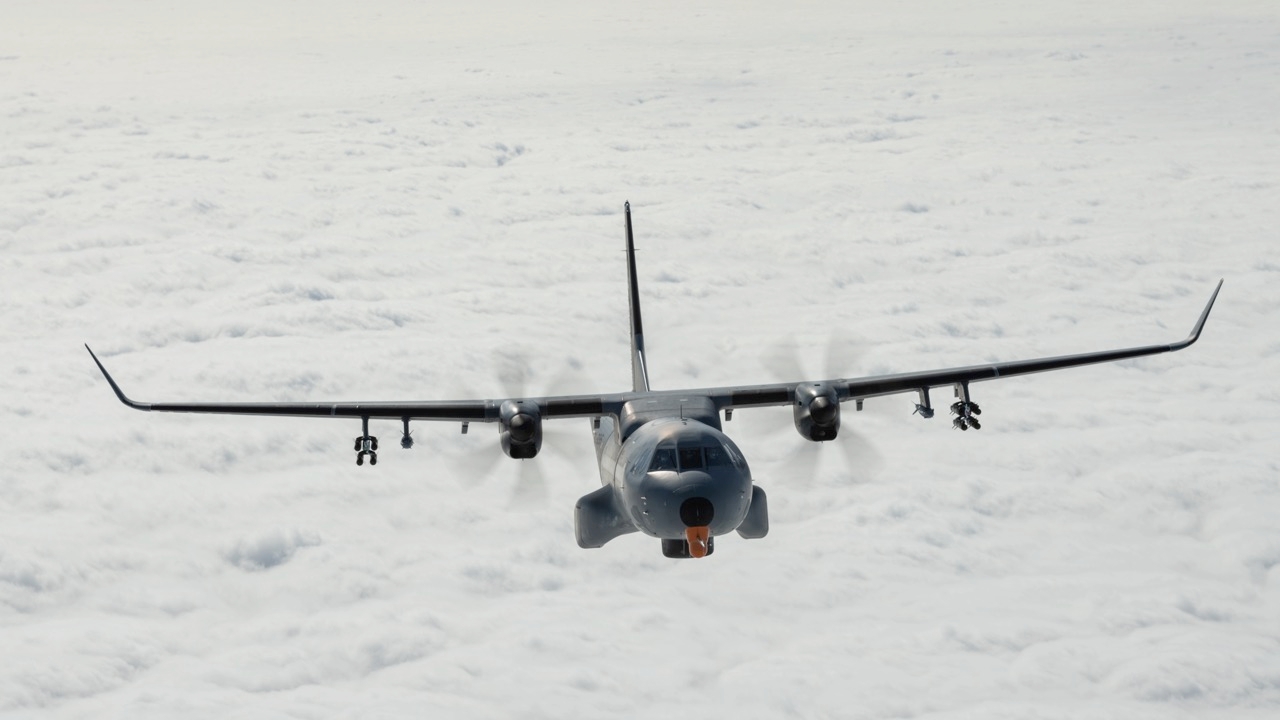
The Royal Thai Air Force has ordered two Airbus C295 aircraft configured as tactical transports to enhance national defense capabilities. Both planes will be stationed and operate with Wing 46 at Phitsanulok Air Base. Currently, Thailand operates three C295 aircraft under the Royal Thai Army, used for personnel transport and equipment logistics since 2016. These two new aircraft will be assembled at the Airbus Defence and Space facility in Seville, Spain, with the first delivery scheduled for the first half of 2029.


The C295 transport aircraft can carry 70 troops or 49 paratroopers. It is capable of taking off and landing on unprepared runways, supporting missions such as cargo drops and airborne troop deployment, as well as medical evacuation operations. Airbus supports Thailand's defense industry through cooperation with Thai Aviation Industries (TAI), assisting with maintenance of the C295 fleet via advanced training systems.


Thailand is one of seven countries in the Asia-Pacific region operating the Airbus C295 tactical transport aircraft. The C295 leads the global market in this category, holding an 85% market share with 333 orders from 39 countries across four continents. To date, the worldwide C295 fleet has accumulated over 750,000 flight hours.
The Airbus C295 is one of the most successful medium tactical transport aircraft globally and plays a significant role in the Thai military. Currently, the Royal Thai Army operates two C295s, and the Royal Thai Air Force has recently procured additional units.

.Technical Data and Performance
Powerplant: The aircraft is powered by two Pratt & Whitney Canada PW127G turboprop engines, each producing 2,645 shaft horsepower. These engines have six-blade composite propellers that are lightweight yet durable. The PW127G is known for fuel efficiency, easy maintenance, and a long service interval of up to 10,000 flight hours before major overhaul.

Service Ceiling: The maximum operating altitude of the C295 is between 25,000 and 30,000 feet (approximately 7,620 to 9,144 meters). The pressurized cabin allows it to fly above turbulent weather at lower levels comfortably, ensuring that personnel arrive at missions without fatigue.

Range and Payload: With auxiliary fuel tanks, the C295 has a maximum range of about 4,260 kilometers. At maximum payload, the range is approximately 1,300 to 2,300 kilometers, easily covering Thailand and neighboring ASEAN countries without refueling. The aircraft can carry up to 9.2 tons (9,250 kg), accommodating 71 armed soldiers or 50 paratroopers.


Suitability for the Air Force (and Thai Military): The C295 fills the gap between smaller transports like the CN-235 and larger aircraft such as the C-130 Hercules. Its STOL (Short Take-Off and Landing) capability enables operation on short and rough runways (unprepared surfaces like dirt, grass, or sand), ideal for border military camps or disaster zones where main runways are damaged.


Versatility: The modular cabin can be quickly reconfigured for various roles, including troop transport, paratrooper deployment, cargo delivery, medical evacuation (medevac), and disaster relief missions such as transporting vaccines, relief supplies, and field medical teams during crises.
Right-sized for Most Missions: Over 70% of domestic military and disaster relief missions do not require larger aircraft like the C-130. Using the C295 for smaller-scale operations helps reduce unnecessary fuel consumption and operational costs.


Long-term Value and Cost
The base price of the C295 on the global market ranges from about 25 to 30 million US dollars. For Thailand, based on past military procurement contracts, the average price is approximately 1.2 to 1.3 billion baht per aircraft. This package includes spare parts, ground support equipment, pilot and technician training, and warranty coverage.


Long-term cost efficiency comes from lower fuel consumption of the turboprop engines compared to the C-130, significantly reducing cost per flight hour. This allows the military to conduct more missions within a limited fuel budget.
Maintenance cost efficiency is enhanced as Thailand already operates aircraft in this family within the army and air force, providing existing infrastructure, skilled technicians, and shared spare parts management (commonality), avoiding the need to establish new maintenance centers from scratch.
Service Life: The Airbus airframe and structure are designed for a service life exceeding 30 years, making it a cost-effective long-term investment for national airspace management and public assistance missions.