

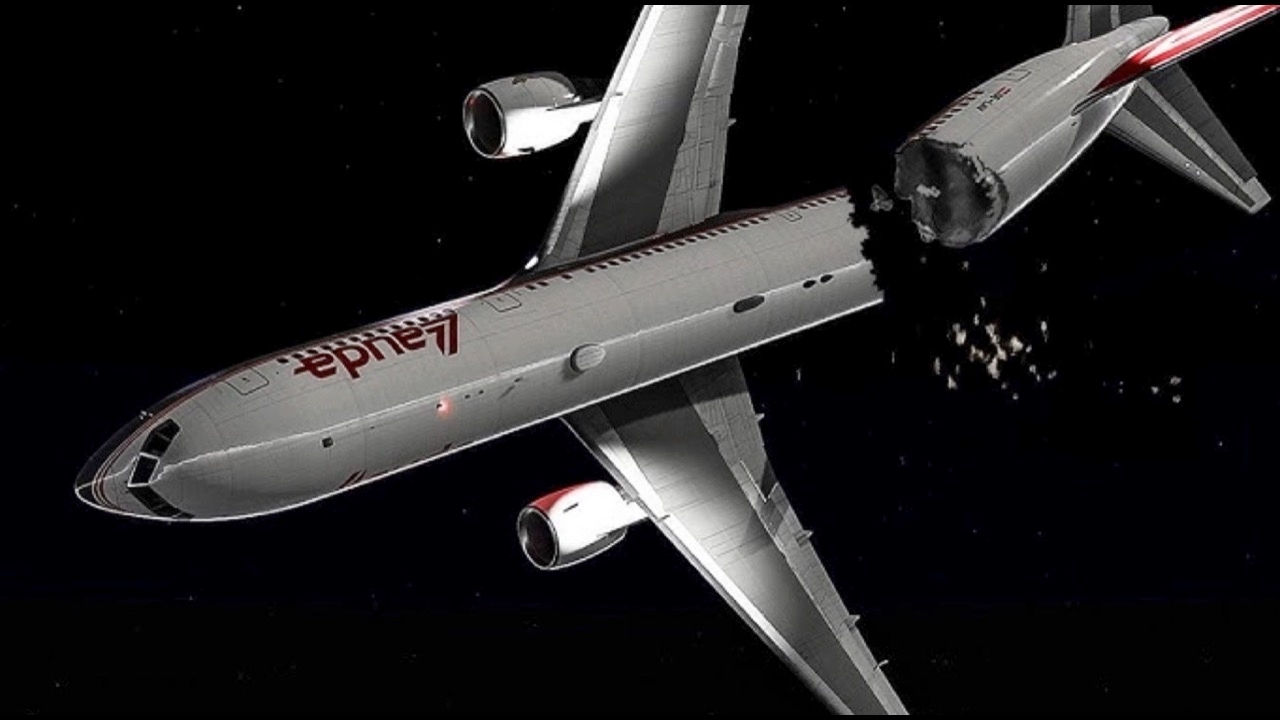
Air travel is considered the safest mode of transportation among all human-made vehicles, including cars, ships, and trains. Commercial flights operated by airlines certified for safety by international aviation organizations such as the N.T.S.B. and the U.S. FAA are regarded as having the lowest risk of accidents. However, when accidents do occur, they tend to be severe with significant loss and ongoing impacts, as exemplified by Lauda Air Flight NG004, which will be discussed here.

Lauda Air was established in 1978 by Niki Lauda, an Austrian three-time Formula One World Champion driver. After retiring from F1 racing due to a car fire accident, Niki Lauda ventured into aviation by owning charter flights, acquiring FOKKER F27 aircraft, and operating charter flights within Europe. Later, after receiving an operating license from Austria's Ministry of Transport, Lauda launched charter routes using BOEING 767 aircraft, flying from Vienna to various European Union countries.


After gaining public trust as an airline, Lauda Air was authorized by the Austrian Department of Transport to expand flights to New Zealand, Australia, South Korea, Taiwan, Hong Kong, Central and South America, and Thailand. In October 1987, Lauda Air began using BOEING 767-300S aircraft on long-haul routes, modifying the 290-seat cabin to 246 seats to increase passenger space for comfort on long flights. The BOEING 767-300S is a medium-range airliner (about 6,000 km range at normal cruising speed). Although smaller than the 777 or 747 and less suited for long-haul flights, it featured modern avionics and digital navigation systems, making it safe and reliable. Lauda Air introduced these new planes in 1989 after they left the Boeing assembly line. By 1989, Lauda Air expanded its route network to cover over 50 countries, improved service standards with attention to detail, earning Niki Lauda recognition as Person of the Year by TREND magazine for his success in aviation and bringing prestige to Austria.

On Sunday, 26 May 1991, at 21:05 local time at Hong Kong International Airport, a BOEING 767-300S operating Lauda Air Flight NG004 departed from Hong Kong bound for Don Mueang International Airport in Bangkok, with a final destination of Vienna, Austria. The flight covered a distance of 950 nautical miles, taking approximately two and a half hours, and landed at Don Mueang without any abnormalities on the route from Hong Kong to Bangkok.

At the parking area for the BOEING 767-300S Flight NG004, after disembarking passengers, the aircraft was cleaned and refueled, and routine checks were completed. Two hundred thirteen passengers waiting in the departure lounge for the flight to Vienna were called to board. Captain Tom Welsh, an experienced American pilot, and First Officer Josef Thurner, an Austrian, taxied the aircraft slowly to the assigned runway for takeoff. Weather conditions were clear with 11 km visibility, slight clouds, wind speed of 6 knots, and a moonlit sky. However, small rain cloud clusters were noted along the planned flight path crossing the Thai-Myanmar border.

At 23:02 local time at Don Mueang Airport, air traffic control cleared Lauda Air Flight NG004 for takeoff and instructed the crew to switch radio frequency to 119.1 MHz VHF to communicate with Bangkok Departures air traffic control after becoming airborne.
After takeoff and climbing, Captain Tom Welsh turned the aircraft right to head southwest. At 23:10, radar at Bangkok Area Control Center tracked the aircraft's position, heading, and altitude clearly. Controllers instructed the crew to climb to 11,000 feet and change radio frequency to 128.1 MHz (Bangkok Control) to connect with radar control near the Thailand-Myanmar border. The pilots climbed to 5,000 feet, then switched radio as directed. After radio contact ended, Captain Welsh continued climbing to cruise altitude of 31,000 feet. Meanwhile, First Officer Thurner contacted Lauda Air ground operations in Bangkok to report the flight and estimated landing time at Vienna of 0308 UTC. This was the final communication from Flight NG004.

At 23:17, radar signals from the BOEING 767-300S disappeared from Bangkok Control's radar screen. Controllers on duty, startled, quickly composed themselves and radioed Bangkok Departures, which also had radar and radio communication, to try to contact the Lauda Air 767. They also requested nearby aircraft to assist in radio contact or visual search, but no response was received from the 767.

The situation worsened when the Department of Civil Aviation's search and rescue center received a radio report from police that local villagers in Dan Chang District, Suphan Buri Province, witnessed a large aircraft explode mid-air. Debris scattered and fell as large fireballs into the dense forest of Khao Pu-Teuy National Park, an area characterized by thick jungle, steep valleys, and limestone cliffs. Witnesses described multiple large fireballs spreading over a wide area.

Khao Pu-Teuy National Park lies about 200 km northwest of Bangkok. Its terrain is dense forest and high valleys, difficult to access. Aviation safety officials promptly reviewed weather conditions at the time of the Lauda Air crash using weather radar to detect any abnormalities that could have caused flight problems for the BOEING 767, such as severe thunderstorms or strong high-altitude air currents that might affect climb performance. No such anomalies were found that could have caused the aircraft's difficulties.
Rescue and aviation safety teams faced significant challenges accessing the crash site to search for survivors and examine wreckage. Khao Pu-Teuy is a dense forest located five kilometers from Phu Toei Village in Dan Chang District, Suphan Buri Province. Upon arrival at the mountain ascent, teams found the first piece of wreckage: the right horizontal stabilizer. Smoke from the burning wreckage was spread widely over the mountain. Numerous passenger remains were scattered among the debris. The dense and steep forested terrain, along with variable weather such as intense sunlight and heavy rain, impeded rescue operations.

After learning of the crash, Lauda Air dispatched company representatives and flight engineers to assist in the investigation, joined by officials from Austria's Department of Transport and international aviation organizations NTSB and FAA, who arrived promptly in Dan Chang. Rescue teams from various foundations found no survivors among the passengers but discovered the scattered bodies of 223 victims—including 213 passengers, 2 pilots, and 8 cabin crew—throughout Pu-Teuy valley. After removing all bodies from the site, a further tragedy was that only 72 of the 223 victims could be positively identified.


Investigators from multiple aviation safety agencies found evidence of fire damage on many BOEING 767 parts. Analysis indicated that the fire occurred in flight before impact, caused by wing damage that released fuel onto operating engines, leading to intense fire. Local villagers testified that they saw the aircraft explode or at least catch fire mid-air before crashing.


The left cabin door, located amidships, was covered in soot but found in an area unaffected by ground fire, and its frame was not charred. This indicates it was exposed to intense heat in the air from the in-flight fire, causing contraction. Thus, it is confirmed that an in-flight fire occurred but did not spread to both wingtips or certain parts of the fuselage's right side. However, key evidence to analyze the fire's origin, cause, and the aircraft's flight path before impact was obscured by post-crash fires on wreckage. Weight and maintenance records showed the aircraft was within normal limits for loading and center of gravity.
There were no reports of structural or engine defects that could have caused the accident. The aircraft was just over two years old. Engine examination revealed that the engine cowling had experienced more stress than expected. The BOEING 767-300S was powered by Pratt & Whitney PW4000 engines, designed with engine cowlings capable of withstanding aerodynamic forces, especially during takeoff at maximum thrust. Damage was found on fan rubstrips (rubber seals around air intakes) on both engines, indicating abnormal forces or unusual flight attitudes causing wear. Analysis of wear patterns suggested:
1. The forces acting on the engine cowling exceeded those typically experienced during takeoff roll.
2. The forces were directed downward with wear points rotating clockwise, consistent with the aircraft pitching nose-down with unusual rolling and yawing motions. This scenario was considered unlikely because the aircraft was climbing at high engine revolutions per minute (RPM). If the thrust reverser were deliberately or accidentally deployed, pilots would have to reduce throttle to idle before activating the thrust reverser lever, which is integrated with the throttle controls. Additionally, the Air-Ground system prevents hydraulic pressure from activating the thrust reverser in flight. Testing on other aircraft showed this system functioning as designed. However, electrical malfunctions could cause unintended thrust reverser deployment.

About nine months post-accident, a crucial part—the Directional Control Valve (DCV) of the left engine's hydraulic thrust reverser system—was recovered largely intact and handed over to the Department of Civil Aviation. It was sent to Boeing for analysis with NTSB and FAA officials. Testing revealed that electrical short circuits could cause the thrust reverser to deploy spontaneously. For deployment, the Hydraulic Isolation Valve (HIV) must open to allow hydraulic fluid flow; the HIV opens only via the Air/Ground Electrical Sensing System or Auto-Restow Circuit.

The Auto-Restow Circuit automatically retracts the thrust reverser if sensors detect it is partially deployed contrary to pilot commands, providing electrical power to open the HIV valve whether airborne or on the ground. However, a short circuit in the DCV solenoid coil could cause thrust reverser deployment despite circuit breakers designed to prevent such faults. Tests showed that as little as 8.2 VDC could energize the solenoid coil, with an estimated chance of 1 in 599 occurrences.

In the worst case, a short circuit in the thrust reverser wiring could cause 22.6 VDC to flow to the solenoid coil for one second. Tests could not conclusively determine the severity of response or whether the Auto-Restow Circuit would successfully retract the thrust reverser after the circuit breaker tripped. The extensive wreckage dispersal hindered discovery of electrical faults, so it remains unproven whether wiring issues caused the thrust reverser deployment. Boeing tested the hydraulic system with the HIV valve open and found that contamination in the DCV solenoid valve could increase hydraulic pressure on the deployment side, causing uncommanded thrust reverser deployment. Boeing promptly notified the FAA to initiate urgent system improvements.

The Cockpit Voice Recorder (CVR) and Digital Flight Data Recorder (DFDR) were recovered from the wreckage and sent to the NTSB in the U.S. However, the DFDR tape was damaged by heat and could not be read, while the CVR sustained minor damage and still yielded usable data.


The last recorded messages before the cockpit voice recorder ceased functioning:
23:07:48: The captain said to the first officer upon seeing a warning on the EICAS (Electronic Indication and Crew Alerting System) screen, “That keeps that’s come on [again]!!!” indicating a recurrent alert.
23:08:52: The first officer said, “So we past transition altitude – 1013,” informing the captain that the aircraft had passed the altitude where the pressure setting changes to standard (1013 millibars).
23:08:54: The captain replied, “OK.”
23:10:21: The captain asked, “What’s it say in there about that? Just ah…,” apparently requesting information from the first officer who was consulting the Boeing 767 Quick Reference Handbook for about a minute.
23:10:27: The first officer read aloud from the manual, “Additional system failures may cause in-flight deployment – expect normal reverse operation after landing,” indicating the system might malfunction by deploying in flight but should operate normally on the ground.
23:10:35: The captain responded, “OK – just….ah let’s see…,” taking the manual to review personally.
23:11:00: The captain said, “OK,” and returned the manual.
23:11:43: The first officer, still concerned about the EICAS warning, asked, “Shall I ask the ground staff?” suggesting contacting ground personnel for assistance.
23:11:46: The captain asked, “What’s that?” seeking clarification.
23:11:47: The first officer said, “Shall I ask the technical men?” proposing to contact technical support.
23:11:50: The captain, uncertain, replied, “Ah... you can tell ’em about it… it’s just… Ah no… it’s probably… ah water or moisture or something. Because it’s just on… it’s coming on and off.” He speculated moisture or water might be causing intermittent warnings. The Reverse Isolation Valves warning light or L or R REV ISLN VAL message on EICAS indicates sensors detecting hydraulic flow behind the HIV valve, but the manual provides no corrective procedures, only noting possible in-flight uncommanded thrust reverser deployment.
23:12:04: The captain said, “But… you know it’s a … it’s doesn’t really… it’s just an advisory thing…,” downplaying the warning as advisory only.
23:12:19: The captain, still worried, said, “Could be some moisture in there or something.”
23:12:27: The first officer suggested, “Think you need a little bit of rudder trim to left, eh?” advising the captain to adjust the rudder trim slightly left.
23:12:32: The first officer repeated, “You need a little bit of rudder trim to the left.”
23:12:34: The captain agreed, “OK.” This likely indicates a slight right bank requiring left rudder trim adjustment, a normal flight procedure possibly unrelated to the thrust reverser issue.
23:13:14: The first officer audibly counted numbers in German for 3 minutes and 19 seconds without apparent meaning.
23:17:01: The first officer exclaimed, “Ah… Reverser’s deployed!” alerting to the thrust reverser deployment.
23:17:02: Sounds of severe structural vibration were recorded.
23:17:04: Sounds of metal tearing were heard.
23:17:05: The captain uttered a curse.
23:17:06: More metal tearing sounds occurred.
23:17:08: Four-tone danger warning alarms sounded.
23:17:11: A one-second siren sounded and stopped.
23:17:16: The siren sounded again, continuing until the tape ended.
23:17:17: The captain said, “Here – wait a minute!” in a tone of despair amid ongoing metal tearing noises.
23:17:19: Two tones of metal tearing sounds were recorded.
23:17:22: The captain swore again.
23:17:23: Increasingly loud wind noise was recorded.
23:17:25: The tape recorded heavy static, making voice unintelligible.
23:17:27: The captain’s unintelligible sounds were captured.
23:17:28: Multiple sounds occurred until the tape ended.
23:17:30: End of recording.


Probable causes of the BOEING 767-300S Lauda Air Flight NG004 accident.
Thailand's Aircraft Accident Investigation Committee concluded the accident was likely caused by uncommanded deployment of the left engine's thrust reverser in flight, leading to loss of control. The exact reason for the thrust reverser's uncommanded deployment could not be definitively proven. Following the accident, the NTSB issued urgent recommendations within a month for manufacturers to redesign the thrust reverser system. On 11 September 1991, the FAA announced the formation of a special task force including government and aviation industry officials to review design philosophies and certification standards for passenger aircraft using thrust reversers. Requirements were established that thrust reversers should only deploy on runway surfaces, with safety designs preventing in-flight deployment.


Subsequently, engineering tests and evaluations of aircraft began. For BOEING 767 aircraft powered by Pratt & Whitney PW4000 engines, the thrust reverser system was completely redesigned to fix multiple potential failure points that could cause in-flight deployment. FAA certification of these changes was completed in February 1998. Additionally, the FAA revised flight data recorder (DFDR) design standards to enhance heat resistance, preserving flight data for accident investigations.


Human-made passenger aircraft offer convenient travel through human-machine cooperation, yet errors can occur beyond control. Such incidents lead to improvements preventing recurrence. The pilots, engineers, and passengers who lost their lives made profound sacrifices toward aviation safety, fulfilling humanity’s dream to soar through blue skies. We mourn the 223 souls aboard Lauda Air BOEING 767-300S Flight NG004.
References: Aviation Safety Division, Air Force Headquarters; Aircraft Accident Investigation Committee; Ministry of Transport and Communications, Thailand.