

In recent years, industries worldwide have faced significant pressure to transition to a low-carbon economy due to government policies, trade measures, and changing consumer expectations, prompting businesses to rethink their approach to resource use in practical ways.


One key issue and turning point is changing the perception of "waste," especially "used lubricants," which were traditionally classified as hazardous waste requiring disposal or used as low-grade fuel. Today, technology allows these resources to be reused through a process called "Re-refined Base Oil" or RRBO.

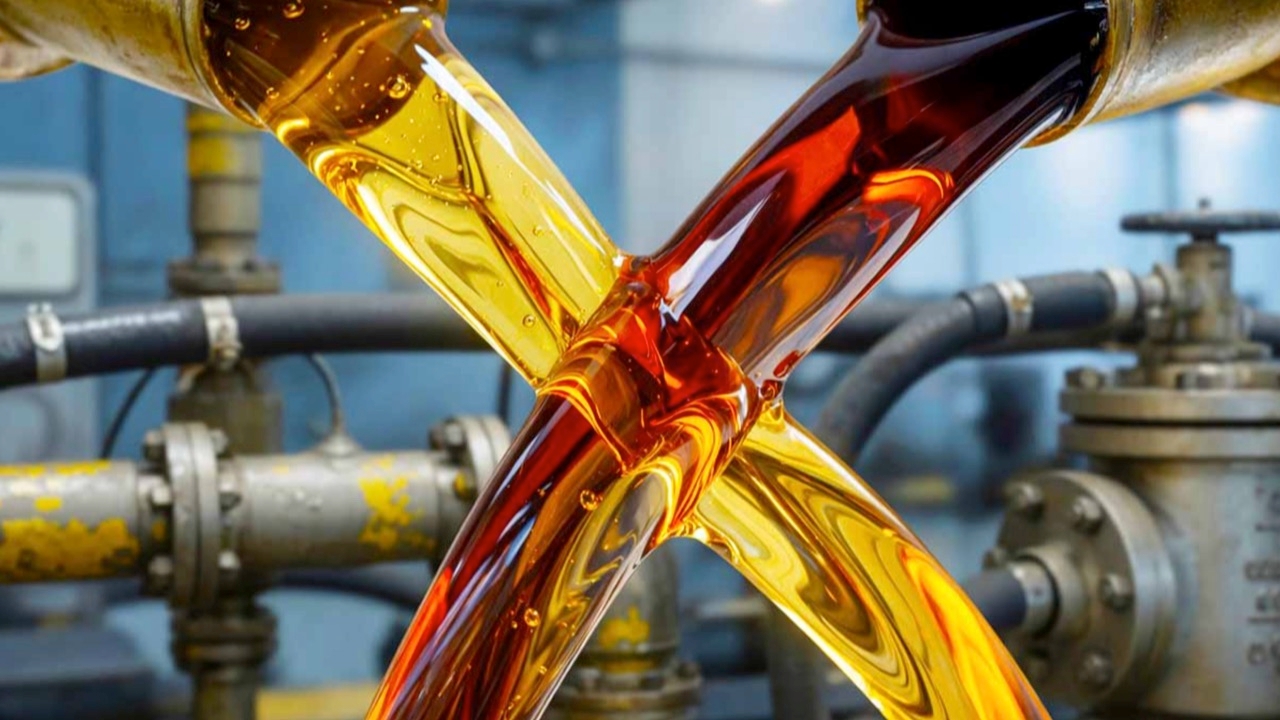
Re-refined Base Oil (RRBO) is an environmentally friendly lubricant innovation gaining importance in the global automotive industry. It involves filtering used lubricants to remove debris (Re-conditioned), followed by advanced chemical and engineering processes to recycle them into pure base oil comparable to new oil.

Technical details of interest
1. The Re-Refining Process
Turning dark used motor oil drained from engines back into clear, pure oil requires several stages of large-scale refinery technology.
Dehydration involves heating to separate water and fuel contaminants (such as gasoline or diesel from combustion) before further processing.
Vacuum Distillation separates used lubricants by temperature under vacuum to fractionate viscosity grades and remove degraded additives and residual carbon deposits.
Hydrotreatment is the crucial step, using hydrogen gas under high pressure and temperature with catalysts to remove sulfur, chlorine, aromatic compounds, and heavy metals completely.
The result is a clear, pure base oil with stable molecules, ready to be blended with new additives to produce finished engine oil.

Standards and Grades (API Base Oil Groups) In the past, older technology could only produce Group I RRBO, but today’s advanced Hydrotreatment technology in the 2026 industry easily refines RRBO into high-quality Group II and II+ base oils, which feature:
High and stable Viscosity Index.
Excellent Oxidation Stability, resisting degradation from engine heat.
Very low sulfur content meeting international standards.
Engineering Properties: Can RRBO compete with Virgin Base Oil?

Equivalent Quality: The American Petroleum Institute (API) and global automakers certify that properly refined RRBO matches or even exceeds the chemical and physical properties of base oils refined directly from crude oil (Virgin Base Oil).
Scientific Explanation: The oil molecules in used engine oil do not degrade or break down; only the additives deteriorate. Re-refining removes impurities to restore the original oil molecule purity.

Environmental Dimension (Sustainability & ESG)
This is why major automakers and lubricant brands are promoting RRBO in the market.
Carbon Footprint Reduction: Producing RRBO consumes 50–80% less energy than crude oil extraction and refining, significantly lowering greenhouse gas emissions.
Circular Economy: Instead of disposing of used engine oil—which risks contaminating water and soil—it is recycled endlessly into new engine oil.
Many leading lubricant brands now offer products with 25% to 50% RRBO content, claiming the highest standards such as API SP or ACEA, supporting combustion engines with a sustainability narrative alongside the EV trend.

From Recycling to Upcycling: Reviving Used Lubricants with Quality Equal to New
RRBO is not just traditional recycling but an Upcycling process that upgrades resource quality by sorting used lubricants, re-refining them with advanced technology to eliminate contaminants, heavy metals, and degraded substances thoroughly, turning them back into raw materials for industry. The base oil quality from re-refining can match new Virgin Base Oil in many aspects.

RRBO is not only an alternative material innovation but part of the global megatrend in sustainability and circular economy affecting economies, societies, and lifestyles long-term amid evolving trade rules emphasizing ESG standards and measurements like CFP (Carbon Footprint of Product) and CE-CFP (Carbon Footprint of Circular Economy Product). Industries and supply chains must adapt to optimize resource use, reduce greenhouse gas emissions, and develop sustainable products, positioning RRBO as a key future growth area.
In this context, RRBO is not merely an environmental choice but a strategic tool helping businesses cut management costs, reduce reliance on new resources, and meet greenhouse gas reduction goals simultaneously.


Thailand’s Blueprint: Turning Waste into Economic Treasure Thailand has great potential and readiness to develop this industry, supported by strong industrial production bases and logistics systems. In 2025, Thailand’s lubricant consumption is estimated at about 682 million liters annually, indicating a vast amount of used lubricants awaiting proper management. Globally, the RRBO market is growing steadily with a value of 3–4 billion USD (approximately 89,000–131,000 million THB), expected to expand further due to environmental standards and demand for low-carbon products. This presents a significant opportunity for Thailand to transition from a linear economy to a circular economy that sustainably adds value.

PSP Sets Flag as Leader, Shifts Role to Closed-Loop Business Chain Management
As a leader in lubricant production and eco-friendly product development, P.S.P. Specialties Public Company Limited (PSP) views the transition to a circular economy as a key chance to advance Thai industry. PSP is investing in the RRBO project through Recycle Engineering Co., Ltd. (RE) to develop systems that recycle used lubricants into high-quality raw materials again, reflecting PSP’s role as a leader in used lubricant recycling and moving toward managing a closed-loop lubricant business chain—from production, use, collection, to reuse—to achieve growth alongside environmental sustainability.

Highlighting Advanced Technology for Sustainable Solutions The core of the RRBO project developed by PSP and RE is the use of advanced refining and quality improvement technologies that effectively and environmentally remove impurities. The resulting products are pure and meet international standards, assuring partners and operators that they can safely replace conventional base oils without damaging machinery or vehicles.
In the long term, PSP aims for RRBO business to become a key piece of its "Sustainable Solutions" portfolio, not only addressing its own needs but also partnering with B2B customers to achieve Net Zero greenhouse gas emissions targets together.

Ultimately, realizing a circular economy requires collaboration from all sectors: government policy support, private sector technology investment, and consumer participation in sorting used products. If Thailand can rapidly build a standardized recycling ecosystem, it will not only protect the environment but also have the opportunity to become a regional hub for circular resource management in ASEAN.
When "waste" is fully transformed into "valuable resources," the Thai industry can grow hand in hand with sustainability.