

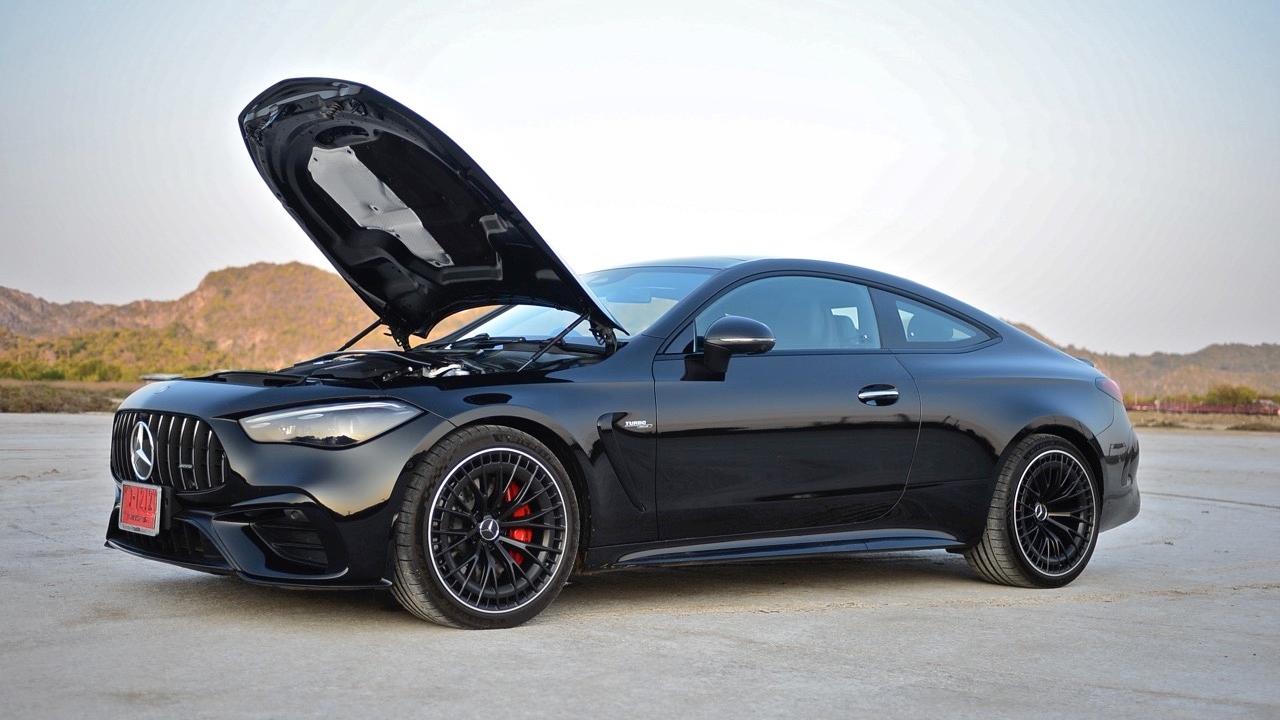
Leaving the car hood open after driving home is a behavior we often see, especially in hot countries like Thailand. This habit arises both from routine and from technical reasons.
The straightforward pros and cons of this practice are as follows.

What is the main reason for doing this?
The primary reason is to quickly dissipate heat from the engine bay. After turning off the engine, the radiator fan stops working, so the hot air trapped inside the engine compartment cannot escape through normal vents, causing heat to accumulate. Opening the hood allows the hot air to rise and escape more easily.

Benefit: Helps extend the lifespan of rubber and plastic parts.
The engine bay contains rubber hoses, wiring, plastic covers, and clips. These parts can become brittle, crack, or break easily if exposed to intense heat for long periods. Faster heat dissipation helps slow their deterioration somewhat.
Reduces heat accumulation in the battery.
Car batteries, especially semi-dry or wet types, do not tolerate excessive heat. The quicker the engine bay cools, the less water evaporates from the battery, preserving the internal plates and slowing degradation.

Deters unwanted animals when parked for long periods.
Rats and cats often seek warm engine bays to nest. Leaving the hood open exposes the engine bay to light and air, cooling it faster and discouraging these animals from nesting or chewing wires.

Drawbacks and precautions often overlooked.
There is a risk of accidents and foreign objects falling in. In homes with small children or pets like cats and dogs, debris or animals may climb into the engine bay. Also, someone could accidentally bump into the open hood edge.
Hood struts wear out faster.
For newer cars using hydraulic struts to hold the hood open, frequently leaving it open for long periods stresses the rubber seals inside the struts due to pressure and temperature changes. This causes struts to degrade and eventually fail, making the hood fall.

Dust and leaves accumulate in the engine bay.
Rising air currents can carry dust and dirt inside the house into the engine bay, where it sticks to oily surfaces. Parking under trees may cause leaves and twigs to fall and clog windshield drainage channels.
Does not help extend the life of metal engine parts.
Major metal parts like the cylinder head and engine block are designed to withstand high heat. Opening the hood to cool the outside does not significantly affect the temperature inside these cast metal parts.

Is it necessary to leave the hood open after parking at home?
From a modern automotive engineering perspective, it is no longer necessary. All cars are designed and tested under harsh Hot Weather Testing conditions. Plastic parts and wiring harnesses are made to withstand engine bay temperatures after shutdown without needing the hood to be open. However, if you do open the hood for 20-30 minutes in a well-secured, enclosed area safe from rodents and pets to cool the engine bay, it can help preserve rubber hoses and wiring. After cooling, close the hood. If parking in an area with many rodents, it is safer to set humane traps under the vehicle to catch and relocate them, protecting the car without causing harm.