

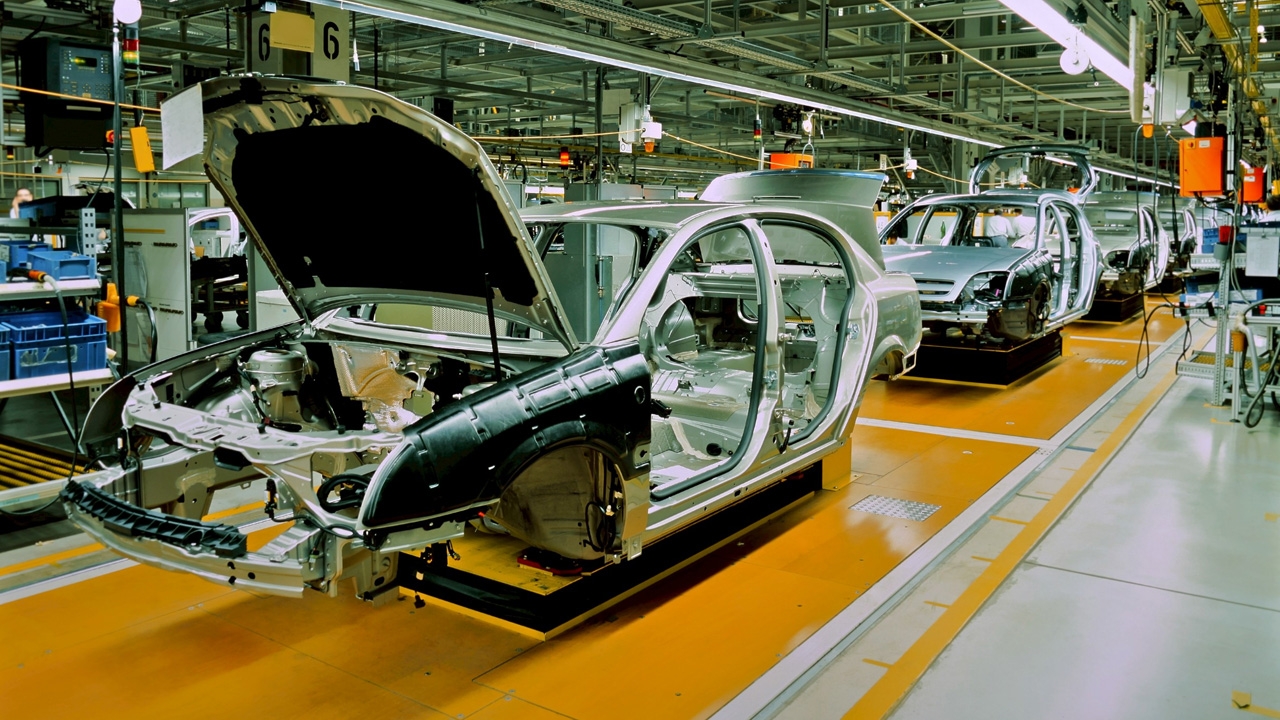
The Automotive Industry Association points out that Thailand's automotive sector is facing multiple pressures, including declining production capacity, sluggish domestic sales, export disruptions, and competition from imported electric vehicles. It proposes the government advance three key measures: protect the production base, promote investment, and stimulate the domestic market to maintain Thailand's status as a regional automotive manufacturing hub.
Mr. Suwat Supakarndejakul, Chairman of the Automotive Industry Group at the Federation of Thai Industries (AIC), revealed an overview of Thailand's automotive industry in 2026, stating that the sector is facing significant challenges from technological transitions, competition from electric vehicles (xEV), and economic conditions affecting purchasing power. Consequently, operators have proposed three main policy pillars to the government to preserve Thailand's competitiveness as a global automotive production base.
Currently, Thailand remains one of the world's important automotive production bases, although its global ranking has dropped from 10th place in 2023 to 11th in 2024. Domestic production capacity has steadily declined from over 2 million units in 2016 to around 1.46 million units now, despite factories nationwide having an installed capacity exceeding 3 million units per year but utilizing less than half of that capacity.

In the domestic market, pickup trucks and PPVs still hold over 61% market share, but sales have been affected by household debt and stricter loan approvals. As a result, sales in the first five months of 2026 remain about 5% below the previous year.
Conversely, the electric vehicle market is growing rapidly. At the recent Bangkok International Motor Show, total vehicle bookings exceeded 130,000 units, with nearly one-third being electric vehicles, reflecting changing consumer behavior and increased demand for clean energy.
Meanwhile, exports remain the industry's main revenue source but have been impacted by conflicts in the Middle East and shipping issues in the Strait of Hormuz. Exports to the Middle East, accounting for about 20% of Thai vehicle exports, have dropped by 30%, potentially forcing a review of export targets for this year.

Ms. Yupin Boonsirichan, President of the Thai Automotive Industry Association (TAIA), stated that to address these challenges, the private sector has proposed three key policy approaches: First Pillar Protecting Domestic Production
They suggest the government balance competition between imported vehicles and domestically produced ones, especially electric vehicles under the EV3 and EV3.5 policies. Currently, the excise tax differential between imports and domestic production is only 8%, which is insufficient to incentivize local investment. They propose reviewing tax rates, duration of measures, and import and production quota conditions to be more appropriate.
Second Pillar Promoting Production and Value Addition in Thailand by proposing tax incentives for manufacturers that increase use of local content. This includes support for research and development (R&D), software development, AI systems, electronics, workforce skill upgrades, and the development of modern automotive testing centers to build long-term competitiveness.
Additionally, they propose the government design flexible investment conditions to accommodate manufacturers of all sizes, especially those with lower production volumes, to encourage investment in new technologies without harming the Thai parts industry.
Third Pillar Stimulating the Domestic Market by recommending continuous government support for the automotive industry across all technologies, increasing the proportion of HEV/PHEV/BEV vehicle procurement by government agencies to drive the market, and considering personal income tax deductions for buyers of electric vehicles and pickup trucks using alternative fuel B20 to boost the economy and support clean energy use.
"If there is no follow-up policy after the EV3 and EV3.5 measures expire, manufacturers might revert to importing completely built units instead of producing domestically, directly impacting Thailand's supply chain," they warned.
At the same time, pickup trucks remain the heart of Thailand’s automotive industry, as over 90% of their parts are produced domestically. A market slowdown in pickups would negatively affect parts manufacturers and operators throughout the supply chain.
Furthermore, the association is promoting cooperation between Chinese car manufacturers and Thai operators through Business Matching activities to increase local parts usage, transfer technology, and elevate Thai manufacturers into the new era automotive supply chain.

Monitoring Supply Chain Impact — Urging Government to Accelerate Management of End-of-Life Vehicles and Batteries
Beyond the three pillars, the association also expressed concern over the pickup truck supply chain, which uses over 90% local content. Continued market slowdown will inevitably impact the entire parts industry chain. Simultaneously, they have accelerated efforts to facilitate business matching between Chinese EV manufacturers and Thai suppliers to ensure concrete technology transfer.
Another urgent agenda where Thailand lags behind is the management of end-of-life vehicles and batteries. The private sector urges the government to rapidly establish a comprehensive ecosystem for vehicle waste management to handle the electronic waste from electric vehicles expected to flood the market soon.
The industry agrees that Thailand's automotive sector is at a critical crossroads. Having continuous policies covering production base protection, investment promotion, and domestic market stimulation will be key factors in maintaining competitiveness and ensuring Thailand remains a leading automotive production hub globally.