

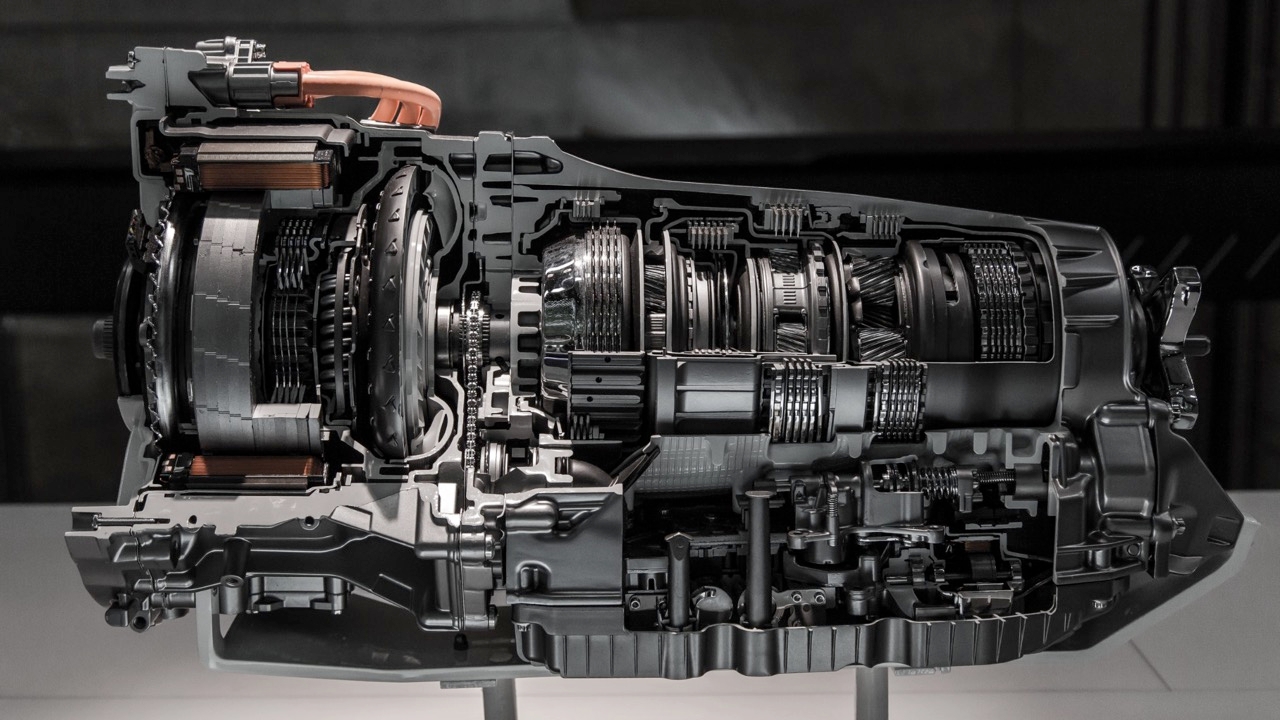
Automatic transmissions are complex and require proper maintenance. A key element is the lubricant, or ATF (Automatic Transmission Fluid). Automatic transmission fluid not only lubricates but also cools, cleans, and transmits power within the gearbox. Over time, the fluid's properties degrade, making it necessary to replace it according to the intervals recommended by the manufacturer at service centers. Neglecting this can affect the gearbox's lifespan and performance.

Understanding the main types of automatic transmissions helps clarify the importance of the correct transmission fluid.
Traditional automatic transmissions (AT) use a torque converter and planetary gear sets. They are known for durability and smooth shifting. Older models typically have 5–6 speeds, while modern versions offer 6 to 10 speeds, improving performance and fuel efficiency.
Continuously Variable Transmissions (CVT) lack fixed gear ratios and adjust ratios continuously via a belt (b-CVT) or chain (c-CVT), resulting in smooth, seamless driving without shift shocks.
Dual Clutch Transmissions (DCT) combine the performance of manual gearboxes with the convenience of automatics by using two separate clutches that alternate control of odd and even gears, enabling fast and precise gear changes.
Knowing these differences is the first step toward proper maintenance, ensuring the vehicle delivers full power efficiently and enjoys a long service life.

Is it necessary to change automatic transmission fluid?
Lubricating the transmission system effectively requires regular automatic transmission fluid changes. This is crucial to maintain the function and extend the life of the complex and costly transmission. ATF degrades over time due to heat, friction, and debris generated during operation. Degraded fluid loses its lubrication and cooling abilities, increasing risks of slipping gears, jerky shifts, and internal damage. Changing fluid as per manufacturer guidelines preserves optimal performance, reduces costly repairs, and prolongs transmission lifespan.

Though manual and automatic transmission fluids share some functions, their specific properties differ significantly.
In manual transmissions, lubricants primarily reduce friction between gear teeth, prevent wear, withstand high pressure (Extreme Pressure or EP), and dissipate heat generated during operation. Their main role is direct mechanical protection of engineering components.
In automatic transmissions, ATF not only performs these basic functions but also plays a critical role in the entire transmission operation. It acts as a hydraulic medium controlling clutch packs and torque converters. Additionally, ATF must exhibit high thermal stability, compatibility with synthetic materials like rubber seals, and maintain consistent viscosity despite temperature fluctuations.
The chemical formulations of automatic transmission fluids vary completely depending on the transmission type—AT, CVT, or DCT. Each system requires a specific fluid formula detailed in the vehicle manual or service center recommendations, though equivalents matching the manufacturer’s specified grade can be used.

Transmission fluid: main functions, replacement intervals, and warning signs of degradation.
Primary functions of transmission fluid.
Transmission fluid serves as the main lifeblood of the gearbox system, with engineering roles including:
Lubricating gear teeth and moving parts to prevent wear.
Carrying heat away to maintain stable temperatures.
Generating hydraulic pressure to control automatic gear shifts.
Cleaning and trapping debris to prevent buildup inside the gearbox.
Standard average transmission fluid replacement intervals.
Replacement frequency varies by transmission type as follows:
Manual transmissions: every 48,000 to 96,000 kilometers. For heavy-duty use like towing, change every 24,000 kilometers.
Traditional automatic transmissions: fluid changes recommended between 36,000 and 96,000 kilometers.
CVTs require more frequent servicing, typically fluid changes every 48,000 kilometers. These are general guidelines; always consult the vehicle manual for precise intervals.
Factors accelerating transmission fluid degradation.
Excessive heat is the primary cause of chemical breakdown and loss of lubricating efficiency.
Stop-and-go traffic and driving in steep or urban areas place continuous heavy loads on the transmission.
Towing or carrying heavy loads increases system stress and rapidly accumulates heat in the gearbox.
Contaminants like metal particles, clutch dust, and dirt mix into the fluid, forming sludge.
Fluid grade and transmission type: high-quality synthetic fluids last longer, whereas some transmissions like CVTs cause faster fluid degradation.
Low fluid levels, often due to leaks at seals, cause overheating and rapid fluid deterioration.

Seven clear warning signs that indicate immediate transmission fluid replacement is needed.
Slipping gears: engine RPM rises without vehicle acceleration, or gear ratios suddenly drop.
Delayed or rough shifting: hesitation, jerking, or clunking noises when changing gears.
Burnt smell: a smoky odor signals overheating caused by degraded or insufficient fluid.
Unusual noises: whining, humming, or metal grinding sounds when shifting gears.
Slow response: vehicle hesitates for several seconds before moving after shifting into D or R.
Jerking: abrupt forward or backward jolts during acceleration that feel unnatural.
Dashboard warning lights: illumination of the Check Engine or transmission warning lights.
Each automatic transmission type (AT, CVT, DCT) requires a specifically formulated transmission fluid. When changing fluid, it is essential to use the exact formula specified for that transmission model as per the vehicle manual to prevent severe damage to internal parts and seals.