

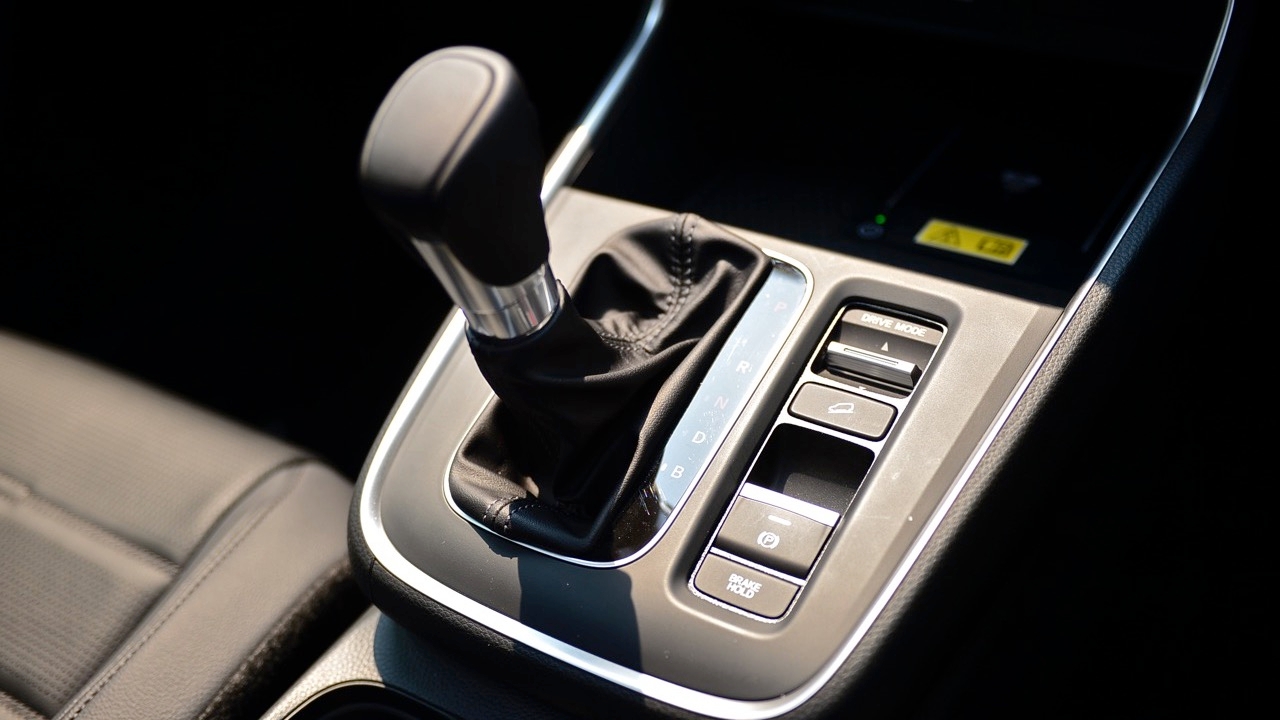
When stopped for a long time at a traffic light in an automatic car, whether to keep the gear in D (Drive) or switch to N (Neutral) while pulling the handbrake has been a frequent topic of debate among automatic transmission users. From an automotive engineering perspective, the rationale and recommendations depend on the vehicle's mechanical design, as explained below.

Case 1: For short stops at red lights of no more than 1-2 minutes, it is recommended to keep the gear in D and press the brake. The engineering reason is that traditional automatic transmissions with torque converters are designed to handle idling in D. The transmission fluid pressure circulates steadily inside the torque converter, so keeping the gear in D for a short time does not cause serious damage to the transmission mechanism.
The advantage is that it prevents the solenoid valves and clutch plates inside the transmission from engaging and disengaging too frequently without need, which helps reduce long-term wear on the gear-shifting mechanism.
A caution is to ensure your foot firmly presses the brake pedal to prevent the car from rolling forward and hitting the vehicle ahead.

Case 2: For long red lights lasting more than 2-3 minutes, it is advised to shift to Neutral (N) and apply the handbrake. From safety and comfort perspectives, shifting to N fully disengages the drive from the drivetrain, allowing the driver to relax their foot from the brake pedal during extended stops, while the handbrake prevents the car from rolling due to inertia or sloped surfaces.
Regarding temperature reduction and fuel savings, when the car is stopped in gear D, the engine still bears load from the drivetrain trying to move the vehicle forward, causing rapid heat buildup in the transmission fluid (ATF). Shifting to N reduces engine load, lowers gear chamber temperature, and slightly reduces fuel consumption at idle.

A warning: When the light turns green and the car begins to move, the vehicle should be fully stopped before shifting back to D. Wait approximately 0.5 to 1 second for the transmission to fully engage before pressing the accelerator to avoid gear jerking caused by sudden hydraulic pressure surges.
Modern automotive technologies like Auto Brake Hold and Auto Start-Stop systems have changed driver behavior. These features alter how drivers manage gear selection during stops.

With Auto Brake Hold, once the vehicle stops completely, the system automatically maintains brake pressure, allowing the driver to release the brake pedal without shifting out of D. To move again, simply press the accelerator lightly, and the brakes release immediately, eliminating the need to shift gears during stops. Auto Start-Stop shuts off the engine temporarily during complete stops to save fuel, while air conditioning and electrical systems continue operating. This system works most smoothly when the gear is kept in D and the brake is applied or Auto Hold is activated.