

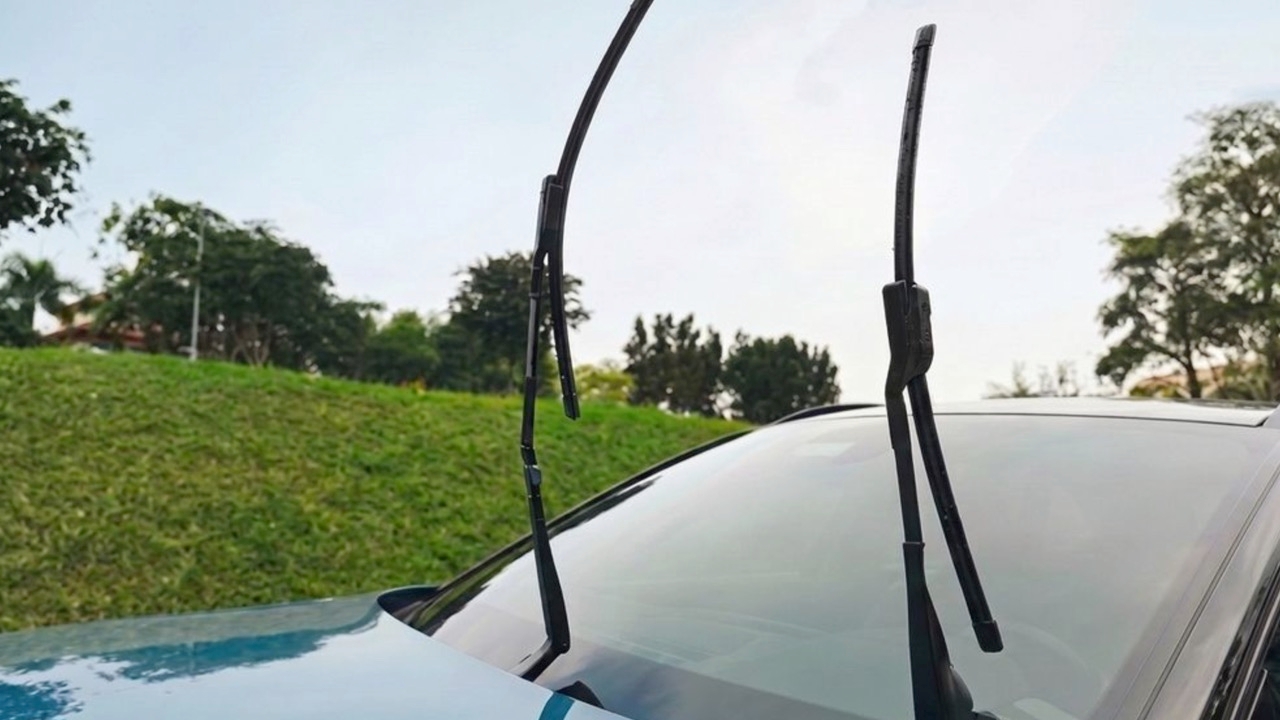
Raising the windshield wiper arms when parking in direct sunlight has long been a debated topic among drivers. To answer directly: it only slightly helps preserve the wiper rubber, but often it’s not worth the trouble and is unnecessary.


Raising the wiper arms has both advantages in terms of heat dissipation and disadvantages that affect other vehicle mechanisms.
1. The benefit and reason people do this is that it reduces heat buildup on the rubber edges. The windshield glass can reach very high temperatures from sunlight (up to 60–70°C on a hot day). When the wiper rubber rests against the glass, heat transfers directly to the rubber. Raising the arm reduces contact with the hot glass, preventing the rubber from deforming, twisting, or flattening under pressure when softened by heat. It also prevents the rubber from sticking firmly to the glass: in some cases, after prolonged sun exposure combined with dust or chemical residues, the rubber may melt or adhere to the glass, risking tearing when the wipers are used again.


2. The disadvantages and why experts do not recommend raising wiper arms in hot sun when parking outdoors: the wiper arm springs deteriorate, making it not worth the risk. There is a spring under the wiper arm that presses the blade firmly against the glass to wipe water effectively. Leaving the arm raised for long periods stretches the spring continuously. When the spring weakens, the pressure decreases, resulting in poor wiping performance—water is not cleaned properly, or the wipers flutter. Replacing the arm and spring mechanism costs much more than just replacing the wiper rubber.

Heat in the air still causes rubber deterioration regardless.
Wiper blades are made from synthetic or natural rubber, whose main enemies are UV rays and atmospheric heat. Even if the arm is raised, the rubber is still exposed to sun and UV radiation, which breaks down its molecular structure, causing it to dry out, harden, and become brittle over time.

Risk of windshield damage from accidents.
If strong winds blow, children play, or someone accidentally bumps the raised wiper arm, it may snap back forcefully against the windshield. Since the arm is metal without rubber cushioning, it could crack or shatter the glass.
Proper recommendations and care.
Leave the wiper arms down as usual to maintain spring pressure. Replace the rubber according to its lifespan—usually 1 to 2 years or one rainy season. If wiping is ineffective, noisy, or leaves streaks, replace the rubber seals or the entire blade assembly; these are relatively inexpensive. For cleaning, regularly wipe the rubber edges and windshield with a damp cloth to remove dust, oil, or leaf debris. This helps extend the wiper's life and reduces glass scratching better than raising the arms to avoid sun exposure.