

Honda is advancing the expansion of its production base in Thailand from the current 6 models with an annual capacity of 110,000 units to a target of 8 models and 150,000 units by 2029, anticipating an investment of no less than 12 billion baht. The company appeals to the government to consider equalizing import taxes so it can offer more choices and present vehicles at prices more accessible to consumers.
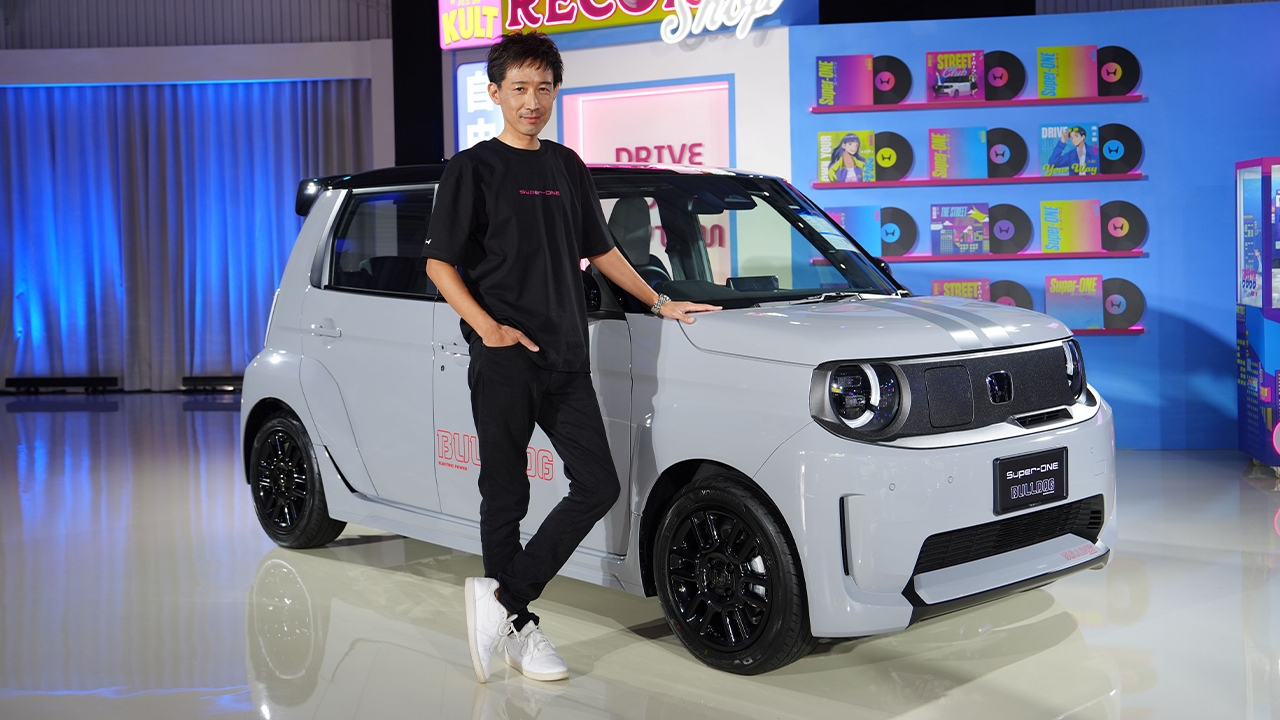
On 14 Aug 2026 GMT+7, Koji Iwanami, President and CEO of Honda Automobile (Thailand) Co., Ltd., said Honda has imported approximately 30 units of the new small electric vehicle model, Honda Super-ONE, into Thailand to gauge consumer interest and response, as this vehicle segment is new for the company in the Thai market.
"Importing this initial limited batch serves as a market test before evaluating the feasibility of long-term marketing, including strategies to expand product options suited to Thai consumer needs."
However, a key obstacle is the import tax on conventional vehicles (non-electric), currently around 80%, which causes some popular models in Japan, such as Jazz, Fit, or Stepwagon, to be priced high when imported into Thailand.
Therefore, Honda is in discussions with government authorities about the possibility of reducing import taxes to enable the company to increase options and offer vehicles at more affordable prices for consumers.
Another important issue is the excise tax criteria for hybrid vehicles. Honda and five other Japanese car manufacturers are jointly discussing with the government the new regulations that require a greater proportion of key parts to be used or produced domestically.
Honda supports the approach to increase the use of local parts; however, since the company’s vehicle development plans and model update cycles are clearly predetermined, it may not be possible to immediately adjust production lines to comply with the new criteria.
The company has therefore proposed that the government consider extending the implementation period to allow manufacturers time to prepare. Honda plans to produce the power unit—which includes engines and motors for the new generation of hybrid vehicles—in Thailand. Without this extension, current hybrid models may face higher excise taxes, leading to increased prices that would make such technology less accessible to consumers.
Market outlook sees decline in ICE but growth in hybrid and EV segments.
Regarding market trends, Honda assesses that sales of internal combustion engine (ICE) vehicles will gradually decline, while hybrid and electric vehicles are expected to continue growing steadily. The company aims that within five years, Honda vehicles will increasingly transition to smart cars equipped with new-generation hybrid drive systems to meet market demand and environmental goals.
However, Honda acknowledges that the entry of Chinese automakers has significantly altered competition in Thailand, especially consumer expectations regarding technology, features, and price. The company is studying how Chinese manufacturers manage to keep electric vehicle costs low, largely due to strong supply chains and control over raw materials.
Meanwhile, Japanese manufacturers have begun discussions on sharing certain raw materials and parts, or Common Parts, to reduce costs and enhance competitiveness.
Concerns over incomplete battery management systems for used batteries.
Koji also expressed concerns about the electric vehicle ecosystem in Thailand, particularly the management of batteries after their lifecycle ends, including reuse, adaptation for buildings, and recycling raw materials back into production processes.
Honda has been studying and researching this technology with institutions in the United States for over 10 years and has expertise in dismantling lithium-ion battery components. However, hybrid vehicle battery management differs in detail, and some parts must be returned to factories for proper and safe disassembly.

Honda’s Prachinburi factory still operating at full capacity.
Currently, Honda’s factory in Prachinburi province produces 6 vehicle models with a capacity of about 110,000 units per year. The company aims to increase this to 8 models and expand capacity to 150,000 units per year by 2029.
Adding two new models and upgrading production lines to support all 8 models is expected to require an investment of no less than 12 billion baht, averaging about 6 billion baht per model.
Beyond production line investments, Honda plans to adjust working patterns and shift numbers to align with demand while integrating modern technology to improve quality and shorten delivery times to customers.
Exports from Thailand reach over 70 countries.
Currently, Honda exports about 35,000 completely built-up (CBU) vehicles annually from Thailand to roughly 70 countries. Meanwhile, parts exported for assembly (CKD) serve about 13 countries, with some market overlaps.
Key exported models include the Honda HR-V and Honda CR-V, with similar export volumes. The plan to increase models produced in Thailand to 8 and raise capacity to 150,000 units by 2029 reflects Honda’s continued commitment to Thailand as a production hub despite challenges such as Chinese competition, technology transitions, new tax conditions, and economic volatility.
Emphasizing AI support for workers with no plans for staff reduction.
Although Honda is increasingly implementing machinery, automation, and AI in its factories, the company affirms no plans to reduce employee numbers. These technologies will support routine or repetitive tasks, enabling workers to focus more on creative thinking, analysis, and production process development. The goal is to enhance efficiency without sacrificing product quality while speeding up production and delivery to meet market demand.
Strong baht and household debt pose major challenges for Thailand’s car market.
Regarding economic factors, Koji noted that the continuously strong baht is affecting export competitiveness by raising the price of vehicles produced in Thailand when sold abroad, especially in neighboring countries.
The company believes exchange rates need appropriate management to maintain Thailand’s competitiveness as a vehicle production and export hub. Meanwhile, high household debt directly impacts purchasing power and credit accessibility, requiring manufacturers to develop and price vehicles suitably for consumers’ affordability.
Honda maintains its sales target in Thailand at 76,000 units and estimates the total vehicle market at about 663,500 units, a decline of around 5% from the previous year.