

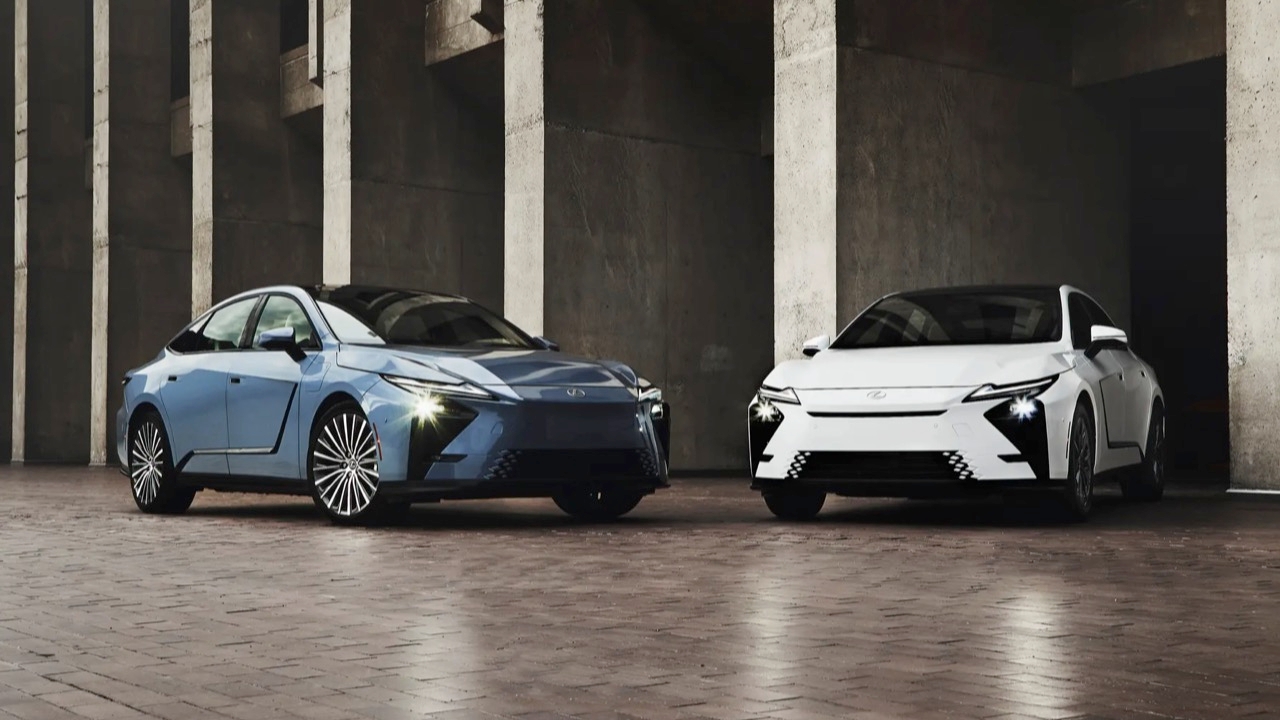
This is actually the eighth generation of the Lexus ES, tracing back to the original ES model launched alongside the flagship LS in 1989. For luxury car buyers, many are not deeply versed in automotive history due to its mix of interesting and tedious details.


What's new in the 2026 ES?
The exterior lines have been refined to create a more aggressive and dimensional shape. Lexus states that the New ES design draws inspiration from the 2023 LF-ZC concept car. The previously large grille has been downsized and replaced with a new design philosophy called Spindle Body, featuring lines extending from the lower front bumper up to the hood. The Split Lighting Setup headlights include LED daytime running lights positioned above and sharp L-shaped turn signals below, all operating automatically. Among Japanese brands, Lexus’s automatic lighting system performs on par with luxury European brands in responsiveness, road illumination in dark areas, and avoiding glare for oncoming or leading vehicles.


On the side, the door handles are designed to blend seamlessly with the body in a semi-flush style, complemented by sharp creases and a fastback roofline sloping toward the rear. The taillights feature a continuous lightbar emphasizing elegance, following a modern trend where rear light strips connect both sides to give the car a contemporary look.
In Thailand, two powertrain options are offered: hybrid and pure electric. The Lexus New ES Electric appears to have more features than the hybrid version. Notably, it is not built on a dedicated electric vehicle platform but adapts the GA-K platform used by the Toyota RAV4 and Camry, modified for electric use.
Pricing of The All-New Lexus ES
ES 350e Premium – priced at 3,290,000 baht
ES 350h Grand Luxury – priced at 3,890,000 baht

The Lexus ES 350e Electric is equipped with a usable 76.96 kWh battery, front-wheel drive via a single electric motor delivering 221 hp. It accelerates from 0-100 km/h in 8.0 seconds and offers a maximum driving range of 620 kilometers (WLTP standard). Real-world range drops by about 100 kilometers, making around 500 kilometers practical for daily use. Although its performance trails some European electric brands, the ES retains a loyal customer base unwilling to switch to other luxury brands, willing to pay around 3 million baht for this new model. However, this loyal group is quite small, and the higher price contributes to Lexus’s relatively modest sales in Thailand.

The Lexus New ES350h hybrid combines HEV and BEV powertrains. The HEV system uses a 2.5-liter inline 4-cylinder gasoline engine (A25A-FX, 6th generation), front-wheel drive, producing 247 hp. The hybrid battery is an air-cooled lithium-ion type, achieving fuel consumption of 22.72 km per liter (according to the ECO Sticker).


Choosing the 21-inch alloy wheel option reduces driving range to 524 kilometers. The car supports AC charging up to 22 kW and DC fast charging up to 150 kW. Globally, there is also an AWD version offering 337 hp, appealing to affluent drivers who prefer powerful, fast vehicles.


Overall, the interior follows current trends with a touchscreen infotainment system that requires some adaptation time, and a reduction of physical control buttons, although shortcut strips are discreetly placed on the console for convenience.
A notable Lexus hallmark is the tasteful use of Bamboo Trim for decoration. The seats are designed with thinner backrests to increase cabin space, and the steering wheel features a slimmer grip with precise tactile buttons for improved control.


Of course, this market segment is dominated firmly by German brands with strong performance. Lexus prices the ES to compete directly with the BMW i5, Audi A5 e-tron Sportback, and Mercedes-Benz EQE. The latter is about to be replaced by an electric E-Class with a more traditional sedan shape, signaling the end of the era of the star brand’s smooth EV designs. There is also a Scandinavian alternative, the Volvo ES90, which is slightly less expensive and awaits comparison.

For those seeking alternatives to German luxury electric sedans, the Volvo ES90 seems a more fitting choice. The Lexus ES 350e lacks sharp driving dynamics and importantly, its electric range remains noticeably behind key competitors in the market.


The Mark Levinson PurePlay Surround Sound system in the Lexus ES (2026) highlights acoustic engineering designed specifically for modern cabin environments.
Speaker quantity and arrangement (17 speakers, 12 channels)
This system includes 17 speakers strategically placed to create realistic, immersive surround sound:
Front console (3 positions): Unity™ coaxial speakers combining midrange and tweeter components, aimed at the windshield to raise the soundstage to eye level.
Front door panels (4 positions): large woofers installed low on the doors (2 per side) and tweeters mounted on the A-pillars (2 per side).
Rear door panels (4 positions): separate woofers and tweeters, two per side.
Rear parcel shelf (5 positions): surround sound speakers left and right, a central midrange speaker, and a large subwoofer.
Subwoofer (1 position): rear-facing subwoofer dedicated to low-frequency sounds.
2. Power output and amplifier system
Total output of 1,800 watts (Class-D amplifier).
Energy efficiency is achieved using a high-efficiency amplifier technology that reduces electrical consumption while delivering a wide dynamic range and fast musical response without excessive heat buildup.
3. Key audio technologies
Mark Levinson PurePlay employs a high-end headphone-like speaker layout, placing ear-level speakers symmetrically throughout the cabin to synchronize sound waves reaching the listener, reducing phase distortion and creating a wide, deep, realistic soundstage.
Clari-Fi 2.0 (Digital Audio Restoration) is an algorithm that restores compressed digital audio files (e.g., MP3s or Bluetooth/Spotify streams) by replenishing lost dynamics and frequency ranges, resulting in clarity closer to the original studio master.
QuantumLogic Surround (QLS) processes surround sound by separating musical elements (instruments, vocals, room reverberation) in real time and remixing them naturally across the cabin's speaker channels.
Sound character
The ES’s new audio setup emphasizes neutrality and balance. The sound is clean and open, with deep, soft bass that avoids boominess. Vocals sound highly realistic, making it ideal for jazz, acoustic, classical, or high-resolution music files.


Performance figures and charging evoke a sense of being limited by the front-wheel-drive platform originally designed for internal combustion engine vehicles, not as a dedicated EV. However, the interior excels with refined materials, soft genuine leather, and impressively spacious rear legroom. In summary, the Lexus ES is most enjoyable when experienced as both driver and rear passenger, but driving the new Lexus is recommended over simply sitting in the back scrolling on a phone as an executive passenger.