

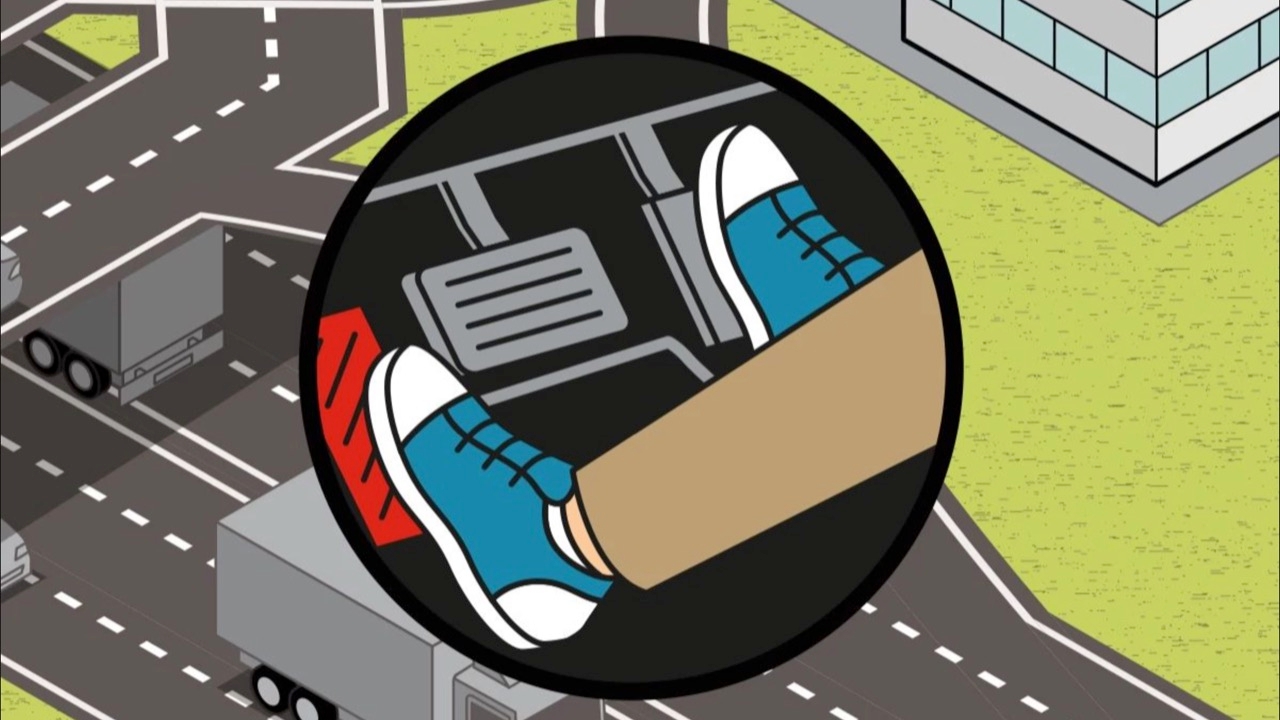
The leftmost footrest pedal is where your left foot rests while your right foot operates the accelerator and brake. Drivers of automatic cars often notice it once when buying a new car, then forget its purpose beyond just a place to rest the left foot—which seems useless unless you drive a McLaren and practice left-foot braking. Interestingly, this footrest, called the Dead Pedal or Left Footrest in English, plays an important role. It is thoughtfully designed for comfort during long resting periods and to help drivers maintain stable control, especially on rough roads, in stop-and-go traffic, or when braking hard or suddenly.


This small detail can quickly change your perception of a car. The footrest might seem useless; it doesn’t make the car faster or fix bad driving habits. But in automatic cars, the left footrest provides a solid anchor point for the driver’s body, allowing smooth control of the accelerator and brake pedals. This smoothness makes driving easier, even in heavy traffic or at high speeds on the highway.

The footrest acts as an assistant that seems unhelpful at first. Certainly, it adds comfort but also improves vehicle control by preventing the left foot from swinging aimlessly. It avoids accidental pedal presses and helps the driver brace against impacts without tensing the whole body like riding bumper cars at an amusement park. When slowing down, the body tends to lunge forward, and when cornering fast, it may slide sideways. The footrest is positioned so the left foot can push firmly to stabilize the body—unless driving recklessly into turns. It’s not a crucial function but helps keep the body firmly anchored.

The footrest is a fixed pedal located at the far left, next to the clutch pedal in manual cars or beside the brake in automatics. It’s designed to be stationary, not connected to the engine or braking system, which is why it’s called the "Dead Pedal." Despite the seemingly useless name, it is specifically meant to support the left foot.

In automatic cars, the right foot switches between accelerator and brake, while the left foot has no direct role. In manual cars, the left foot operates the clutch occasionally. The footrest provides a place for the left foot to rest, helping position the driver ergonomically, reduce fatigue, and keep the foot steady.
Early cars lacked footrests, but as vehicle performance, speed, tire grip, and traffic density increased, drivers needed a stable anchor point to prevent sliding on the seat during turns. Thus, the footrest became essential in modern cars.

The angle of the footrest is important; a flat surface cannot replace the carefully calculated tilt. The correct angle lets the foot rest naturally without strain or bending the ankle for long periods, reducing fatigue during traffic jams. I tested some cars without footrests, and just driving to Khlong Khon made my left foot tired before reaching Cha-Am.

The footrest’s role is to act as a brace. When you place your left foot on it and apply slight pressure, your upper body and hips are locked firmly against the seat, reducing forward sway or sideways sliding.
It reduces arm tension. With the body held securely, the arms and hands don’t need to grip the steering wheel tightly, resulting in smoother and more precise steering.
It decreases corrective steering. During tight turns or sudden lane changes, if the body isn’t properly braced by the footrest, centrifugal force causes the driver to lean, which can unintentionally pull the steering wheel at the wrong moment. Using the left foot to stabilize helps wrists steer more effectively.
It prevents the right foot from swinging. Bracing with the left foot keeps the torso steady over rough roads, reducing the chance that the right foot will accidentally jerk the accelerator due to bumps.


Comfort aids concentration and good driving habits. Comfort isn’t just for relaxation but helps the driver stay focused and respond quickly. A tired leg causes constant shifting, which leads to mental fatigue. This results in discomfort and muscle pain on long drives.
It prevents clutch riding (in manual cars). Having an easy-to-reach footrest discourages the habit of resting the foot on the clutch pedal or keeping it hovering unintentionally, which causes premature clutch wear.
It encourages natural posture (in automatic cars), keeping the left knee at a proper angle without bending or holding it awkwardly.
Seat adjustment: the correct position is when placing the foot on the footrest results in a slight bend in the knee. If the leg is too straight, the seat is too far back; if the knee is too spread, the seat is too close.

In emergencies requiring sudden braking, having a left foot anchor helps prevent the body from pitching forward. This allows the right foot to press the brake fully and accurately, avoiding pedal confusion since the left foot has a clear resting place and does not obstruct or interfere with the brake pedal.
Left-foot braking is a racing technique but is difficult and risky on public roads. For everyday driving, assigning the right foot for accelerator and brake and the left foot resting on the footrest is the safest and most stable method.

The area under the steering wheel around the brake, accelerator, and footrest pedals has always been a focus in automotive engineering. Safety structures are designed based on crash research regarding front impacts and leg injuries, showing that pedal movement and floor design directly affect ankle and leg injuries.
In reality, the footrest alone isn’t a safety device in collisions but part of the structural design to manage force direction and distribution. It also helps drivers maintain proper posture, enabling seat belts and airbags to function at their best.

Precautions
Foot movement (manual cars): Practice the sequence—press clutch, shift gears, then return the foot to the footrest—to develop a good habit.
Wet or thick-soled shoes may cause the foot to slip off the footrest when applying pressure.
When test-driving new or used cars, check that the footrest is wide enough, angled properly for the ankle, and has a non-slip surface. Cars with well-designed footrest positions let drivers relax their left foot completely during trips.