

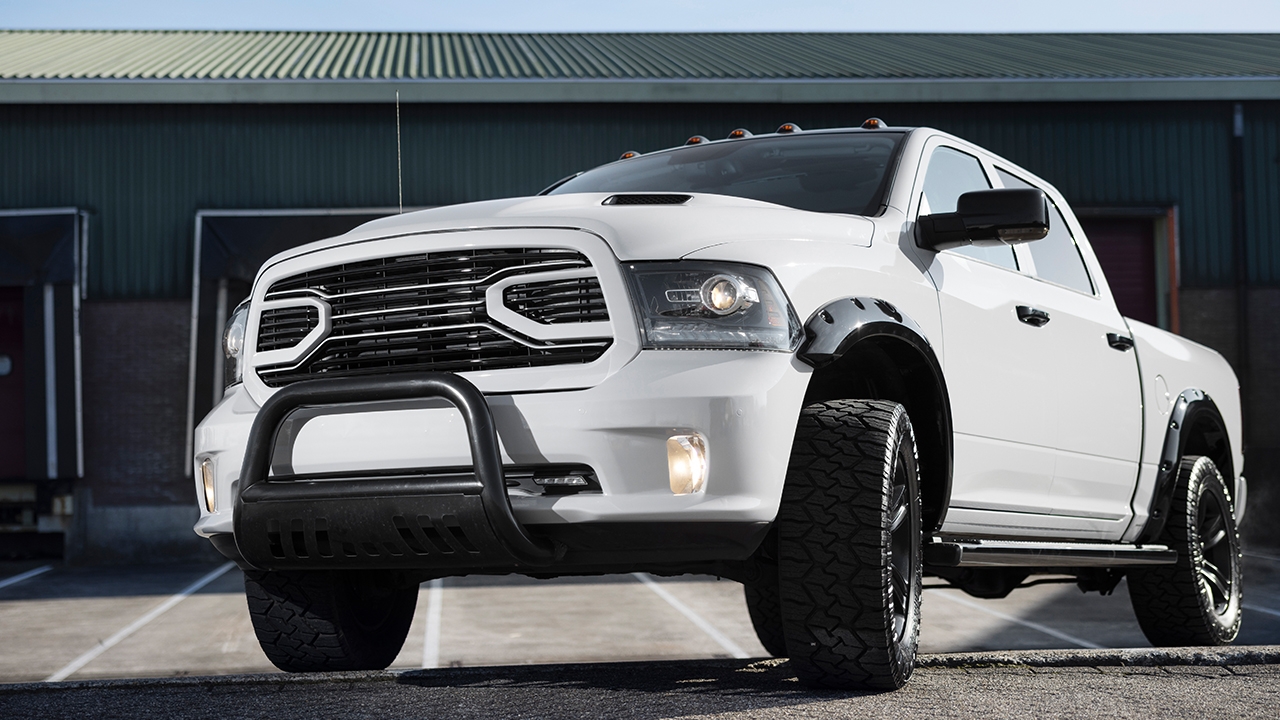
The Federation of Thai Industries (FTI) has signaled the government to urgently implement measures to stimulate the pick-up truck market and enhance credit access after domestic sales have contracted, while exports to the Middle East have declined, affecting over 2,500 parts manufacturers and more than 800,000 workers. The FTI is also awaiting clarity on imported vehicle tax adjustments to ensure fairness for investors manufacturing in Thailand.
On 27 Oct 2023 GMT+7, Mr. Suwat Supakarndejakul, Vice Chairman of the Federation of Thai Industries (FTI) and Chairman of the Automotive Industry Group, revealed that Thailand's automotive industry continues to face pressure from the persistent contraction in the pick-up truck market—especially trucks used by farmers, traders, and vendors—impacted by tighter credit lending policies.
The Automotive Industry Group expects the government to urgently and concretely implement market stimulation measures, particularly for pick-up trucks, which serve as the Product Champion, or main product, of Thailand's automotive industry.
Over the past nine months, the automotive industry saw positive growth in domestic production and sales, while exports declined. Domestic vehicle sales reached approximately 521,000 units.
Mr. Suwat stated that the pick-up truck market crisis has caused ripple effects throughout the automotive supply chain, involving over 2,500 operators and employing more than 800,000 people. Production of combustion engine pick-up truck parts made domestically—with about 90% local content—has fallen by over 300,000 units.
This has led many parts manufacturers, including those producing radiators, exhaust pipes, seats, air conditioners, glass, steel, and petrochemical products, to reduce output. The impact extends to showroom revenues, sales staff, financial institutions, and government tax revenue collection, all of which have declined.
Mr. Surapong Paisitpattanapong, Advisor to the Chairman of the Automotive Industry Group and FTI automotive spokesperson, said that sales of pick-up trucks and double-cab trucks have dropped 11.50% and 4.95%, respectively, due to tighter lending by financial institutions. Key factors include sluggish economic growth, weak SME incomes, and persistently high household debt.
Mr. Surapong said the FTI is proposing that the government assist pick-up truck production, which this year has also been affected by a drop in exports to the Middle East due to ongoing conflict for more than nine months.
Pick-up truck exports to the Middle East market, which exceeded 100,000 units last year, have decreased by 33,118 units, or 37.73%.
Therefore, the FTI urges the government to increase credit availability for domestic pick-up truck purchases compared to last year, helping to prevent production declines and enabling supply chain operators to maintain parts production and employment levels, potentially increasing jobs.
Mr. Surapong believes that if the economy grows and investment rises, the government will collect more tax revenue, while public debt, household debt, and non-performing loans will decrease, strengthening financial institutions.
"When the economy grows and investment increases, the government collects more taxes, public debt falls, household debt decreases, non-performing loans reduce, and financial institutions strengthen. This initiates economic growth that helps Thailand quickly transition from an upper-middle-income country to a developed and wealthy nation. All of this depends on the government leadership's ability, which many countries have shown can lead to greater or lesser national prosperity compared to others."
Mr. Suwat addressed the impact of the September 2023 floods, noting that many areas were affected, with some directly impacting automotive parts factories, such as Amata City Industrial Estate in Chonburi Province, where flooding was severe.
Although many vehicle assembly plants were not directly flooded, they had to temporarily halt production due to parts shortages, disrupted transport routes, and some employees being unable to commute.
However, the FTI estimates that the floods will not affect the 2026 vehicle production target, which remains at 1,450,000 units—comprising 900,000 units for export and 550,000 for domestic sales—as many factories have planned to accelerate production to meet the original schedule.
Additionally, the FTI is awaiting an official announcement regarding the excise tax restructuring for fully imported vehicles, viewing this adjustment as a means to ensure fairness for operators investing and manufacturing vehicles in Thailand.
At the same time, it signals that Thailand values long-term investment and aims to create added value within the country.
The FTI also calls on the government to fairly restructure excise taxes for manufacturers producing both internal combustion engine vehicles and electric vehicles, to protect and promote the growth of Thailand's automotive industry and maintain its role as a key global production and export base.