

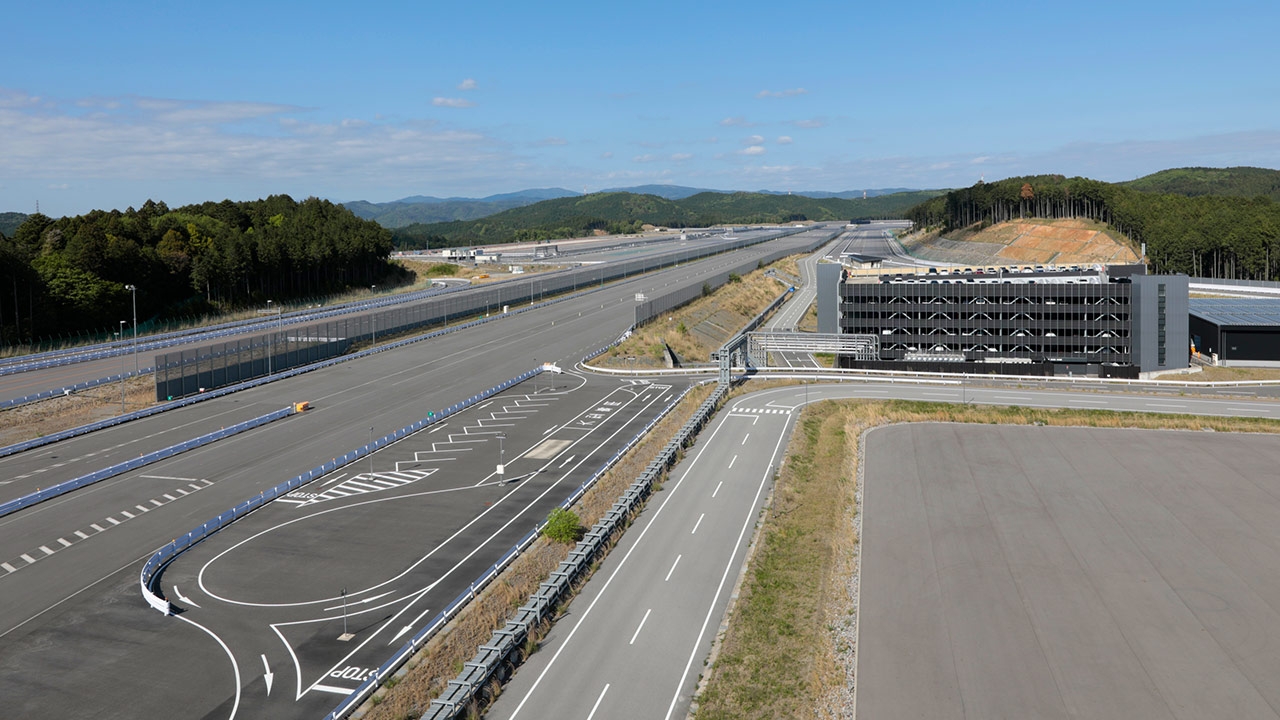
Toyota Technical Center Shimoyama is a mountain-based automotive development facility in Japan where Lexus and GR teams engage in real testing across more than 4,000 rai, while also focusing on electric vehicle development, environmental preservation, and community disaster assistance.
Before a car reaches the showroom, any mistakes found during development can be the most valuable lessons for its creators, and at Shimoyama, also known as Shimoyama, Toyota has built a place where problem detection, correction, and repeated testing can happen in close proximity.
For Toyota Technical Center Shimoyama, or TTC-S, located on mountainous terrain spanning Toyota City and Okazaki City in Aichi Prefecture, Japan, this site serves as the research and development base for Lexus and GR. It integrates test roads with the work of vehicle creators under the philosophy that roads refine both cars and developers.

the project began from the experience of Akio Toyoda, Toyota’s Executive Chairman who races under the name “Morizo,” aiming to bring the vehicle development approach used at Germany’s Nürburgring to Japan. The core idea is to push vehicles on challenging roads to uncover defects, analyze and fix them, then retest, so lessons from behind the wheel reach development teams quickly.

Construction of Toyota Technical Center Shimoyama began in April 2018, with the rural road test track opening in April 2019, followed by the eastern area in October 2021. Full operations started on 25 March 2024 after completion of the automotive development and western reception buildings. Thus, the center has been active for over two years, not newly opened in 2026. Investment totaled about 300 billion yen over 650.8 hectares (approximately 4,068 rai). As of May 2026, around 3,000 staff are employed.

a key feature of Shimoyama is the 5.3-kilometer Country Road track with a 75-meter elevation change. It uses natural terrain to create a test course with demanding curves and surfaces.
This track condenses key Nürburgring characteristics into a smaller scale to assess vehicle responses in complex conditions. Steering feel, body control, and vehicle reactions to driver inputs provide data that teams review alongside measured results.

The eastern area includes a high-speed track and specialized test courses simulating roads from various regions. A dirt route allows study of vehicle behavior under reduced grip, durability evaluation, and GR component development.
Testing to identify damage in this context aims to reveal improvement points during development before vehicles reach actual users.

Inside scenes shared by Toyota Times in May 2026 show the automotive development building’s layout—from the first-floor repair shop to second-floor offices and third-floor design studios—facilitating convenient collaboration among staff with different roles on the same vehicle.
During media visits, vehicles under Lexus development and the GR Yaris M Concept were present, with engineers and drivers discussing post-test results. This reflects the center as a real prototype workspace. The co-location of the two brands fosters knowledge exchange between Lexus’s focus on refinement and comfort and GR’s focus on driving enjoyment, with the shared goal of elevating vehicle quality.

the design area employs virtual reality and digital tools alongside full-scale clay models, because proportions, the feel of standing beside a car, and surface light reflections still require real-world assessment by the design team.
Shimoyama embodies a working method combining digital data with the skills of designers, clay modelers, engineers, and test drivers, so that numerical tools and human senses together guide vehicle development decisions.
a key event Toyota announced on 7 May 2026 was using TTC-S as the launch site for the new three-row battery electric SUV Lexus TZ, showcasing the vehicle development process within the center.
Toyota stated that the TZ was developed through testing and refinement at Shimoyama, where engineers, designers, technicians, and test drivers collaborated to polish performance and driving quality.
For automotive industry followers, this demonstrates that the real-road learning approach continues to apply to electric vehicles, which must satisfy both drivers and passengers alike.

the center's land includes 386.5 hectares (about 59%) of preserved forest and green areas and an additional 81.8 hectares (about 13%) of newly developed green space. These two categories differ.
Sustainability data released by Toyota in 2026 notes that approximately 385 hectares of TTC-S conservation area received certification from Japan's nature conservation management in September 2025, with activities including forest care, rice paddies, and satoyama landscapes—forested and agricultural zones near communities.

Additionally, a May 2026 event involved helicopter transport tests and disaster preparedness drills with Toyota City to address risks of mountain communities becoming isolated during natural disasters.
From identifying vehicle flaws to preparing community disaster response, Shimoyama demonstrates the growing importance of development connected with people, while the core value of testing remains: learn thoroughly and improve before delivering each vehicle model to customers.