

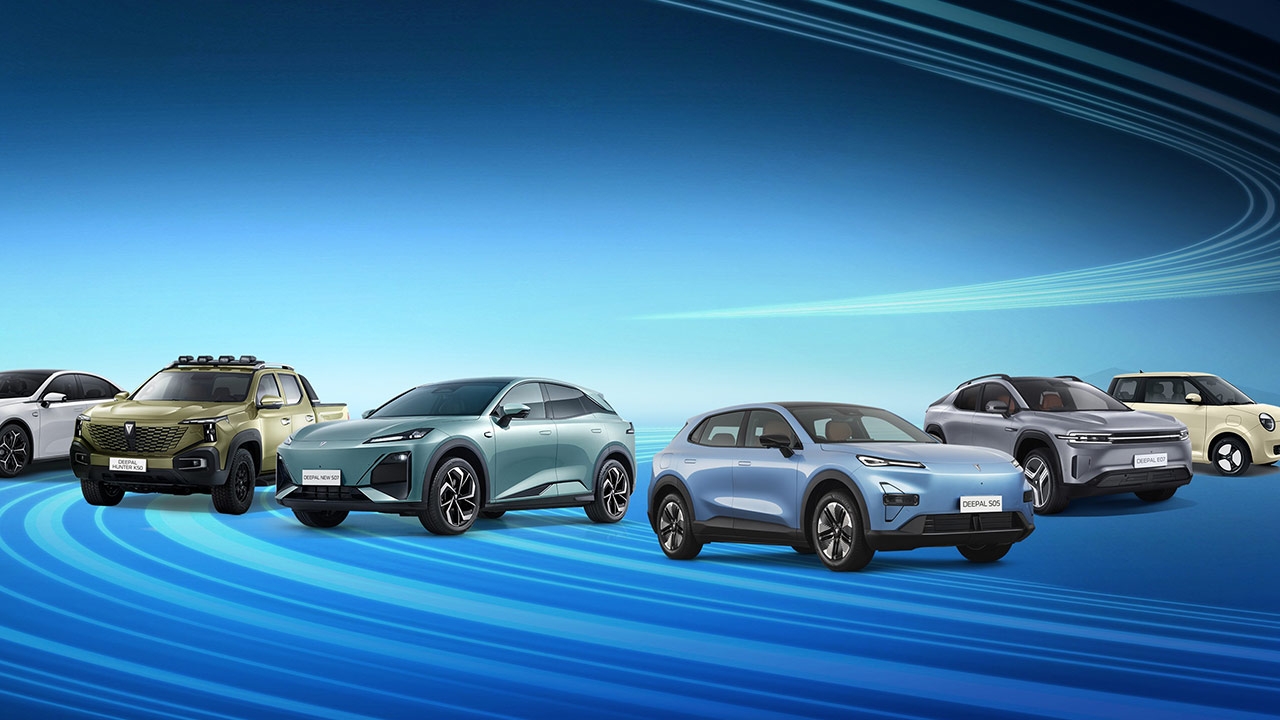
Changan addresses the pain point of expensive electric vehicle insurance by preparing to build a battery repair center in Thailand and plans to launch seven more EV models over the next three years.
Dr. Attawit Techawiboonwong, General Manager of Government Relations at Changan Thailand, said that Changan’s operational plan includes establishing a battery repair center for batteries, electric motors, and electric drive systems.
Previously, Changan Automobile completed its first after-sales technical support training center in Southeast Asia in 2024 to provide after-sales service training to personnel across Southeast Asian markets, including Thailand.
Moving forward, Changan will proceed with setting up the battery repair center to enhance EV repair capabilities in Thailand, reducing battery and electric drive system repair costs for customers, with prices expected to be about 90% cheaper than replacing the entire battery pack.

This will also shorten after-sales repair times, as complete battery packs currently need to be imported, usually taking about one month to arrive. After opening the battery repair service, many individual battery components will be stocked, allowing repairs within five days, excluding insurance appraisal time.
"The plan is to build two to three battery repair centers by 2026. All technicians will be certified by Changan China and CATL, significantly raising professional repair standards. The first repair center is expected to begin trial service in March 2026 and fully operate by July 2026. All of this will help reduce battery repair costs and further lower electric vehicle insurance premiums," he said.

Dr. Attawit added that Changan views Thailand as a global strategic base and is developing its Rayong factory into an international production hub. Currently, it has an annual production capacity of 100,000 units, serving the Thai market and exporting to Australia, New Zealand, Indonesia, Vietnam, Malaysia, Singapore, and Europe. Phase 2 is expected to be completed by 2030.
With a combined production capacity of 200,000 units, the strategic S05 model is already produced in Thailand. In 2026, a new entry-level new energy SUV model will be added, and in the future, two to three more models will be added to production. Plans also include establishing a battery production line to increase the share of locally produced parts.
"We align with the government's strategic direction on EV development, environmental conservation, and smart mobility. We focus not on short-term profits but on building brand reputation, market stability, and social value, as well as creating a highly efficient supply chain centered in Thailand, linking key ASEAN markets. We aim to increase local production share to a stable and complete system. By 2027, we target 70% local parts procurement worth over 3 billion baht, rising to 80% worth more than 6 billion baht by 2030," he said.

Dr. Attawit further stated that the market is expected to pass its toughest phase in 2026 and gradually return to growth, with annual registrations projected at 630,000 units, a 3% increase. Despite reduced EV support policies, superior product experience and operating costs compared to gasoline vehicles will continue to attract new consumers. EV adoption rate is expected to reach 24%, with over 150,000 EVs registered—more than 120,000 BEVs and nearly 30,000 PHEVs and REEVs.
By 2030, BEV adoption rate is expected to exceed 30%, achieving the Thai government's 30/30 target. Including PHEV/REEV, the rate will surpass 50%, aligning with global market trends. Thailand may reach this level faster than many countries.

Changan also plans to launch seven additional EV models in Thailand over the next three years. Since entering the Thai market, Changan has launched models including the S07, L07, E07, S05, HUNTER K50, LUMIN, and AVATR 11, focusing on supporting the transition from gasoline to electric vehicles.
Changan aims to be among the top three brands in Thailand by 2030. The market is expected to pass its most challenging phase in 2026 and grow slowly thereafter, with annual registrations projected at 630,000 units, a 3% increase. Despite reduced EV support policies, superior product experience and operating costs compared to gasoline vehicles will continue to attract new consumers.