

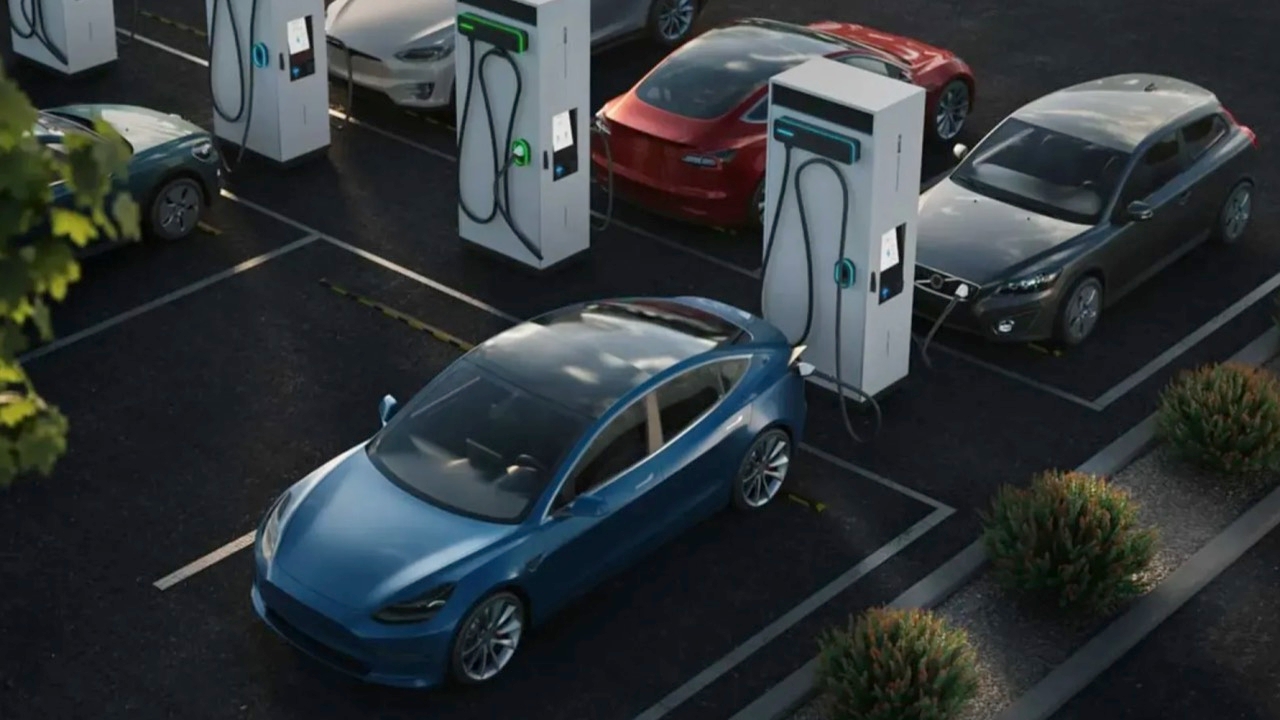
The problem of full or long queues at electric vehicle (EV) charging points during the Songkran festival is a major challenge caused by an imbalance between the "number of vehicles" and the "distribution capacity of charging stations" at a time when everyone travels simultaneously.
An analysis of causes and solutions at both structural and individual levels.

Causes of the problem.
EV charging points tend to cluster along main routes. A large number of vehicles depart from Bangkok to the North and Northeast simultaneously, especially those aiming to save on fuel costs amid high oil prices. Many EVs travel north, south, and northeast at the same time, overloading charging stations on main roads (such as the Asian Highway or Mittraphap Road). Some vehicles arrive as early as 10 a.m. but only get to charge around 2 p.m., waiting in the intense heat. Even on main routes, EV charging stations at service areas become packed. Meanwhile, stations in towns or secondary routes are also filled with EVs waiting anxiously for their turn to charge.
Charging behavior: Many users choose to charge up to 100%, but charging from 80% to 100% takes much longer due to reduced charging speed (charging curve), leading to unnecessary occupation of charging points.
Charging station performance decreases when multiple chargers are used simultaneously at one station. Each vehicle draws current separately, and combined with hot weather unfavorable to batteries, the power is shared (load balancing), causing slower charging than specified.

Although problems such as gasoline vehicles parking diagonally or occupying EV spots, and EV owners not moving cars after full charge, have somewhat decreased, there are still inconsiderate individuals who park anywhere without care for society. Some occupy charging spots long after reaching 80% charge, when they could continue their journey and free the spot. Arriving at such scenes almost leads to conflicts. Such selfish behavior is typical in Thailand. There should be education from childhood about social responsibility and consideration for others rather than selfishness.
The issue of full or long queues at EV charging points during Songkran is a major challenge caused by an imbalance between the number of vehicles and the distribution capacity of charging stations at a time when everyone travels simultaneously.

Charging behavior: Many users choose to charge to 100%, and the 80-100% range takes much longer due to reduced charging speed, causing unnecessary occupation of chargers. When multiple chargers are used simultaneously at one station, charging speed drops because power is shared (load balancing), resulting in slower charging than the specifications.
Strategic planning can save a lot of time: charge just enough to reach the next stop, around 80%, avoiding waiting to reach 100%. Focus on charging between 10-80%, the fastest range, then proceed to the next station to continue charging, which saves more time. Choose alternative stations such as those at hotels, shopping malls, or car showrooms located 5-10 km off main roads; these tend to be less crowded than big gas station chargers. Make advance reservations using app features and have backup apps from various providers (e.g., PEA VOLTA, EleX by EGAT, MG Super Charge, Evolt).
Traveling outside peak times helps. If possible, depart one day before or after peak periods, or travel at night when cooler temperatures improve battery cooling systems and allow faster charging, thus reducing problems significantly.


Structural solutions (Systemic Solutions).
Increasing energy capacity by installing Battery Energy Storage Systems at stations to supply high power during peak times without relying solely on transformers. Enforcing fines for overstaying: strictly applying fees to vehicles that remain parked after charging is complete to improve turnover rates.
Mobile EV Chargers: During festivals, providers should deploy mobile charging units or mobile chargers to standby at crisis rest stops. Implement accurate real-time reservation systems with data sharing among providers (roaming) so users can see available chargers nationwide in a single app, along with fair queue management systems.