

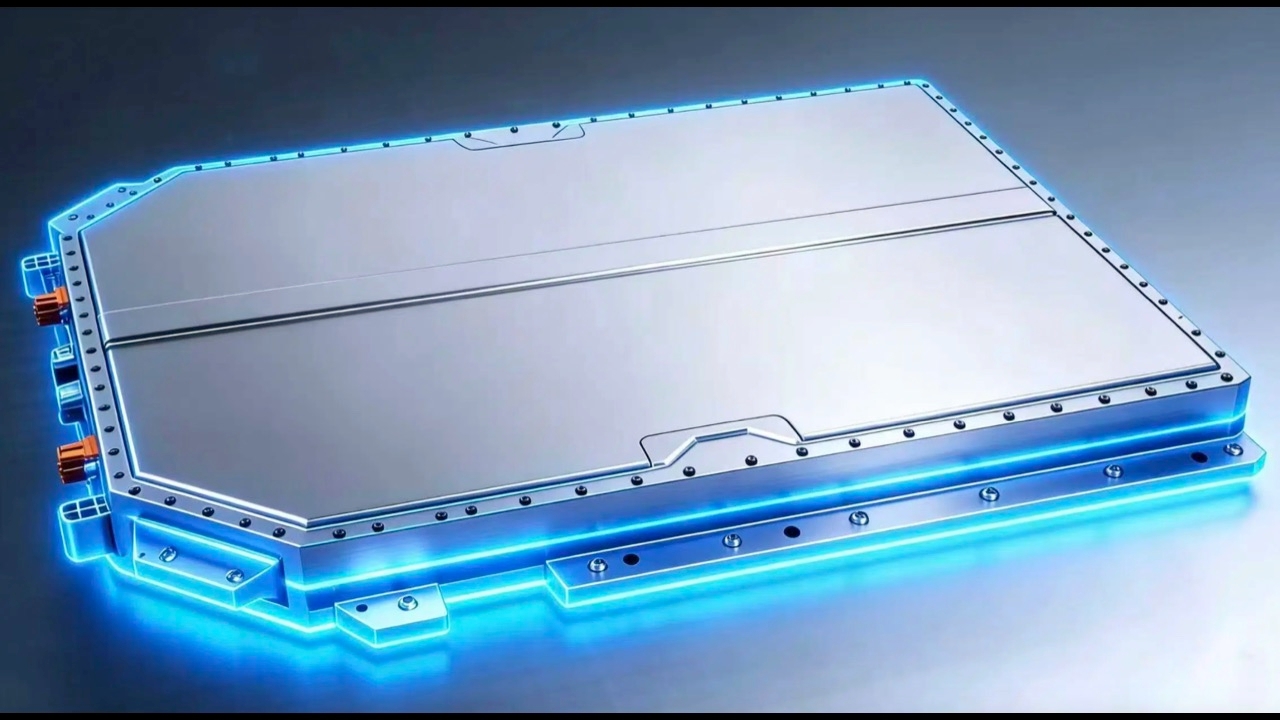
Changan's solid-state battery, featuring an energy density of 400 Wh/kg, is considered a "leap" in technology set to transform the future standards of electric vehicles. Key details are as follows:

What does an energy density of 400 Wh/kg mean?
Current lithium-ion batteries used in typical EVs have an energy density of about 200–300 Wh/kg. Increasing to 400 Wh/kg means that, for the same battery weight, Changan’s vehicles can travel much farther (potentially over 1,000 kilometers per charge). The lighter weight also improves energy consumption; for the same driving range, the battery can be smaller and lighter, enhancing vehicle performance and energy efficiency.

Why use solid-state batteries?
They use a solid electrolyte instead of the liquid electrolyte found in conventional batteries, which is flammable and prone to explosion if short-circuited. Solid-state batteries are non-flammable and more resistant to extreme temperatures. This new type charges faster, supports ultra-fast charging, and lasts longer. The technology enables efficient ion movement, reduces heat build-up during charging, and prevents rapid battery degradation.


Implementation plan
In 2026, testing and verification of battery installation and usage in actual vehicles will begin.
In 2027, full-scale mass production will commence.
This battery will allow Changan’s electric vehicles to travel farther, be safer without risk of explosion, and charge much faster, with market availability expected starting next year.
The chemical mechanism of Solid-state Battery (SSB) is fundamentally similar to liquid electrolyte lithium-ion batteries, involving lithium ion (Li+) movement between positive and negative electrodes, but differs significantly in the electrolyte medium and surface reactions.

Replacing liquid with solid electrolyte: In regular batteries, lithium ions swim through flammable liquid, but in solid-state batteries, the solid electrolyte consists of ceramics, solid polymers, or sulfide glass. The ions don't "swim" but "hop" through gaps in the crystal structure of the solid material to move from one electrode to the other.
Use of Lithium Metal anode (the core of 400 Wh/kg energy): Traditional batteries use graphite to encase lithium for safety, but solid-state batteries rely on the mechanical strength of the solid electrolyte to block dendrites—sharp lithium crystals that can pierce separators and cause fires in liquid batteries. This chemical advantage allows direct use of pure lithium as the anode, which has much higher energy density than graphite.


Chemical challenges Changan and partners must overcome: Because it involves solid-to-solid contact, ion movement across interfaces is more difficult than in liquid electrolytes. Changan applies Separator-free technology and nanoscale surface coatings to ensure tight contact between electrodes and solid electrolyte, minimizing chemical resistance.
Thanks to this highly stable chemical structure, Changan’s battery can withstand temperatures above 100°C without triggering thermal runaway reactions that cause explosions, which is the critical limitation of current liquid batteries.
Current solid electrolyte materials fall into three main families, each with distinct chemical characteristics affecting EV performance.
Oxide-based group: ceramic materials such as LLTO or LLZO.
Advantages: Highly stable, excellent heat and chemical resistance, non-flammable and explosion-proof, mechanically strong to prevent dendrite penetration.
Disadvantages: Brittle like tiles, making large-scale manufacturing difficult; high interfacial resistance due to hardness makes achieving tight contact with electrodes challenging.
Sulfide-based group: materials favored by Japanese and Chinese automakers (including Changan) to address drawbacks of traditional batteries.
Advantages: Excellent ion conductivity comparable or superior to liquid electrolytes, enabling very fast charging; flexible and softer than oxides, allowing better electrode contact and lower internal resistance.
Disadvantages: Highly sensitive to moisture; even slight exposure causes hydrogen sulfide gas formation, which is toxic and foul-smelling, requiring production in high-quality dry rooms.
Advantages: Easy to produce, adaptable to existing liquid lithium-ion battery manufacturing equipment, highly flexible and resistant to twisting and shocks.
Disadvantages: Low ion conductivity; usually requires preheating the battery to 60-80°C for optimal performance, making it less suitable for cold climates or immediate vehicle start.
Initially, the new batteries are expected to be more expensive. Changan plans to begin mass production in 2027. Solid-state battery prices remain high due to costly raw materials like high-grade sulfide or oxide chemicals and the need for new manufacturing facilities with precise humidity and environment control, especially for sulfide types requiring special dry rooms. Early production volumes will be lower than conventional lithium-ion batteries.