

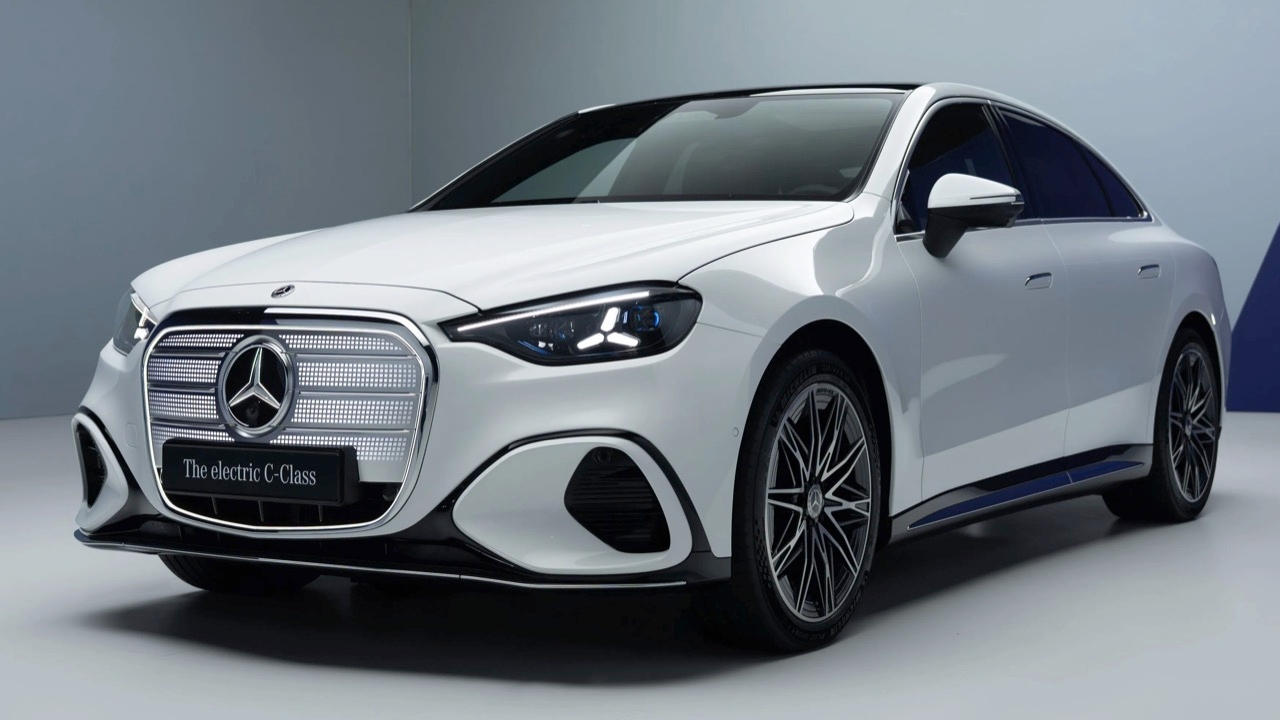
After BMW surprised its fans by launching the iX3 to shake up the industry, followed by the sleek i3 saloon, Mercedes-Benz immediately responded by introducing its first electric C-Class to continue the momentum set by the GLC Electric and the smaller CLA Electric models.


Today, those interested in clean-energy vehicles focus heavily on the driving range figures, which headline every new electric car launch—especially among premium brands competing over range. Admittedly, Mercedes still trails BMW slightly. According to Mercedes' media documents, the 94kWh battery can deliver a maximum range of about 761 km per charge. Sharp EV enthusiasts will notice this battery is actually smaller than the one BMW installed in the i3.

More intriguing than the range rivalry is the design. This electric C-Class features Mercedes' latest design language, described as coupe-style lines with a sleek GT rear. The overall shape emphasizes elegance and a special allure, notably with the imposing "Radpig" grille, reminiscent of the GLC Electric’s grille that revives the classic 1970s S-Class style but with modern, intricate LED detailing inside. Drivers should be cautious, as this new grille is no cheap accessory.


The electric C-Class is aerodynamically styled, fitting its electric identity, while clearly retaining family DNA. In fact, it looks like a smaller, sleeker version of the GLC Electric. Mercedes' designers and engineers often showcase advanced technology in their designs, such as the 1,050 illuminated points on the new grille. Mercedes focuses on combining beauty and cutting-edge tech, even if its range numbers slightly lag behind perennial rival BMW.

Inside, the cabin features the MBUX Hyperscreen dominating the console completely. The main reason for this giant screen in a small electric sedan is its sheer size—an impressive 39.1-inch ultra-high-resolution display stretching across the car’s width, equipped with backlighting and over 1,000 LEDs. It’s the largest screen ever installed in a C-Class, and undeniably spectacular.

For those who find that overwhelming, there’s also the MBUX Superscreen option, which seems modest by comparison. This integrates three screens under a single glass panel. Both systems offer extremely detailed customization—so much so that even expert sales trainers struggle to explore all features. Thankfully, Mercedes thoughtfully keeps a separate, always-accessible climate control strip, making it genuinely user-friendly.


With AI taking over the driver's seat interface, everything looks high-tech—not only can you access the screen, but the AI also accesses the car owner through a full suite of artificial intelligence tools. It seems Mercedes-Benz (and the rest of the world) have never watched The Terminator, as the star brand has integrated ChatGPT-4o, Microsoft Bing, and Google Gemini into the new C-Class under a "Multi-agent approach" concept. Mercedes claims this trio of AI services working together better meets user needs, likely making voice commands more practical and less annoying than older systems.
A standout new technology is the 3D Augmented Reality navigation system borrowed from the S-Class and EQS. Having personally tested it, I can attest it’s excellent, starting with a stylish welcome display. The navigation is highly intelligent with clear route visualization, making travel in unfamiliar areas much easier and more convenient. Basic safety features are comprehensive, including standard Distance Control, plus a suite of 27 sensors and cameras around the car. Optional extras include lane-change assist and advanced driver assistance systems—essentially semi-autonomous driving features not yet available in Thailand.

The driving performance of the electric C-Class goes beyond just a chrome-plated tablet on wheels. Mercedes claims, as it did with the GLC, that this car offers ride comfort comparable to the S-Class. Yet, they also assert this is the sportiest C-Class ever made. So it promises to be both smooth and sporty, but only a test drive will confirm if it lives up to those claims.

Powertrain options include a single motor on the rear axle with a new 2-speed automatic gearbox, and a dual-motor setup (front and rear). The front motor acts as a booster and automatically disengages when not needed to save energy. The braking system has been completely revamped for strong, satisfying braking and substantial energy recuperation. Mercedes claims the powerful regenerative braking can slow the car in nearly every situation, even when ABS activates, using motor drag to recharge the battery with up to 300kW. Essentially, the new C-Class electric can come to a complete stop using electric braking alone, maximizing kinetic energy recovery.
For suspension, the standard model features a Passive setup with Amplitude-selective shock absorbers that respond quickly. Alternatively, an air suspension (Airmatic) with automatic leveling is available. Both promise excellent comfort, and if it performs close to the GLC—which the C-Class Electric surely can—this will be one of the most comfortable rides in its class.


For performance enthusiasts, the top C 400 4MATIC delivers 483 horsepower, accelerating from 0 to 100 km/h in just 4.0 seconds, with a maximum range of 761 kilometers as mentioned earlier. Thanks to 800V electrical technology, if you find a 330kW charger, you can recharge enough for approximately 325 km of range in only 10 minutes. Although its current range slightly trails the i3, Mercedes won’t let BMW enjoy that lead for long. Next year, the star brand plans to unveil many more C-Class electric variants, including a rear-wheel-drive model expected to set a new benchmark for mid-size electric sedans.
This upcoming model is projected to achieve about 800 kilometers per charge, still slightly less than the i3 theoretically, but that remains an impressive distance for a single charge.