

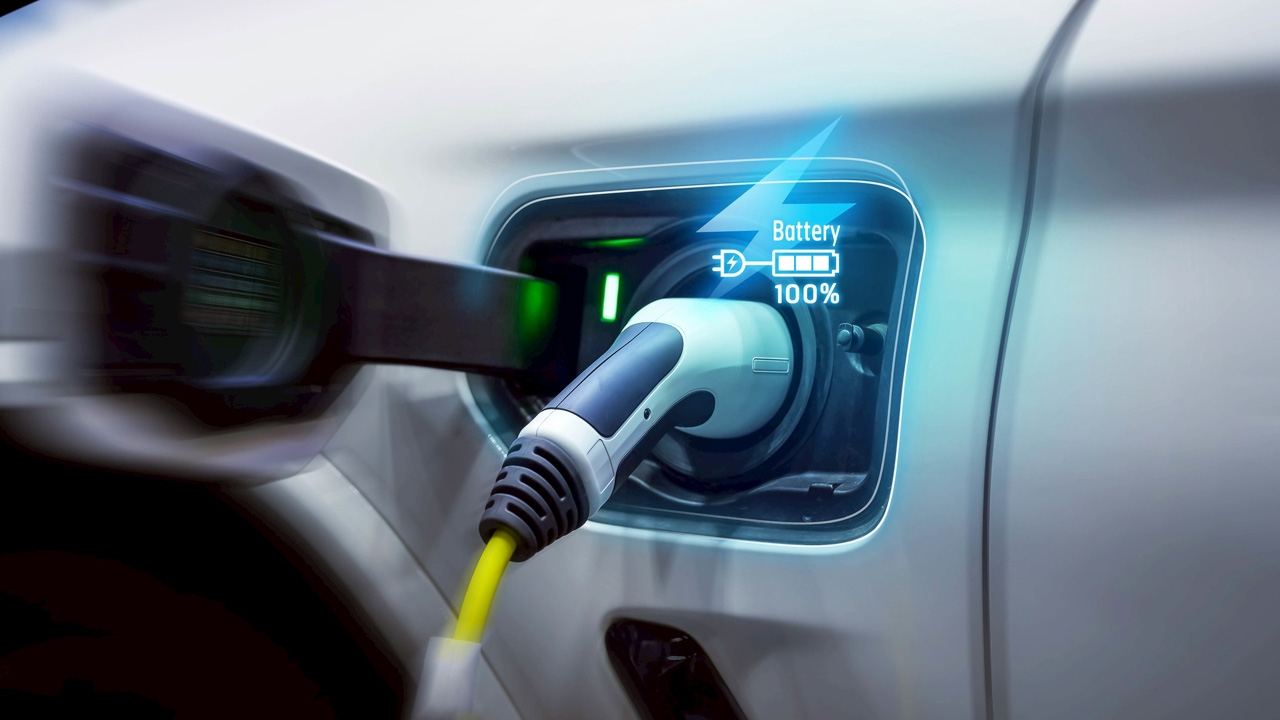
Electric vehicles (EVs) are shifting from a "niche option" to the "mainstream" in Thailand's transportation system. Originally seen as a technology to reduce pollution and greenhouse gas emissions, EVs now meet energy demands and offer economic value amid volatile global oil prices caused by geopolitical uncertainties.
Registration data clearly illustrates this trend: in the first five months of 2026, the number of electric vehicles (xEV) registered under transport laws increased by 178,918 units, a growth of approximately 16.9% in less than half a year. Most are in category 1 (personal vehicles with no more than 7 seats) totaling 163,641 units, divided into BEVs 81,266, HEVs 74,626, and PHEVs 7,749.
Meanwhile, the clean energy transition is not limited to EVs; Thailand is also accelerating the use of renewable energy like solar power across households, commercial buildings, factories, and large-scale power systems.
However, as reliance on renewables grows, the question of "energy storage" becomes increasingly important because solar power does not generate electricity continuously. This makes battery energy storage systems (BESS) a critical infrastructure for the modern energy grid.
While battery technology is rapidly entering daily life, a key question remains: has Thailand's regulatory and standards system kept pace?
Recently, Thai society has seen more frequent reports of battery-related incidents such as battery transport fires, EV fires, or illegal battery recycling. These should not be seen as isolated accidents nor be used to scare the public into fearing EVs, ESS, or batteries themselves.
On the contrary, these incidents are "systemic warning signs" that as batteries become a core technology of the new economy, Thailand urgently needs a modern, comprehensive, and enforceable regulatory system covering the entire battery lifecycle: production, importation, use, transport, storage, repair, reuse, and recycling.

This article does not oppose EVs or ESS. On the contrary, the authors see them as vital infrastructure for a low-carbon economy transition. But this transition can only succeed if the public trusts that these technologies are safe, verifiable, and backed by standards. Without consumer confidence or accountability for risks, the transition will falter.
Standards are not obstacles to transition but essential conditions. Importantly, standards should not be written "in blood"—that is, only after repeated lessons from accidents.
When discussing battery standards, one should consider at least three dimensions: 1. product standards, 2. process standards, and 3. transport and storage standards. This article focuses on product standards, as they are the foundation of safety and consumer trust.
Currently, Thailand mandates some battery standards, especially for portable power banks (TIS 2879-2024), which must meet industrial product safety standards before sale.
However, for larger batteries crucial to the new economy, such as EV batteries and ESS, standards remain general and non-mandatory.
For EVs, current regulation relies on type approval certification for registration. Electric vehicles in categories M and N reference safety requirements for electric drive systems and rechargeable energy storage systems like UN R100, aligned with TIS 3026-2020. Electric motorcycles (category L) reference UN R136, aligned with TIS 2952-2018.
Additionally, Thailand has TIS 3712-2023 for small two-wheelers (electric mopeds) and electric motorcycles, covering lithium-ion battery testing and safety per ISO 18243. However, these product standards are not yet mandatory like those for power banks. Also, some EV types fall outside registration or type approval oversight, which is another concern.
This gap matters because EV batteries are not just vehicle components but complex high-voltage energy systems composed of many cells, battery management systems (BMS), cooling systems, control software, and physical protective structures. Battery safety depends not only on the strength of the battery casing but on the entire system's ability to detect, prevent, warn, and limit damage if abnormalities occur.
Global standards are evolving, but Thailand lags behind.
Thailand still references the minimum requirements of UN R100 Revision 2 for EV type approval. This standard emphasizes passive safety—testing batteries and electric drive systems to withstand severe conditions like shocks, collisions, compression, short circuits, or fire to prevent acute harm to passengers.
However, modern battery risks arise not only from severe collisions but also during parking, charging, normal driving, or after extended use. These risks relate to cell degradation, BMS faults, repeated fast charging, undercarriage impacts, or substandard repairs.
This means standards designed to test post-collision durability cannot prevent hidden risks inside battery cells that degrade over time or are mismanaged by faulty software.
Meanwhile, international standards have advanced to UN R100 Revision 3, which places greater emphasis on managing thermal propagation risks and advanced warning systems.
A key idea is that if some battery cells malfunction, the system must limit or slow thermal runaway to prevent harm to passengers and provide early warnings so drivers can safely stop and evacuate.
Simply put, new standards ask not only “Is the battery case strong enough?” but also “Is the battery system smart enough to detect abnormalities and alert users promptly?”
If Revision 3 seems strict, China—the world's battery supply hub—has gone further with GB 38031-2025, a mandatory EV battery safety standard effective July 1, 2026.
Known as “No Fire, No Explosion,” this standard raises the bar from merely warning occupants to preventing and containing fires or explosions within the battery pack. It adds requirements for preventing uncontrollable thermal runaway, under-vehicle impact testing, and resilience to fast charging.
This is critical for Thailand because many EVs and batteries in its market are linked directly to China's supply chain. If major producers upgrade their domestic standards but importing countries or end markets do not follow, Thailand could become a market exposed to unnecessary risks.
The crucial question is: how long will Thailand wait before its standards catch up with global changes?

Standard gaps are not limited to EVs but also affect ESS, which play a growing role as renewables expand. ESS can be installed in homes, buildings, factories, charging stations, or community power systems. Without clear, enforceable product standards, risks extend beyond individual users to buildings, communities, power grids, and emergency responders.
It is time for laws to catch up with technology.
The problem we face is not battery technology failure but regulatory failure to adapt quickly to global changes. Thailand stands at a crossroads. It must choose between unknowingly accepting risks by relying on outdated standards or becoming a leader that synthesizes and smartly adapts global standards.
China, as the world's battery factory, is elevating its domestic standards to the highest level. Europe has long enforced active safety criteria. As a large and rapidly growing EV market, Thailand should not be a testing ground where consumers bear undue risk.
Good safety standards do not hinder industry growth but provide the foundation for sustainable development. Without strong regulatory measures, true costs fall on consumers and ultimately erode trust in the entire technology. Ultimately, green technology promotion is sustainable only if consumers trust that cleanliness, value, and safety go hand in hand.
Six urgent policy recommendations to begin implementing:
1. The government should define a clear roadmap to upgrade EV battery safety requirements from UN R100 Revision 2 to Revision 3, including timelines, consultation processes, and support plans for manufacturers, ensuring that EV promotion remains but on a safer, modern foundation.
2. Thailand should systematically study key provisions of GB 38031-2025 to assess which requirements suit the Thai context, especially those addressing uncontrollable thermal runaway, under-vehicle impact tests, and fast charging durability, reflecting real-world EV use today.
3. Expand standards to cover unregistered EVs. The government should consider regulatory mechanisms for EV types outside registration or type approval, such as small electric vehicles, specialized-use vehicles, or certain electric mobility devices, since battery safety risks are not limited to registered road vehicles.
4. Accelerate mandatory standards for ESS batteries, especially those installed in buildings, factories, charging stations, and renewable energy systems, as ESS will be key infrastructure for future power grids, and unclear standards could increase risks as the market grows.
5. Link product standards with inspection and data standards throughout battery lifecycles, such as monitoring battery State of Health (SOH), cell balance checks, and access to BMS data in incidents or disputes, to prevent safety information from being controlled solely by manufacturers or importers.
6. Begin establishing a battery passport system or comprehensive database to track batteries from production or import through use, repair, reuse, and recycling, to support the used EV market, ensure consumer transparency, and prevent illegal battery handling.
These proposals do not aim to slow EV growth. On the contrary, the faster Thailand wants to transition to clean energy, the stronger the standards must be.
The success of the EV era depends not only on the number of vehicles on the road but on whether the government can create systems that instill consumer confidence that technological advances come with uncompromised safety.
Article by Dr. Atichart Rojanagorn and Dr. Natthaporn Buayaem, Policy Team for Bioeconomy, Circular Economy, and Green Economy, TDRI.