

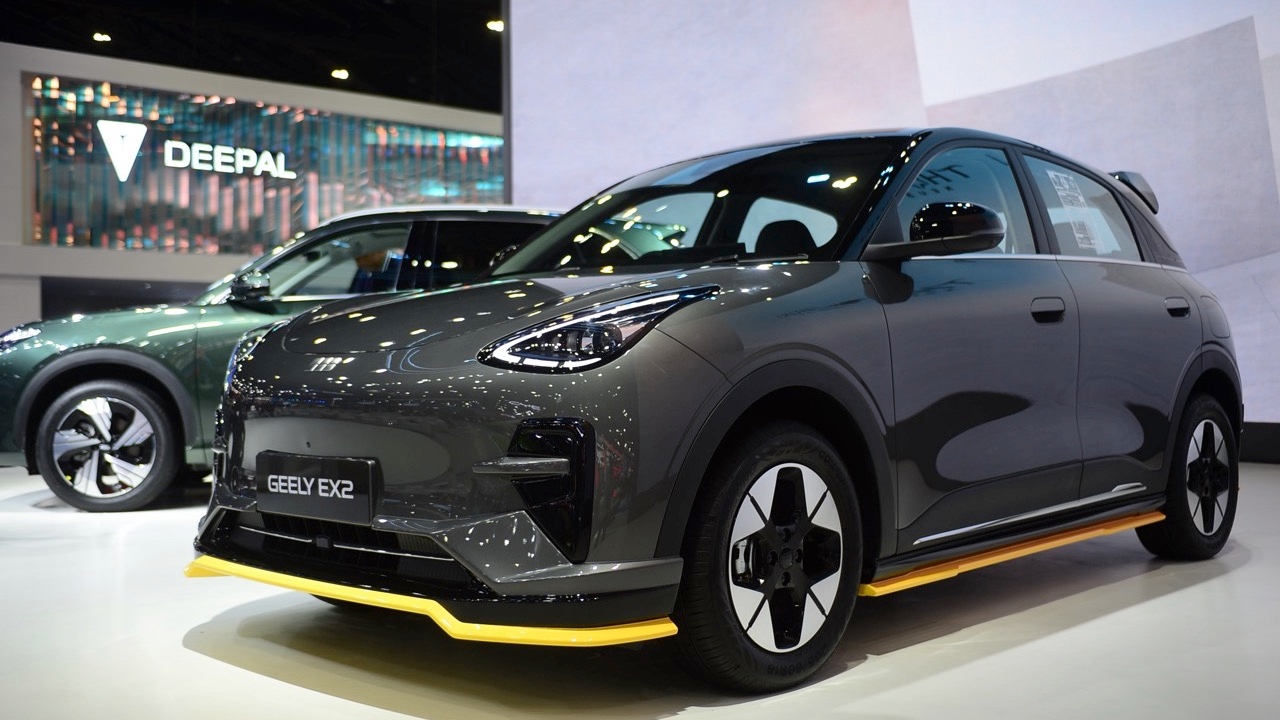
Thailand's transition to electric vehicles is driven by rising oil prices, geopolitical uncertainties, and changing consumer behaviors. The conversation around EVs has shifted accordingly—from initial concerns about driving range to current worries about oil price volatility.

Amid ongoing global oil price fluctuations that push travel costs higher, many Thai consumers are increasingly viewing battery electric vehicles (BEVs) as a practical option to manage unpredictable long-term travel expenses. This trend is clearly reflected in market data: Thailand's EV market grew 80% in 2025, with cumulative registrations surpassing 120,000 units. Meanwhile, the 2026 Bangkok International Motor Show saw a record 132,951 vehicle bookings, driven by rising EV orders and consumers focusing on value, technology, and cost efficiency.


Government policies play a crucial role in accelerating the EV transition by supporting the entire ecosystem—from manufacturing to financing and consumer incentives. Thailand's 30@30 policy targets at least 30% of domestic vehicle production to be EVs by 2030. The EV 3.5 initiative pushes Thailand toward becoming an EV production hub through tax benefits and production support measures. On the consumer side, Government Savings Bank's low-interest EV loan programs make owning an EV more accessible.

Challenges for EV insurance contrast with the ecosystem’s growth.
In my view, Thailand's EV transition changes not only what people drive but also significantly shifts consumers’ perceptions of risk ownership and coverage. Recent energy price volatility has accelerated EV growth by shifting consumer concerns from whether the vehicle can travel far enough to whether they can afford rising fuel costs. Consequently, many see EVs as a practical means to manage long-term travel expenses.

Although EVs attract growing consumer interest, they carry distinct and still-developing risk profiles compared to internal combustion engine (ICE) vehicles. EV accident rates tend to be higher in the first year due to drivers adjusting to new driving characteristics, such as regenerative braking—a technology that recovers kinetic energy when slowing or braking by converting it back into electrical energy stored in the battery. However, braking force from this system can lessen when the battery is fully charged. Additionally, instant torque—electric motors delivering maximum power immediately upon acceleration—also affects driving dynamics. After this initial period, accident rates typically approach those of ICE vehicles.

Another clear difference lies in repair costs and complexity. Currently, EV repair expenses average about 39.7% higher than those for ICE vehicles. This is due to battery system complexity, the need for specialized equipment and skilled technicians, and ongoing limitations in available spare parts.
A structural challenge in Thailand’s market is the limited number of independent repair shops with EV expertise. Most repairs remain concentrated at manufacturer service centers, creating a structural bottleneck that limits competition and keeps repair costs high. Expanding the role of appropriately certified independent repair shops will be crucial long-term to improve pricing efficiency, increase repair capacity, and reduce overall claims costs.

Meanwhile, intense price competition in the EV market also poses new challenges for insurers. Rapid fluctuations in market prices and vehicle depreciation complicate risk assessment and damage valuation for underwriters.
Although EVs are easier to purchase thanks to government support, competitive pricing from manufacturers, and easier loan access, EV insurance is becoming more complex. Consumers might expect insurance premiums to become more price-competitive as EV usage grows, but insurers must adapt to rapidly changing risk environments involving new technologies, evolving repair methods, and more volatile vehicle values.

EV consumers are digital-era consumers.
At the same time, the profile of EV buyers is changing from traditional car buyers. These consumers tend to be digitally savvy, research extensively, and approach purchase decisions cautiously. They are not simply buying a new vehicle but entering an entirely new ecosystem of vehicle usage.

This shifts consumer concerns beyond engine durability or service center access. Battery coverage remains a critical issue due to high replacement costs. Concerns are also expanding to software issues, charging safety, and liabilities related to home charging systems.

Insurance is the safety net for the EV transition.
Today's EV users expect seamless digital experiences, transparent coverage, and insurance products that keep pace with evolving vehicle systems, software technologies, and emerging risks. This creates new expectations for insurers—not only to cover the vehicle but also to reduce uncertainties associated with new technologies.
This explains why EV insurance cannot be viewed as merely traditional car insurance with a different engine. More accurate risk assessment, flexible product design, and operational efficiency will be key factors enabling insurers to provide sustainable, transparent coverage aligned with a rapidly evolving market.

Insurance plays a vital role in reducing the “friction” of the EV transition by transforming unfamiliar risks into manageable and predictable costs. This helps consumers gain confidence in their decision to switch to EVs.
Thailand is clearly moving from the early adoption phase of EV technology to widespread mass adoption. However, long-term success will depend not only on vehicle prices or charging station numbers but on how quickly the surrounding ecosystem—including insurance, repair, charging, and after-sales services—can evolve to support the transition. As EVs become more accessible, the next challenge is to make ownership experiences understandable, manageable, and trusted by everyday Thai consumers.