

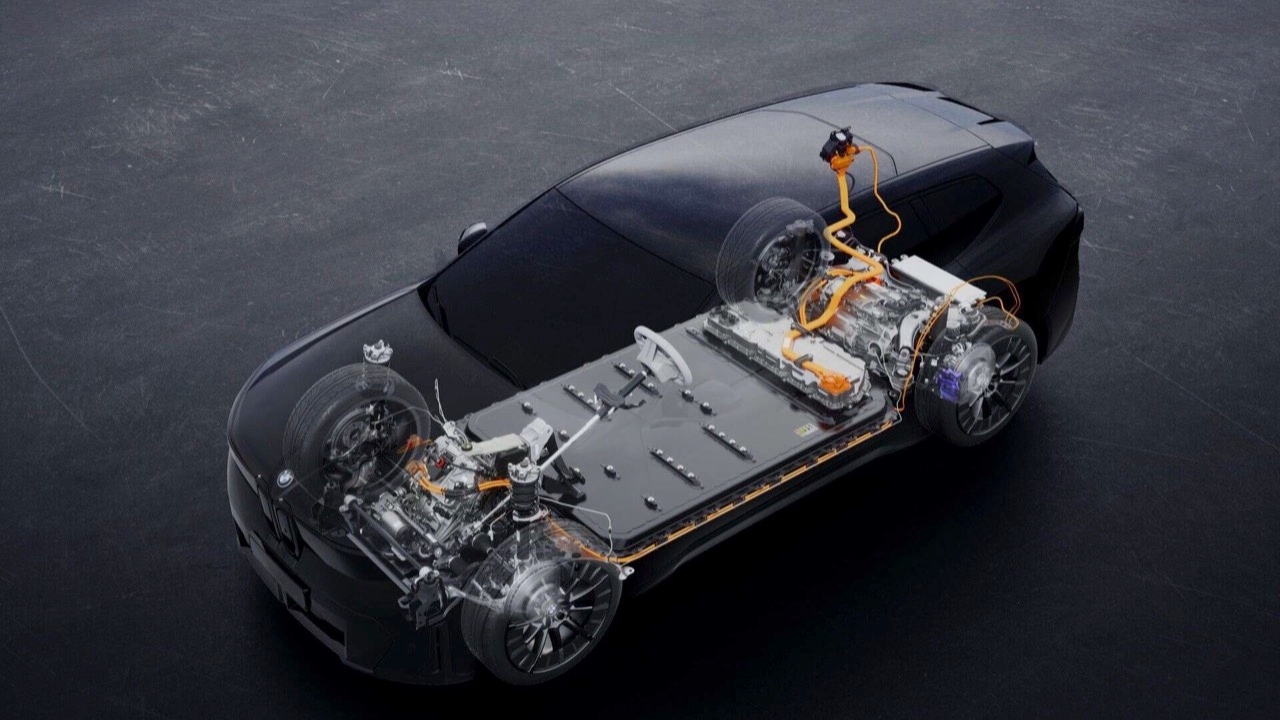
BMW Blog reports on the engineering development direction of BMW’s new energy vehicles, explaining the strategic and engineering reasons why the fully electric BMW iX3 does not and will not use the large-capacity battery pack found in the larger BMW iX5.


BMW’s engineers and product development team explain that the iX3’s compact SUV body size and weight limits, or packaging and weight, are key factors. Installing an oversized battery pack would negatively affect weight distribution and increase the vehicle’s total weight unnecessarily, which would undermine the iX3’s hallmark agile driving character, making it bulky and unwieldy.

The new generation electric drive system’s high energy management efficiency allows the iX3 to achieve sufficient driving range per charge to meet its target customers’ needs without carrying an excessively heavy battery pack. The iX3 achieves a range comparable to the iX5 with a smaller battery by focusing on controlling excess weight that would impact driving dynamics.
Controlling production costs and pricing is another factor. Using an appropriately sized battery enables BMW to keep the iX3’s manufacturing costs and sales price competitive within its market segment. Installing a large battery like the iX5’s would cause the price to jump beyond the main target group.

The BMW iX5’s large battery is one of the biggest energy storage packs the brand has ever produced, with a net capacity of 141 kWh (144 kWh according to U.S. specs due to different measurement standards). Many customers expected BMW to equip the smaller iX3 SUV with this giant battery to reach nearly 1,000 kilometers of range. BMW engineers explain the engineering reasons why the iX3 uses a smaller battery as follows.

1. Differences in battery cell dimensions and platform structure.
Although both the iX5 and iX3 use sixth-generation (Gen 6) battery technology, their cylindrical battery cells differ in height.
The iX5’s battery cells are 120 millimeters tall.
The iX3’s battery cells are only 95 millimeters tall.
BMW states this difference is an intentional engineering decision because the iX5 must support higher payload and driving resistance. The iX5’s body dimensions are larger than the iX3’s, and the two models are built on different platforms: the iX5 uses the CLAR platform, while the iX3 is developed on the new Neue Klasse platform.
2. The driving range figures are not as far apart as expected.
In reality, installing a large battery in the iX3 may be unnecessary. The standard iX3 battery pack with 108.7 kWh capacity can deliver up to 805 kilometers (WLTP). Compared to the iX5’s 845 kilometers (WLTP), the range difference is relatively small despite the iX5’s much larger battery.


3. Impact of vehicle weight.
The narrowing gap in driving range results from the vehicle’s weight:
The BMW iX3 weighs 2,285 kilograms.
The BMW iX5 weighs 540 kilograms more than the iX3, totaling 2,825 kilograms — an extremely heavy weight.
This weight difference is expected because they are different vehicle segments. Notably, the iX5 60 xDrive is the heaviest production BMW ever made, excluding armored vehicles.

4. Market strategy and model options.
The BMW iX5 is offered with a single large battery configuration. In contrast, the European-spec iX3 offers a smaller battery option at 82.6 kWh to provide a more accessible price point, reducing the driving range to 637 kilometers—about 168 kilometers less.