

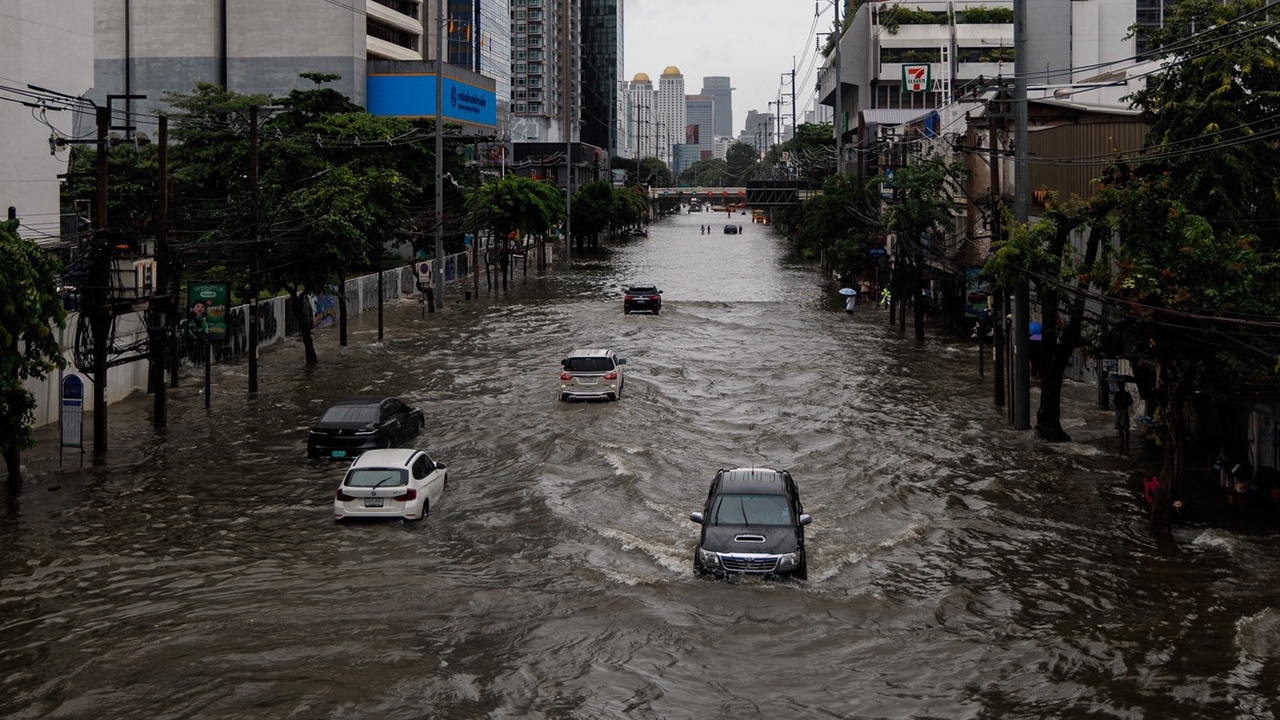
Guidelines for handling electric vehicles after flooding: if water remains below the undercarriage, the risk is low, but if water reaches the vehicle floor or higher, EV experts should manage the situation. It is emphasized not to start the car or touch high-voltage cables.
Following heavy rains in many areas causing several electric vehicles to be submerged or face flooding on the road, owners are concerned about "Can I start driving again once the water recedes? Is there a risk of the battery catching fire?"
Although not all EVs exposed to water catch fire, if water reaches high-voltage electrical components, damage may not be immediately visible. Before moving or restarting the system, water levels should be checked and safety assessed by experts.
The water level flooding the vehicle affects the risk level.

For vehicles in the low-risk group but needing relocation, it is advised not to start or press the ON button, to disconnect the 12-volt battery properly, photograph and video for evidence, and avoid direct contact with orange high-voltage cables. When moving the vehicle, use a flatbed or tow truck rather than towing with wheels on the ground.
For vehicles flooded to the floor or higher, if immediate movement is unnecessary, wait for water to recede below the undercarriage and let the vehicle dry for at least 24 hours before having experts assess it. Drying does not guarantee safety to start or drive on your own. If moving is necessary after water subsides, clear surrounding areas, prepare fire extinguishing equipment, and have specialists oversee the move.
In any case of vehicle submersion, owners should immediately notify their insurance company and contact service centers to arrange expert inspection before using the vehicle again.
The answer is yes, especially for vehicles submerged to the floor or higher. Owners should not start, charge, or test drive, even if the exterior appears dry. Insurance should be notified and service centers consulted before use. If smoke, unusual odors, battery noises, or abnormal heat are detected, move away and call firefighters immediately (information fromthe U.S. National Highway Traffic Safety Administration (NHTSA))
Information from the National Science and Technology Development Agency (NSTDA).