

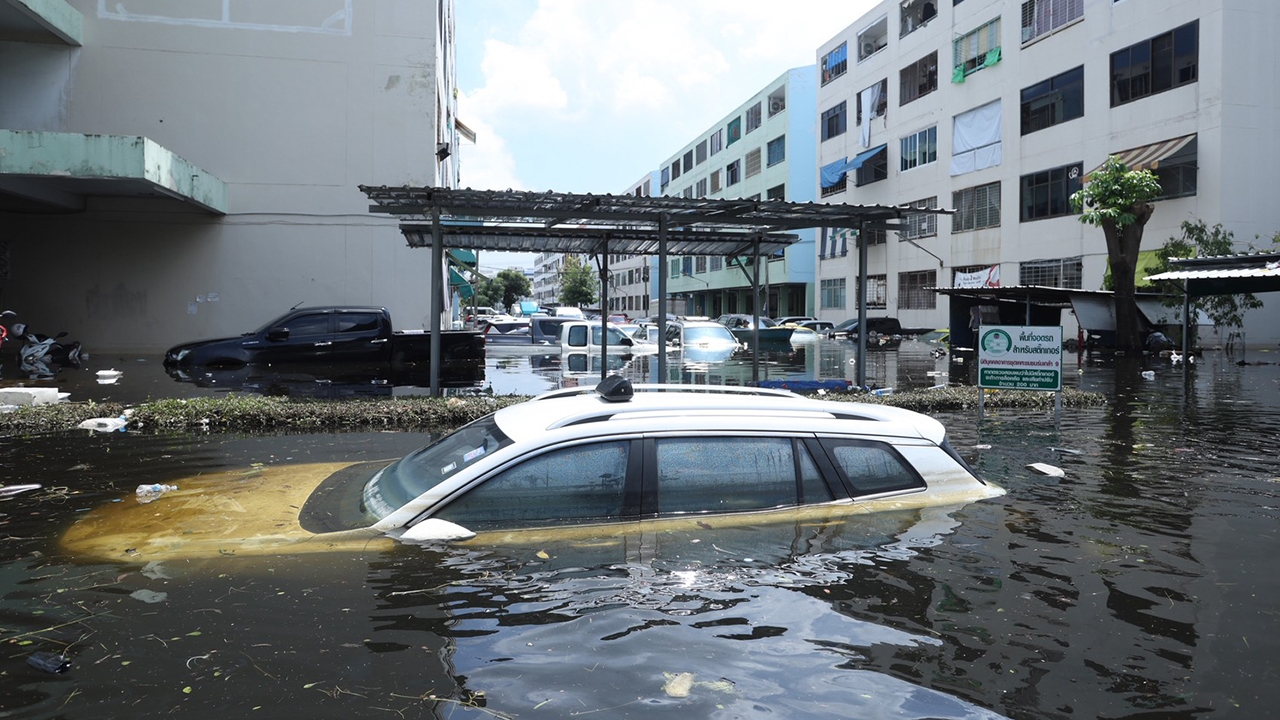
This article highlights precautions for electric vehicles (EVs) affected by flooding, advising owners to avoid turning on the vehicle, test driving, or charging until a technician inspects it. Even if floodwaters recede and the vehicle seems normal, hidden damage may exist. If smoke, heat, or popping sounds are detected, keep a safe distance.
Electric vehicles (EVs) that have been submerged or suspected of having water ingress into their electrical systems require inspection before reuse. Owners should not attempt to turn on the system, drive, or charge the vehicle because some damage may not be visible externally, even after water levels have dropped.
The U.S. National Highway Traffic Safety Administration (NHTSA) states that flood-damaged EVs may pose dangers from high-voltage electrical systems. Damaged batteries can emit toxic gases or catch fire immediately or later. Therefore, contact dealers, service centers, or emergency services if battery damage is suspected.
When floodwaters rise, prioritize human safety over the vehicle.
If you know in advance that your parking area is at risk of flooding, move the vehicle to higher ground or a safer location before flooding occurs, provided travel routes are still safe. If the vehicle is already submerged, do not attempt to start or drive it out. Instead, have experts assess and handle the relocation.
In cases of rapidly rising water or strong currents, focus on evacuating the dangerous area first. Do not return to retrieve belongings or attempt to recover the vehicle yourself.
If the vehicle is charging when floodwaters begin to rise near the charger, do not wade into the water to unplug or touch electrical equipment. Let qualified personnel cut power from a dry, safe location.
After floodwaters recede, do not start or charge the vehicle—wait for a technician’s inspection.
Vehicle owners should not turn on the system to test operability, nor attempt to test drive or plug in the charger until a service center or technician trained in EVs has examined and confirmed safety.
Do not remove the battery or tamper with high-voltage wiring yourself.
Do not attempt to disconnect the battery pack, connectors, or high-voltage cables yourself, especially the orange cables and components under the vehicle. Consider that high-voltage systems may still hold energy even when the vehicle is off or cannot be started.
Removing the 12-volt battery does not eliminate all driving battery energy, so this should not be relied upon as proof that the vehicle is safe for self-inspection or repair.
Report to your insurer and preserve evidence from a safe location.
After the incident, promptly contact your insurance company and service center, and safely photograph the vehicle’s condition, water levels, and water stains from accessible areas to assist with damage assessment.
Additional information to record includes the duration the vehicle was submerged, maximum water depth, whether the water was fresh, brackish, or seawater, and whether the vehicle was charging at the time. Avoid approaching the vehicle if you notice abnormal signs or if the area remains hazardous.
Move the vehicle according to the manual; do not tow without checking requirements.
When contacting a tow truck or emergency service, clearly inform them that the vehicle is a flood-affected EV so they can prepare appropriate equipment and select the correct relocation method for the model.
Do not tow the vehicle allowing wheels to spin without checking manufacturer specifications, as relocation methods vary by EV model. Always follow the vehicle manual or service center guidance.
If battery damage is suspected, have the relocation team park the vehicle outdoors, away from buildings, other vehicles, and flammable materials. NHTSA recommends that EVs with damaged lithium-ion batteries not be parked in garages or within about 15 meters of homes, structures, other cars, or combustible materials. Owners should avoid moving the vehicle themselves if abnormal signs are present.
If you detect smoke, heat, or popping sounds, move away immediately.
Warning signs include smoke, abnormal heat, popping noises, or hissing sounds from the vehicle. If these occur, evacuate the area, remove nearby people, and notify fire or rescue services immediately, specifying it is a flood-affected electric vehicle.
Do not open the hood, inspect under the vehicle, or attempt to extinguish a fire yourself, as battery damage may cause fires even after the flooding has passed.
Drying out does not mean the vehicle is ready for use.
Be aware that even if the vehicle appears dry, moisture and corrosion may remain internally, especially in saltwater flooding cases, requiring thorough damage assessment before reuse.
However, flooding does not guarantee a fire for every EV; damage must be assessed individually. The key is to avoid self-testing and let experts inspect before driving or charging again.
Information fromNHTSA