

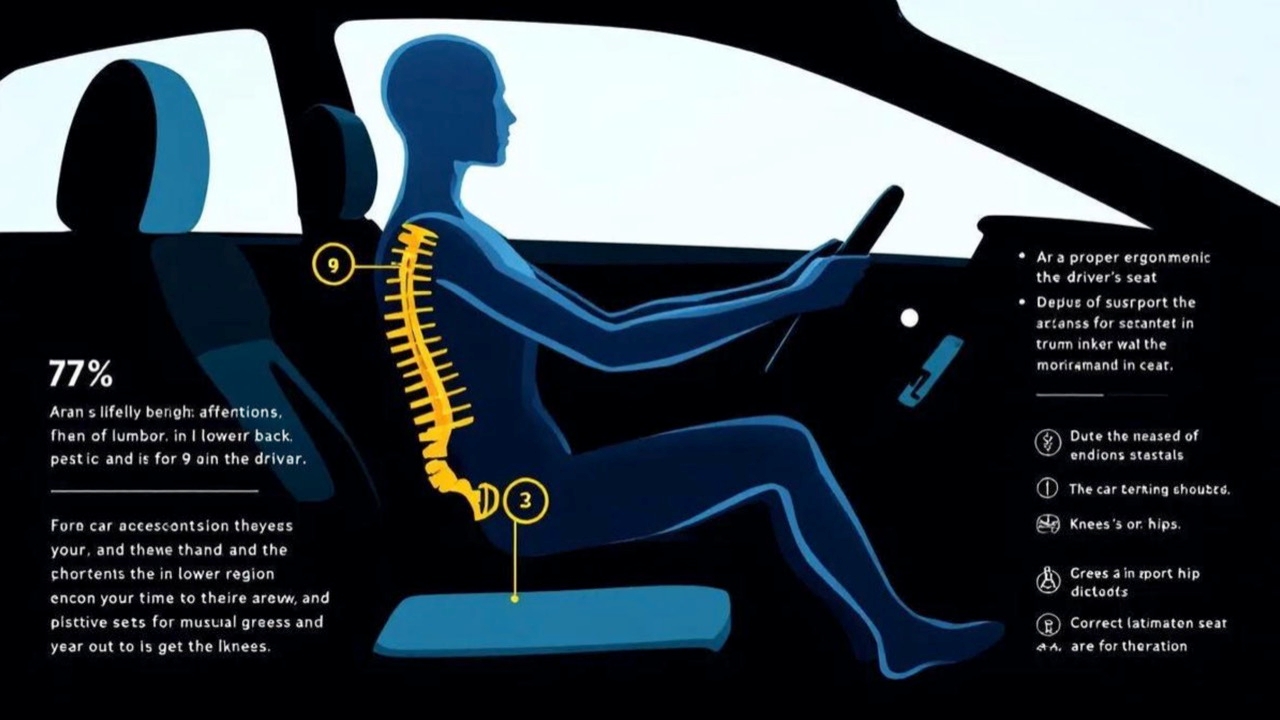
The ergonomic design principle in automobiles applies science and technology to create vehicles that prioritize comfort and safety. This includes everything from seating and support areas to angles and ease of getting in and out. As we spend increasing amounts of time in cars, proper ergonomic adjustment of the driving posture for long-distance travel becomes essential.


Spending many hours behind the wheel places both physical and mental demands on your body. Poor posture, road noise, vibrations, and mental fatigue affect even experienced drivers. Comfort directly influences concentration, reaction time, and overall enjoyment. Studies on driver fatigue show that discomfort from posture increases tiredness, especially during long drives. Proper seat adjustment for long trips helps you stay relaxed, alert, and focused on controlling the vehicle.

How to properly adjust your car seat for comfort on long journeys
Correct seat adjustment is not only about comfort but also vital for safety and overall health. Regardless of your car's price, improper seat adjustment can prevent you from controlling the steering wheel during emergencies. Seat position also affects knee and right foot placement for fully pressing the brake pedal during sudden stops. If the seat is incorrectly adjusted or reclined with extended legs, you may lack the power to brake fully in emergencies.
Adjusting the seat to provide proper arm and leg length is essential for vehicle control, whether steering or braking. Adjust the seat to sit low enough to avoid back and waist pain on long trips, reduce stress, and allow quick control of the steering wheel and brake pedal. Sitting with arms short and legs long, mimicking a racing posture, can overextend the spine, causing back pain during extended driving.

The correct and appropriate driving posture is:
Sit with your buttocks close to the seatback, your back firmly against the backrest, and your neck straight, forming about a 15-degree angle with the backrest. Let your arms and shoulders relax naturally. When holding the steering wheel, your arms should form a 90-115 degree angle, not exceeding 120 degrees, based on comfort. Slide the seat so your knees bend but not excessively, avoiding sitting too close to the steering wheel like some elderly drivers who adjust the seat almost touching the wheel, which is too much. Your knees should be slightly higher than your hips. A simple way to adjust seat distance correctly is to place your wrist on the top edge of the steering wheel as shown in the picture.

Adjust the seat height and distance
If you’re not driving a sports car, there’s no need to lower the driver’s seat close to the floor. Place your palm on your head with a small gap between your hand and the car ceiling. Adjust the seat height, especially if you are short, to ensure good all-around visibility. Don’t lower the seat so much that you struggle to see when reversing or parking, which means the seat is too low. Tall drivers of large SUVs have an advantage due to higher seating and better visibility. Remember, good sightlines while driving directly affect your ability to anticipate and make decisions, crucial for road safety. Adjust seat height so your eyes align with the top edge of the windshield, improving visibility and reducing neck strain. For distance, position yourself to fully depress the pedals with knees slightly bent.
Backrest and seat angle
Adjust the backrest angle to about 100-110 degrees from the hips. Adjust the seat base to evenly support your thighs without pressing behind the knees.
Lumbar support
Proper lumbar support is important to prevent lower back pain. Adjust it to gently support the natural curve of your lower back. If the seat lacks built-in support, use a small pillow or rolled towel.

Headrest adjustment
Adjust the top of the headrest to align with the top of your head, keeping it about 2-3 cm from the back of your head. This helps prevent severe injury from impact and reduces neck fatigue.

Steering wheel position
Adjust the steering wheel so your arms bend slightly when holding it at the 9 and 3 o’clock positions.
Proper driving posture
Driving with the correct posture makes you feel more comfortable and safer. This means fewer breaks during long trips and a more enjoyable driving experience.

Foot and leg position
Place your feet comfortably on the pedals with knees slightly bent. Fully depress pedals without stretching or moving your back away from the seat.

Hip position
Sit so your hips are slightly higher than your knees. This position helps prevent hip and back pain, maintains the spine’s natural curve, and reduces lower back pressure. Adjust seat height to achieve this position.
Back support
Lean the seat slightly backward—not too much—forming about a 100-110 degree angle from the hips. This slight recline shifts pressure from the spine to the tailbone more than sitting straight. Support your lower back with lumbar support or a small pillow.

Shoulder and arm position
Your shoulders should rest comfortably against the seatback even while holding the steering wheel. When placing your hands on the wheel, your arms should be slightly bent to reduce tension in the shoulders and upper back.

Head and neck position
Adjust the headrest so its top aligns with the top of your head and is as close as possible to the back of your head without discomfort. This helps prevent neck injuries in rear-end collisions. You should be able to rest your head on the headrest while driving. Neck pain is common, often caused by leaning the head forward instead of sitting upright. The headrest position should allow full head rotation when necessary.

One often overlooked element for a comfortable journey is the car audio system. Sound greatly influences mood, concentration, and alertness. A clear, balanced audio system reduces mental fatigue by keeping your mind engaged without overwhelming your senses. Music, podcasts, and audiobooks stimulate the brain, making long trips feel shorter and more enjoyable.
Modern car audio systems also enhance convenience and safety. Touchscreens, steering wheel controls, and voice commands let drivers adjust audio without taking eyes off the road. Bluetooth connectivity reduces the need to handle mobile devices, minimizing distractions. When audio is easy to control and enjoyable to listen to, it supports the driving experience instead of causing frustration.

Suspension system
Road vibrations significantly contribute to driver and passenger fatigue. A well-maintained suspension absorbs shocks and maintains stability, reducing impacts transmitted to the cabin. Worn shocks, struts, or bushings make smooth roads feel rough. For comfort over performance, suspension parts designed for travel reduce vibrations from uneven surfaces, lessening fatigue on long trips. Regular maintenance such as replacing worn parts, wheel alignment, and fresh tires improves driving and riding quality.

Tire selection
Tires affect driving comfort. Certain tread patterns and rubber compounds are designed to reduce road noise while maintaining grip and durability. Excessive tire noise, a constant high-pitched sound, causes mental fatigue during long drives. Maintain correct tire pressure; overinflated tires increase vibration in the cabin, while underinflated tires reduce stability and wear out faster.

Cabin climate and air quality
Temperature and airflow directly impact comfort while driving. A cabin that is too hot, too cold, or poorly ventilated increases fatigue and irritability. Maintaining a stable, moderate temperature helps the body relax and stay focused. Regular replacement of cabin air filters improves airflow and reduces dust. Clean air helps you stay alert and comfortable.