

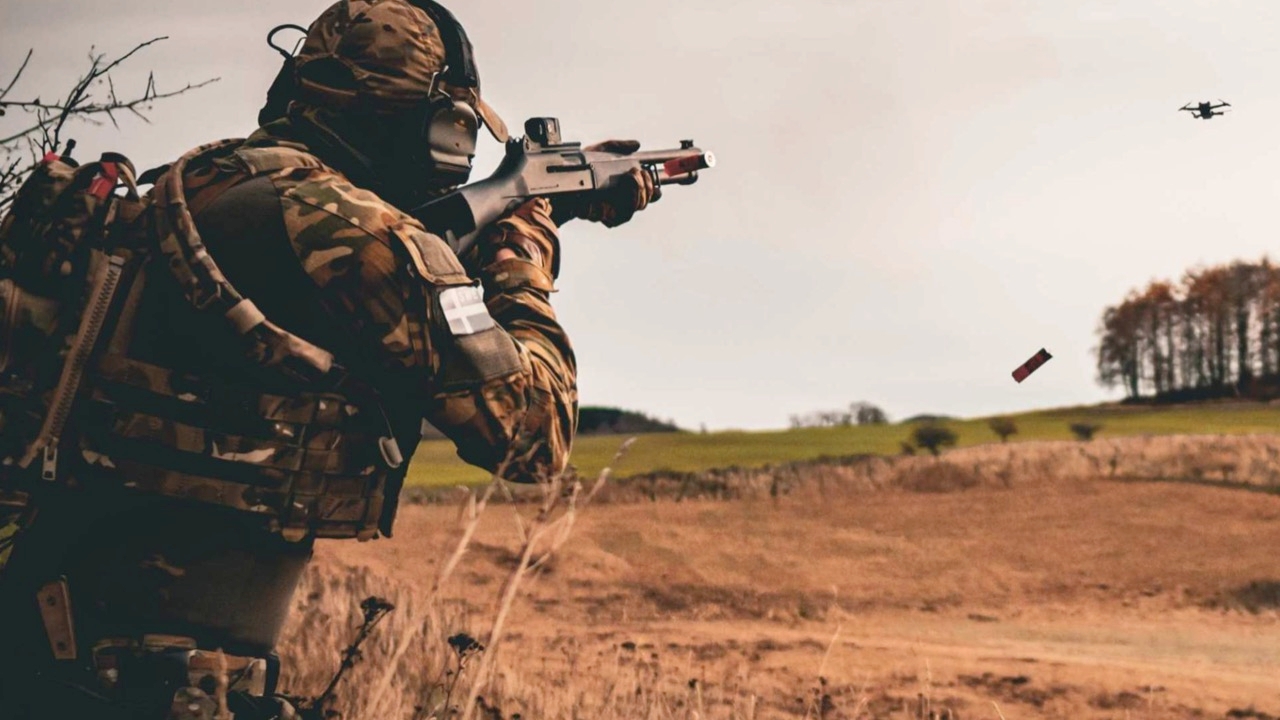
The development of "killer drones" has advanced to the point that the operational effectiveness of "anti-drone guns" has decreased, sometimes rendering them ineffective. This is due to the integration of special communication signals and navigation systems in the new "killer drone" models, which enhance their ability to counteract "anti-drone guns." Lessons learned from the Ukraine-Russia war have provided valuable insights into how "killer drones" are shaping modern battlefields, especially their capability to attack infantry units, vehicles, military equipment, supplies, and logistical resources, significantly impacting the frontline positions of both sides.

"Killer drones" can launch surprise attacks over operational areas with precision, delivering explosives while transmitting critical information. They can also surround zones to allow troops to approach targets undetected. Both Ukrainian and Russian forces have used "killer drones" to disrupt enemy movements, reduce armored vehicle capabilities, and create logistical obstacles.

Therefore, existing weapons have been repurposed to counter "killer drones," with shotguns considered effective, especially against small drones. Ukrainian soldiers have employed semi-automatic shotguns to counter these threats, demonstrating remarkable efficiency in disrupting Russian "killer drone" operations. Although shotguns may not be the primary defense weapon against drones, they serve as an effective last line of defense due to their durability, ease of use, and wide pellet spread, enabling even minimally trained soldiers to have a chance of hitting drones. Nonetheless, training improves shotgun effectiveness significantly.

Ukraine’s allied countries such as France, Italy, and Belgium have acknowledged the lessons learned by Ukrainian soldiers and begun adopting shotguns in tactics against "killer drones." All three militaries have selected various models of Benelli shotguns that use both traditional and special shotgun shells. Field tests have proven these weapons highly effective at shooting down drones within 80–120 meters, allowing their use in protecting forces during operations. The U.S. military also requires thorough training for shotgun use to target close-range aerial drone threats.

Shotguns are effective weapons for close-range engagement of "killer drones" but come with several limitations. Shooting at an incoming drone requires considerable bravery. Moreover, these drones are often very difficult to detect. Although quadcopter drones generally produce constant noise, the battlefield’s inherent loud and chaotic environment often masks their presence. Soldiers familiar with drones report that they typically notice them only when the drone is flying directly overhead, with video evidence supporting this observation.

Advantages include: - Ease of use and availability: shotguns are relatively simple to learn and operate. - Wide pellet spread: the shotgun’s dispersed pellets increase the likelihood of hitting small, fast-moving targets like "killer drones," especially when they fly low or hover. - Cost-effectiveness: shotguns are generally less expensive than advanced anti-drone technologies, making them a practical choice.

Limitations: - Shotguns have a limited effective range of approximately 80–100 meters and may be ineffective against drones flying beyond this distance or at higher altitudes.
Ammunition: - Shotgun shells come in many varieties and can be selected specifically for anti-drone purposes, including special rounds designed to capture or disable drone rotors. For example, the U.S. Air Force has tested the SkyNet Mi-5 shotgun shell, which releases a net midair to entangle drone propellers. Alternative use: - Although shotguns are not the primary drone defense weapon, they can serve as a last-resort option when other anti-drone systems fail.


The main types of shotgun shells are divided into three categories.
Birdshot: small pellets used for shooting flying targets.
Buckshot: larger pellets used for close-range shooting.
Slug: a single, high-powered projectile.
Shotgun shells also have many subtypes, varying in pellet size, velocity, and projectile design depending on intended use.

Main categories include:
Birdshot: contains many small lead pellets (such as sizes 7.5, 8, 9), suitable for shooting flying targets.
Buckshot: contains larger pellets (such as sizes 00, 000), suitable for close-range defense with high stopping power.
Slug: a single projectile, which can be round, cylindrical, or rifled, offering high accuracy and penetration similar to a rifle bullet.
Types by use and features include:
Sabot Slug: a smaller slug encased in a plastic sabot to allow accurate firing through rifled barrels. Low Recoil/High Velocity: buckshot shells vary in velocity and recoil depending on powder charge (slow, standard, fast).
Gauge sizes:
Common gauges are 12 and 20; smaller sizes include .410 bore.


In Thailand, the army and police have developed drone applications for various missions. For drone countermeasures, the army has developed M-16 rifles mounted on bases for anti-drone use, while the police have procured "anti-drone guns." The author believes that security agencies—military, police, and civilian—should study the use of shotguns against drones threatening national security and sovereignty. This includes methods of employing shotguns against drones, especially the development of ammunition optimized for effectively disabling drones, as well as other anti-drone tools such as .22 caliber submachine guns, which offer cheaper ammunition and longer range than shotguns. The author is willing to provide knowledge and advice to any agency seeking to enhance understanding for safeguarding national security.
Author: Dr. Pungrit Lalitthanamongkol
Follow more works by Dr. Pungrit Lalitthanamongkol at:https://thestatestimes.com/author/