

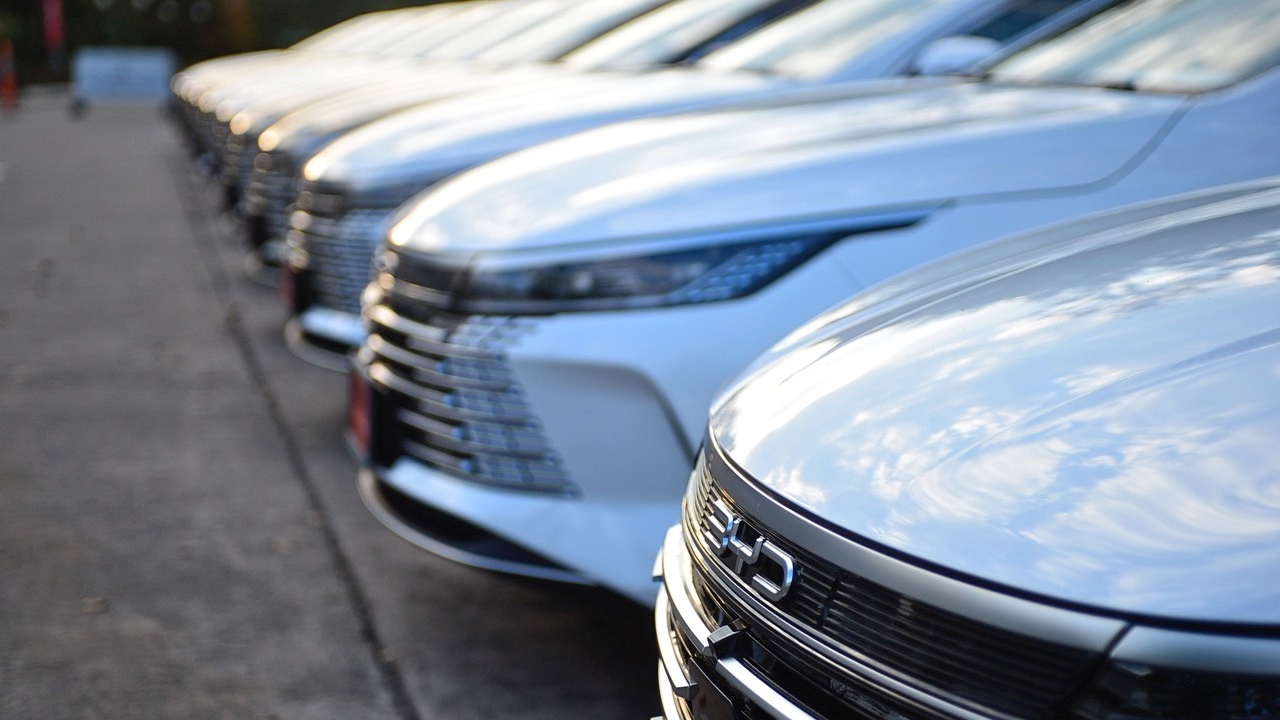
Considering the current strength of Chinese electric vehicle (EV) brands in Thailand in 2026, BYD remains the undisputed strongest brand in terms of sales, market share, and consumer trust. However, this market is highly competitive, with other brands excelling in different aspects.


Ranked number 1 is BYD, the undisputed dominant leader. BYD is the top-selling Chinese car brand in Thailand for several reasons. In 2025, BYD had the highest registration numbers among BEV vehicles, especially with models like the BYD Dolphin and Atto 3, which consistently ranked in the country's Top 5. Business ecosystem: BYD operates a manufacturing plant in Rayong Province, active since 2024, giving it advantages in taxes and spare parts costs. Its Blade Battery technology is well trusted by Thai consumers for safety and durability. BYD also has the most extensive service network compared to other Chinese brands, rapidly expanding through its main distributor, Rever Automotive.


2. MG, the market pioneer and people's favorite, is strong as the most "familiar" brand to Thai consumers. Its diverse lineup ranges from affordable models like the MG EP/ES to sporty convertibles like the MG Cyberster and luxury electric vans. MG boasts one of the largest numbers of showrooms and service centers in Thailand (covering both gasoline and electric vehicles). Being an early entrant and serious market player, especially in after-sales service, has built strong customer confidence in maintenance. Popular models like the MG4 Electric receive praise for superior suspension and driving experience compared to peers in the same category.


3. GWM (Great Wall Motor): The innovator and lifestyle brand.
GWM focuses on building a modern brand targeting the upper market segment. Its flagship model, the ORA Good Cat, remains an iconic EV with distinctive design. The TANK brand (Hybrid/PHEV) appeals to adventure enthusiasts. Its user experience emphasizes app-based services and a Super App that connects well with users. In 2026, marking its fifth year in Thailand's automotive market, GWM is expanding into luxury electric MPVs under the WEY brand, which has earned international awards.


4. Changan and GAC Aion: The fastest-growing challengers.
Changan is gaining momentum with its Deepal brand (S07, L07) and recently launched NEVO in 2026, aiming to be a Top 3 Chinese brand in Thailand, supported by a large manufacturing base in Rayong.
GAC Aion is very strong in commercial use vehicles (taxis and fleets) with models like the Aion ES and family-friendly Aion Y Plus, which offers spacious interiors exceeding expectations for the price.
Comparison of the strengths of Chinese electric vehicle brands (2025-2026).
BYD leads with nearly 40% market share of BEV cumulative sales.
MG has the most extensive and longest-established service network, earning strong consumer confidence.
BYD's Blade Battery technology is the most widely recognized and trusted.
GWM stands out with unique design and a strong community lifestyle appeal.
GAC Aion emphasizes spaciousness and value per square inch.
Changan/XPENG lead in advanced driving technology, with cutting-edge ADAS and AI systems in new models.
Summary.
When asked which brand is overall the strongest, BYD is the clear answer. However, MG, with its familiar service network, is its closest competitor. For those who value modern design and technology, GWM and Changan are rising choices, supported by continuous improvements behind the scenes.


For the Chery brand in 2026, this is a critical period as it seeks to "prove itself" in the Thai market after officially returning under direct management by its parent company, alongside launching sub-brands Omoda and Jaecoo.
Regarding "consumer confidence," the key points can be summarized as follows:
1. Brand status in the minds of Thai consumers.
Chery had a less favorable reputation decades ago concerning durability and service, but this time the brand has thoroughly prepared.
New acceptance: In 2025-2026, Chery achieved significant success with the Chery V23 (box-shaped EV), which won Thailand's Car of the Year 2026, helping erase old perceptions and generate strong interest among younger consumers.
Growing sales: In 2025, Chery reached the Top 5 EV brands in Thailand in some months, indicating increasing Thai openness to the brand.


2. Confidence in production and investment.
The strongest confidence builder is "having a factory in Thailand."
Rayong factory: Chery plans to fully operate its manufacturing plant in Rayong in 2026 as a production base for both domestic sales and exports, signaling a long-term commitment rather than a short-term market presence. However, the cancellation of the Omoda & Jaecoo factory opening ceremony less than 12 hours before the event caused some loss of confidence.
National collaboration: Projects in partnership with government agencies and Thai partners aim to position Thailand as an EV hub, adding credibility to Chery's business approach.

3. After-sales service and spare parts (the biggest concern).
Chery is proactively addressing this pain point by expanding service centers, now covering over 30-40 locations nationwide, with plans for further growth. Its warranty highlights extended coverage (up to 7-8 years or very high mileage on some models/campaigns) to reassure new buyers. A centralized spare parts warehouse in Thailand reduces repair wait times, tackling a major issue for new brands.

4. Technology and products: Chery’s lineup includes not only EVs (Omoda E5, V23, J5 EV, J6T) but also hybrids and plug-in hybrids (Tiggo series), catering to customers not yet ready for full electric.
Assembly quality: Most user reviews acknowledge that interior materials and assembly of newer models exceed the typical standards of Chinese cars at similar price points.
Considerations: Although much improved, consumer confidence still requires long-term proof.
Software stability, like other Chinese brands, can sometimes experience infotainment bugs or overly sensitive driving assist sensors. Regarding resale value, as a recently relaunched brand, Chery's used car prices remain uncertain compared to established brands like BYD or MG. Electric vehicles generally depreciate more steeply than combustion vehicles of the same model year, often by 20-30% or more.
The indefinite postponement of the factory opening ceremony in early 2026, due to internal issues at Omoda & Jaecoo, may cause hesitation and reduce consumer confidence among some prospective buyers.