

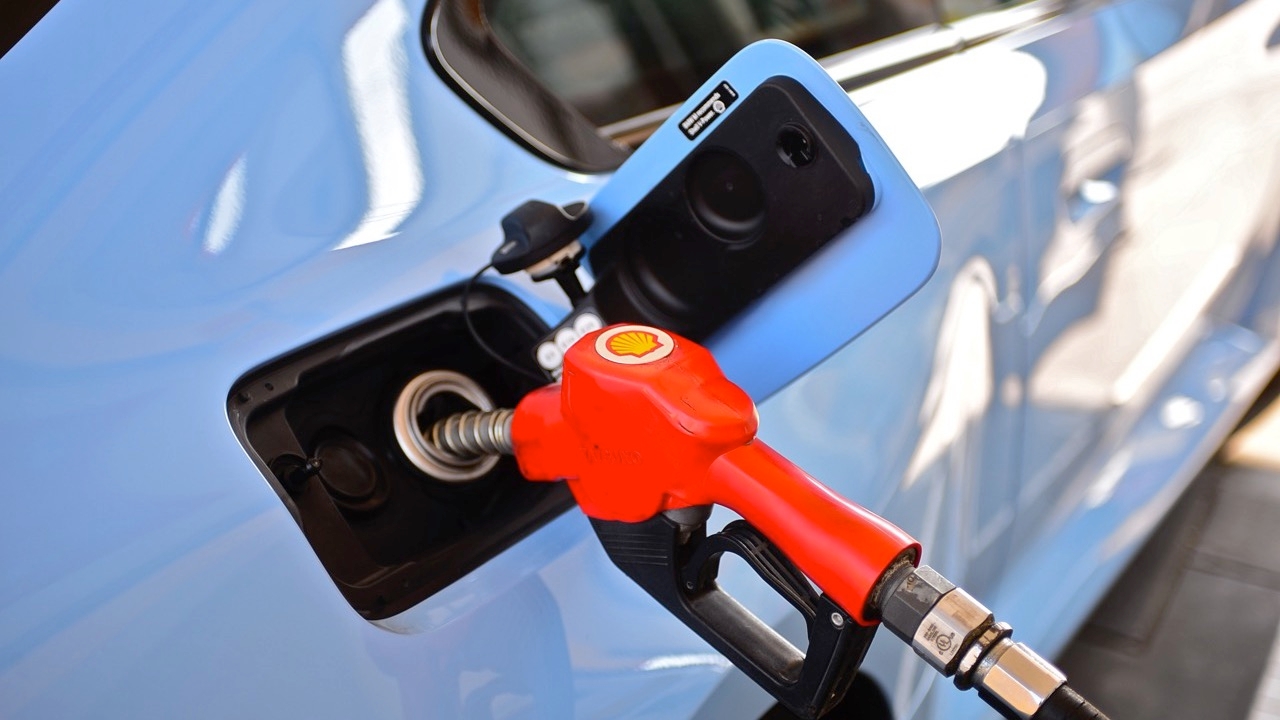
Choosing fuel amid unusual conditions to ensure every baht is well spent and you can drive the farthest depends mainly on two factors: octane rating and the energy density of the fuel. This article compares gasoline types E20, 91, and 95 to determine which provides the greatest driving distance.

Measured by kilometers per tank, gasohol 95 delivers the longest range at the same speed. This is because 95 fuel, especially from Shell, contains more gasoline than E20, which is blended with 20% ethanol. As a result, each combustion of 95 fuel produces more power, allowing the engine to use less fuel to cover the same distance. Although E20 has a higher octane rating than 95, which aids precise ignition, ethanol's lower energy content means the engine injects more fuel to maintain power, increasing consumption. However, E20 is cheaper than both 91 and 95.


Which fuel offers the best cost efficiency? Considering value means dividing the distance traveled by the price paid. E20 is generally the most cost-effective despite its slightly shorter driving range per tank (about 3-5% less than 95). Its lower price often means E20 has the lowest cost per kilometer. Currently, gasohol 91 is priced close to 95 but provides poorer combustion efficiency and less protection against knocking. If your car is rated for 95, switching between 95 and E20 is usually a clearer choice than 91.

In summary, if you prioritize saving money, choose E20. Although the tank empties a bit faster, the price difference makes your cost per kilometer lower. For long-distance driving or smoother engine operation, select gasohol 95, which offers slightly better acceleration and longer range per tank. This suits those who want fewer fuel stops or travel routes with limited stations. However, always check your vehicle’s fuel cap or manual to ensure it supports E20. Older cars not designed for E20 may experience damage to fuel hoses or pumps.

Analyzing why E20 offers the best value despite shorter driving range: Even though E20 requires more frequent refueling, it costs about 5 baht less per liter than gasohol 95. Calculating cost per kilometer shows E20 saves around 10-12%. For typical use of 1,000 kilometers per month or 12,000 per year, filling with E20 can save approximately 200-250 baht annually compared to 95.

Gasohol 95 provides the longest distance per full tank. For example, a 50-liter tank filled with 95 can travel roughly 750 kilometers (using normal acceleration in 1.5 or 1.8-liter engines without turbo but with hybrid systems). E20 yields about 705 kilometers. Thus, 95 extends driving range by nearly 45-50 kilometers per fill-up. It suits those who prefer fewer refueling stops or travel in areas with scarce stations. High-performance vehicles, European models focusing on fuel quality, or cars incompatible with E20 should choose 91 or 95 to avoid ignition, fuel line, and engine performance issues.
Gasohol 91 lies in a middle ground. Currently, the price difference between 91 and 95 is very small (only 0.37 baht). Since 95 offers better ignition quality in most cars, choosing 95 generally feels more worthwhile for engine performance compared to 91.
To maximize savings, choose E20 as the economic winner. For better driving enjoyment, power, and longest distance per tank, select gasohol 95. Remember, we import fuel, and during unusual times, stockpiling for profit does not help the nation survive global energy crises caused by conflicts in Iran, Israel, and the US. Such profiteering leads to fuel hoarding. If fuel shortages become severe, consider switching to electric vehicles, which eliminate waiting in fuel queues. Installing a home charger can save significantly compared to combustion engine cars that consume fuel heavily.