

The 47th Bangkok International Motor Show 2026 (23 Mar – 5 Apr 2026 GMT+7) just ended with a record-high total of 132,951 car bookings. Despite rising fuel prices due to the Middle East conflict, which propelled battery electric vehicles (BEV) to claim over 60% of total bookings, hybrid vehicles (HEV) remain popular among buyers not yet ready to switch fully to electric. The surge in diesel prices, reaching 50 baht/liter in April, has made energy-efficient hybrids a balanced choice for those hesitant to commit to 100% electric vehicles.
The brands with the highest booking volumes and top popular models are:
Brands with the highest HEV bookings:

Toyota: Ranked number one in combustion engine and hybrid segments with total bookings across all models reaching 15,750 units.
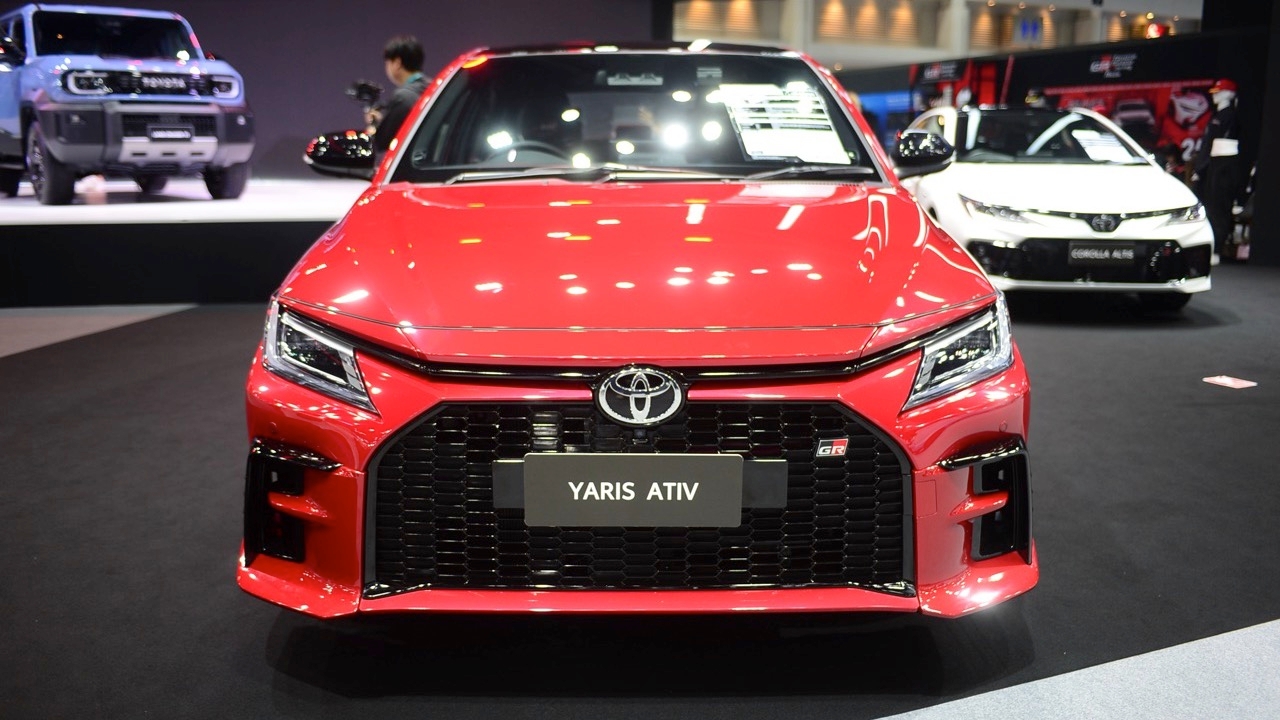
The best-selling model remains the Toyota Yaris Cross, the brand’s top-selling HEV and second best in the small SUV segment, followed by the Corolla Cross HEV and New Yaris ATIV HEV, which drew significant attention at the show.

Toyota’s success at Motor Show 2026, topping bookings in combustion and hybrid categories with Yaris Cross as the flagship, stems from a well-executed strategy to compete against the rising Chinese BEV trend.Confidence in the HEV systemWhile the BEV market grows, many users remain unready for charging station limitations or long charging times, especially during festivals like Songkran 2026. The Yaris Cross HEV addresses these concerns with impressive fuel efficiency of 26.3 km/l (Eco Sticker), offering cost per kilometer comparable to electric vehicles but with the convenience of refueling anywhere. Toyota’s hybrid battery is renowned for durability and long warranties, encouraging buyers to choose it over newer brands.

Honda recorded total bookings of 5,907 units, with standout models all in the e:HEV family—Civic, HR-V, and City e:HEV—remaining the primary choices for buyers seeking hybrid system reliability.
Honda’s situation at Motor Show 2026 shows despite efforts to push BEVs with the e:N2 priced at 1,429,000 baht, nearly all bookings favored their e:HEV hybrids, due mainly to product and strategic factors misaligned with current BEV market expectations.

Honda’s lower BEV sales but stronger hybrid sales result from value concerns compared to competitors. The 2026 BEV market is highly competitive, especially with Chinese brands offering full specs at much lower prices. Comparing Honda e:N2 (1.42 million baht) with similarly priced BYD or Geely models, customers perceive Honda as offering fewer options, including driving range and driver assistance tech, which seem less advanced. Honda’s BEV charging speeds (DC Fast Charge) are slower than newer standards, causing serious BEV users to overlook them.

Honda’s e:HEV hybrid system is recognized for fun driving among peers, reflecting its sporty DNA: Civic and HR-V e:HEV deliver a driving feel akin to European cars, with high torque electric motors enabling quick overtaking—qualities highly valued by Honda enthusiasts over full electric adoption. Most Honda customers prioritize long-term use and worry about BEV resale values and software stability, making e:HEV a balanced choice for economy and peace of mind.
Honda’s early BEV market strategy of "not focusing on outright sales" involved using subscription models for the e:N1 initially, limiting general accessibility and ownership perception. Although later shifted to outright sales around 1.19–1.2 million baht, Honda’s BEV image in Thailand remains perceived as "restricted" and "expensive," especially as its design closely resembles the old HR-V, lacking wow factor.
A fundamental issue with Honda’s BEVs (e:N1/e:N2) is their "converted EV" platform—modifying combustion car structures for electric use, similar to the HR-V—resulting in less efficient space and battery management compared to dedicated pure EV platforms designed from the ground up.

GWM (Great Wall Motor): Recorded total bookings of 6,819 units. Highlights include the launch of ORA 5 HEV starting at 709,000 baht, competing in the affordable hybrid passenger car market, alongside steady bookings for Haval Jolion and Haval H6.

ORA 5 HEV emerged as a dark horse at Motor Show 2026, attracting attention and bookings rivaling Haval models. This was expected given GWM’s aggressive pricing and specs strategy, effectively disrupting the hybrid market under 700,000 baht. The starting price of 709,000 baht (PRO model) is a major market shock, competing with lower segments. This price undercuts City e:HEV and Yaris ATIV HEV while offering a larger, taller SUV/crossover body. Crucially, it costs significantly less than market leaders like Yaris Cross or entry-level HR-V, saving buyers hundreds of thousands of baht, appealing to budget-conscious family buyers.

GWM uses a 1.5 Turbo engine combined with an electric motor (DHT) delivering impressive performance for the price: up to 223 horsepower and 476 Nm torque. Although actual wheel torque may be lower due to hybrid system limits, the 0-100 km/h acceleration in 7.7 seconds outperforms most hybrid rivals in the same class, appealing to drivers seeking power and confident overtaking. While ORA Good Cat is fully electric, ORA 5 HEV targets customers wanting ORA’s futuristic design and EV tech (like the large Coffee OS 3.0 touchscreen) but preferring conventional refueling. GWM claims a single tank can exceed 1,000 km range, averaging 23.3 km/l, which appeals to long-distance travelers.

ORA 5’s body dimensions and features include a 2,720 mm wheelbase longer than many SUVs in its class, providing a surprisingly spacious and comfortable rear cabin. Even the base model includes a comprehensive safety suite and driver assistance systems, plus a modern 14.6-inch infotainment screen, surpassing competitors at the same price point.
The arrival of ORA 5 HEV shows GWM’s willingness to cannibalize its own Haval Jolion sales to capture market share from leaders like Toyota and Honda, leveraging fresh design and superior engine specs as main selling points.