

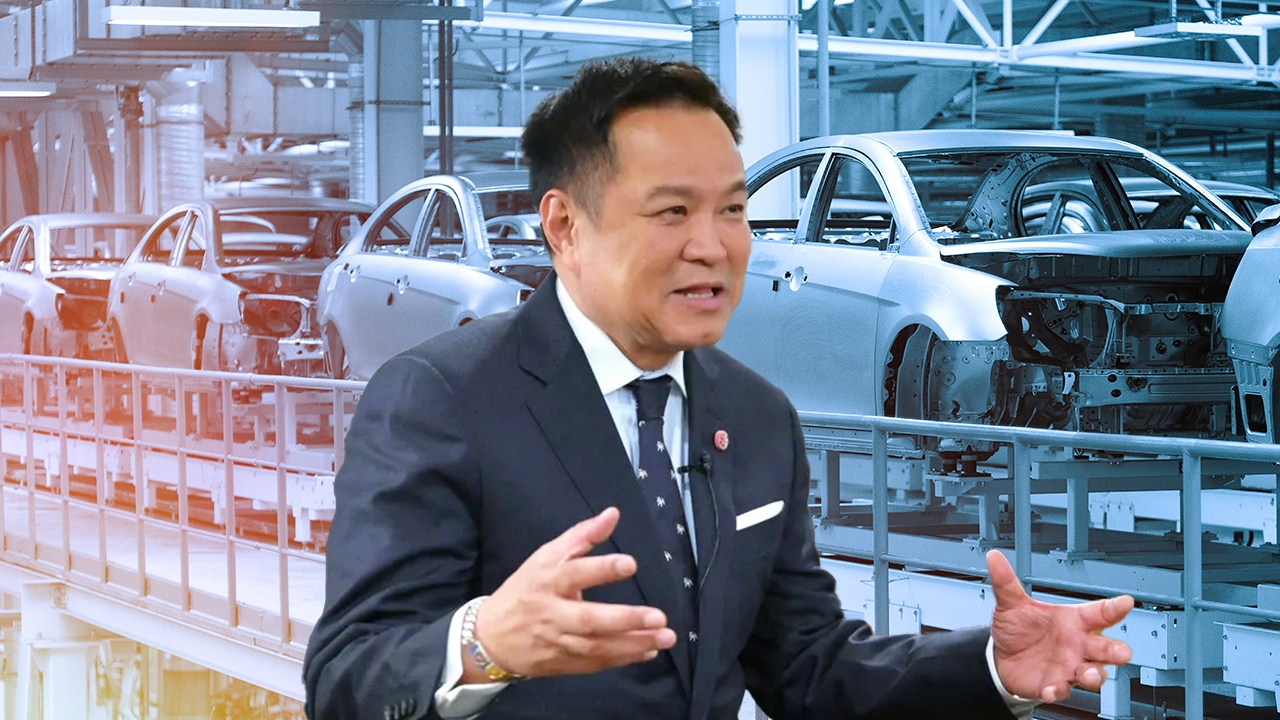
"Anutin" dismisses rumors of Japanese capital relocating, emphasizing that the government has never intended to abandon longtime allies. He asserts the traditional automotive industry is a vital core and urges "Ekniti" to swiftly resolve EV promotion criteria loopholes to create fairness in Thailand's automotive industry and eliminate inconsistencies in policy.
Prime Minister and Minister of Interior Anutin Charnvirakul told reporters during his official visit to Australia and New Zealand that the government values investors from all countries, especially those from Japan, who have long used Thailand as a primary production base and become integral to the Thai industrial sector. The government is committed to assuring that Thailand will not abandon these long-standing investor groups.
"I confirm that the government's main policy is openness and readiness to improve conditions to facilitate business operations under our good relations, aiming for sustainable growth and long-term economic cooperation to maintain Japan's strong production base in Thailand," he said.

However, the government places great importance on the automotive industry, where most components—including engines, bodies, chassis, and systems—are currently produced domestically under Japanese brands. This is a sector that cannot be neglected, and efforts must ensure investors do not abandon Thailand.
"Japanese investors have been in Thailand so long that it's hard to distinguish whether it's Thailand or Japan regarding using Thailand as a production base. We are ready to ease any obstacles to assure them we do not abandon them. It's not acceptable to yield to their demands when they need us, but then impose new conditions once they succeed," Anutin stated.
Anutin said that regarding electric vehicles (EVs), he has assigned Deputy Prime Minister and Finance Minister Ekniti Nitithanprapas to consider measures to protect investors from all countries so that the Japanese automotive industry investing in this sector is not disadvantaged. Structural adjustments will be made to ensure fairness and maintain confidence among manufacturers from all countries towards Thailand.

Although EVs initially rely heavily on imported parts, a new domestic supply chain will surely emerge, including batteries, computer systems, and other components, which will be required to establish production bases in Thailand. The government is committed to maintaining political and economic stability as a positive factor to attract and retain long-term investment.
"We must rely on the numbers: since this government took office, foreign investment in Thailand has increased, surpassing one trillion baht last year, with actual investment reaching 530 billion baht in the first half of this year. Therefore, there is no indication of production base relocation or a halt in foreign investment due to claims that Thailand is not ready," he concluded.