

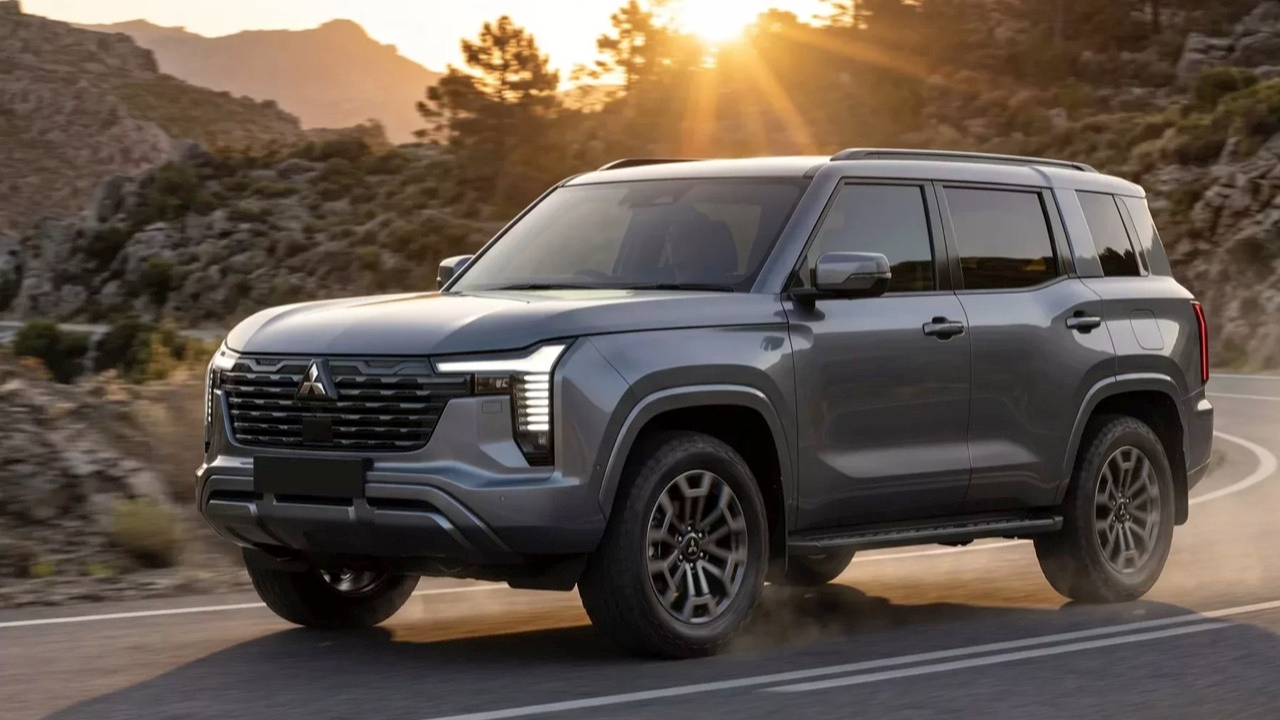
The recent rumors and first teaser of the All-New Mitsubishi Pajero (2027 model) released in late May 2026 mark a significant turning point. Mitsubishi has decided to bring back this legendary name as a Global Flagship SUV, to be assembled at the Laem Chabang plant in Thailand, with an official launch planned for Q3 of this year, expected between September and November 2026.

Following confirmation of the new Pajero's global launch in Q3 2026, deliveries are expected to begin around December. The Pajero features a robust ladder-frame chassis and a diesel engine, sharing its basic platform and diesel powertrain with the Triton pickup, but upgraded with a new 8-speed automatic transmission.This news is a major development that has revitalized the SUV market after a prolonged period of quiet.


The Hyper Power (Bi-Turbo) 2.4-liter four-cylinder diesel engine produces a maximum of 204 horsepower and 470 Nm of torque. Tuned for strong low-end torque to improve responsiveness and reduce turbo lag compared to the previous single-turbo setup. While the Triton uses a 6-speed automatic, reports from Australia and dealers indicate the new Pajero will upgrade to an 8-speed automatic to match its premium positioning. This closer gear ratio enhances long-distance smoothness and fuel efficiency. A hybrid HEV variant is also confirmed to be under development, potentially using a P2 motor system between the engine and transmission, to meet stricter emissions standards post-2027.
.The diesel engine is a 2.4-liter turbo producing 204 horsepower and 470 Nm torque, paired with the full-time four-wheel drive Super Select II system, renowned for making the Triton one of the most enjoyable and capable pickups currently on the market. Dealer reports suggest the 6-speed automatic in the Triton will be replaced by an 8-speed automatic in the new Pajero, elevating power delivery smoothness and intelligence to compete with market rivals and continue the legacy of the Pajero Sport. The vehicle is expected to tow up to 3.5 tons (3,500 kilograms) and wade through water up to 800 millimeters deep, clearly marking it as a true off-road warrior rather than just a utility SUV.


The average fuel consumption is about 12.5 kilometers per liter. The vehicle dimensions directly compete with the Ford Everest and Toyota Fortuner, two dominant players in the large SUV segment. Another strong contender is the Isuzu MU-X 4WD model, closely matching the Pajero. Although the MU-X is well-known for durability and popularity, its driving performance and technology are becoming dated.

Mitsubishi aims to distinguish the Pajero from its pickup-based PPV sibling, the Triton, to avoid it being seen as merely a modified pickup. The company clearly states a completely redesigned rear suspension, switching from leaf springs to coil springs with a multi-link independent setup unique to this model. This focuses on smoother ride quality, better shock absorption, and reducing rear-end sway over speed bumps—a key comfort factor for third-row passengers in such vehicles. For handling, the Active Yaw Control (AYC) system, previously found in the Xpander HEV and top-trim Triton, will be retuned to suit the larger body structure, enhancing high-speed cornering stability and precision.

Another important aspect is performance and usability. Moving the market position from Pajero Sport to the standalone Pajero name means this model will compete with premium off-road SUVs like the Toyota Land Cruiser Prado and high-end Ford Everest variants. The Super Select 4WD II full-time four-wheel drive system allows safe 4H driving on dry asphalt, complemented by seven drive modes (Normal, Eco, Power, Sand, Gravel, Snow, Mud), catering to both serious off-roaders and on-road drivers. The towing capacity is expected to reach up to 3.5 tons, with at least 800 millimeters water wading depth.

The cabin and body dimensions feature a noticeably longer and wider wheelbase than previous models, resulting in more comfortable seating, especially in the second and third rows. Noise, vibration, and harshness (NVH) are improved with a new cabin structure incorporating enhanced chassis vibration isolation points.


This comeback is a challenging strategic move for the Japanese brand, no longer able to launch effortlessly as before due to strong competition from new Chinese models entering the market. Mitsubishi has chosen a durable steel ladder-frame chassis instead of the monocoque used in the old Pajero, prioritizing toughness for heavy off-road use and load-bearing. The biggest challenge will be tuning suspension softness, noise insulation, and interior interface design to transform the rugged pickup feel into a luxurious, appealing flagship PPV SUV that justifies a higher price. We will have to watch how well this is achieved. The launch is expected around late October or possibly at the 2026 Motor Expo, where official pricing and booking promotions will be announced.