

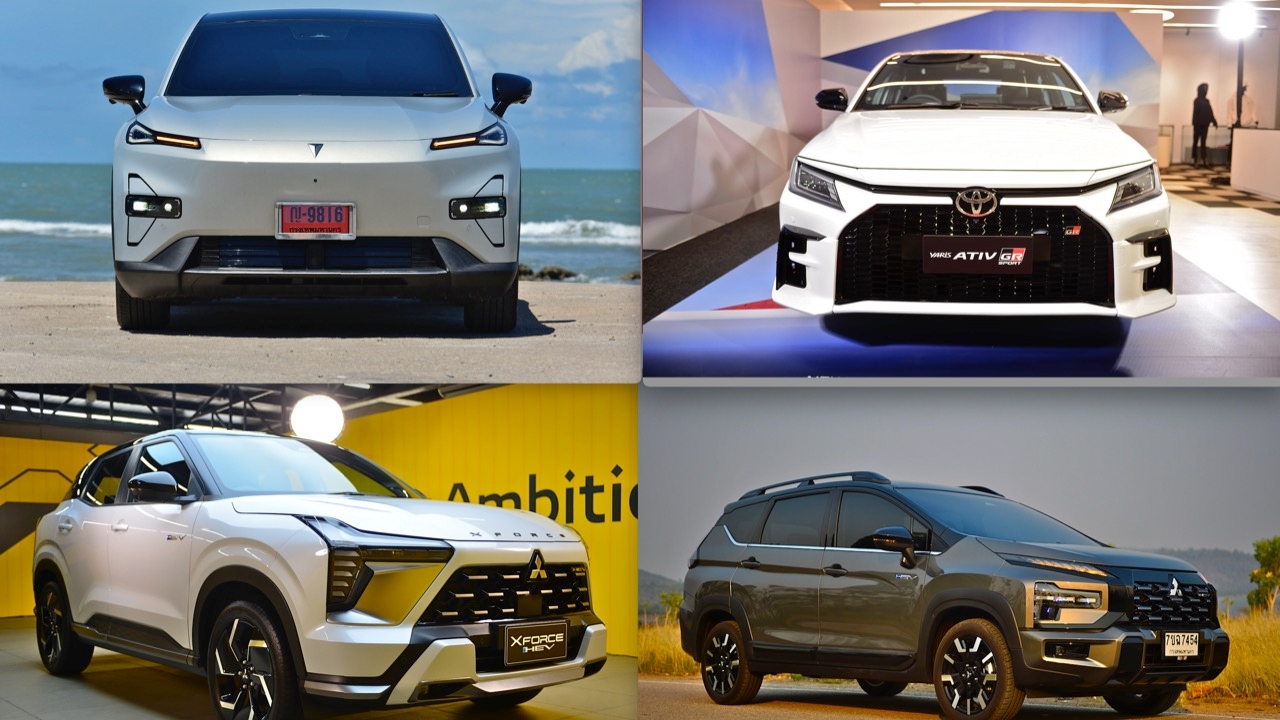
A comparison between the seasoned champion, the traditional HEV (Hybrid Electric Vehicle) hybrid system well known in Thailand, and the energetic newcomer REEV (Range Extended Electric Vehicle) from Chinese brands, currently trending because people are tired of searching for public charging stations during long holiday trips. Which type offers the best fuel economy?


Hybrid Electric Vehicles (HEV)
Hybrid vehicles, or HEVs, such as the Toyota Yaris Ativ HEV, Honda City HEV, and Mitsubishi XForce HEV/Mitsubishi Xpander Cross HEV, are popular models combining electric motors with internal combustion engines. Unlike PHEVs, they do not require external plug-in charging.

The HEV drivetrain uses a self-charging hybrid system consisting of a 1.5-liter gasoline engine, an electric motor, and a small battery. Electrical energy is generated by regenerative braking and by the engine acting as a generator. The electric motor assists during start-up and overtaking, and can power the vehicle for short distances at low speeds.
The control system automatically switches between using the electric motor, the engine, or both to maximize energy efficiency, focusing on minimizing fuel consumption even at higher speeds (Honda HEV).

HEVs emit less pollution than traditional internal combustion cars due to better fuel economy, especially in traffic jams where regenerative braking recovers energy. However, because they still rely on internal combustion engines, they cannot achieve zero emissions like BEVs. HEVs do not require plug-in charging; refueling is as simple as normal gasoline filling. The hybrid system manages energy capture and reuse automatically, reducing fuel stops compared to conventional cars. The three models mentioned achieve fuel economy of 19-24 km per liter, which is very efficient. Although manufacturers' claims often exceed real-world results, driving steadily at 80-100 km/h, these cars typically get 18-22 km per liter, still very economical. Pushing a Honda City HEV to 16 km per liter would require sustained speeds of 140-150 km/h with hardly any accelerator lift, which is not recommended.

HEVs are suitable for Thailand where charging infrastructure is limited or insufficient. The established nationwide network of gas stations, even in remote areas, supports HEVs well. When electric charging stations are scarce and many EVs travel simultaneously during long holidays, HEVs allow smooth long-distance trips without needing to stop for charging, reducing risks—especially in rural or natural tourist areas lacking charging points.

Range-Extended Electric Vehicles (REEV)
REEVs combine electric drive systems with a small onboard generator engine, offering a practical solution to reduce range anxiety. Drivers can use battery power for daily trips while having reliable extended range for longer journeys without worrying about battery depletion en route.


Drivetrain Configuration
In REEVs, the electric motor directly drives the wheels, delivering smooth, quiet acceleration typical of electric vehicles. The onboard engine functions solely as a generator to recharge the battery when needed, without mechanical connection to the wheels. This design ensures zero emissions at low speeds when the engine is off, while providing peace of mind with longer driving range for trips. It intelligently combines EV performance with a dependable backup power source.


When operating in electric mode, REEVs produce zero tailpipe emissions. Even when the generator engine runs, emissions remain relatively low because it only produces electricity rather than directly powering the drivetrain. Thus, REEVs are noticeably cleaner than traditional internal combustion vehicles.
REEVs offer convenient energy options: they can be plugged into charging stations for direct battery charging like conventional EVs, and the onboard generator can recharge the battery as needed. This allows continuous travel even where charging infrastructure is lacking. However, driving fast causes high fuel consumption—up to about 10 km per liter—significantly worse than HEVs.

At moderate speeds of 70-80 km/h, REEVs serve as practical new energy vehicles during the transition period. They act as full electric cars for urban low-speed driving, with the generator as a backup for long trips or areas with limited charging stations. This dual capability solves the challenge of finding chargers, making REEVs a promising choice for drivers who don't speed.

Battery Electric Vehicles (BEV)
Powered 100% by electricity, BEVs produce zero emissions and require minimal maintenance. For long-distance travel, they depend heavily on charging stations. Secondhand prices drop sharply, and insurance premiums are high. However, for urban use with daily travel of 100-200 km and home charging (Wall Box), they are highly practical.

Plug-in Hybrid Electric Vehicles (PHEV)
Combine electric power for short trips with gasoline engines for longer drives. The duplicated drivetrain increases complexity and repair costs, especially for European plug-in hybrids where battery replacements can cost around a million baht (e.g., Porsche Panamera SE Hybrid).

Hybrid Electric Vehicles (HEV)
Improve fuel efficiency without relying on charging infrastructure, allowing limited pure electric driving—only 2-3 km at low speeds before the engine starts. HEVs sold in Thailand are mostly tuned for fuel efficiency between 18-23 km per liter, which is very economical.

Range-Extended Electric Vehicles (REEV)
Offer the benefits of electric motor drive combined with extended range. However, options remain limited and high-speed driving can lead to excessive fuel consumption.
Summary
HEVs are best for those seeking reliability, simplicity, no complex technology, no home charging setup, and no change in driving habits. Prefer Japanese brands known for durability, easy repairs, and good resale value, while achieving significant fuel savings amid rising fuel prices.
REEVs suit those who enjoy new technology, want the full electric driving experience—powerful, quiet, smooth—with home AC charging to save fuel on workdays. They avoid long waits or sharing charging stations during holiday trips. REEVs effectively address range anxiety now, but should not be driven fast, as high speeds greatly increase fuel consumption.