

If the C-Class is the best-selling model of the Mercedes brand, then the BMW 3 Series is the compact backbone of the BMW lineup (no argument). It might even be considered the main luxury sedan in the automotive industry.

The 3 Series has become increasingly difficult to attain today, yet most car enthusiasts still desire to own one. For a long time, the BMW E21/E30/E36/E46/E90 and G20 have been agile machines, emphasizing nimbleness in an era when major manufacturers produced boxy sedan designs just to sell them. However, the legend of "The Ultimate Driving Machine," with over 18 million units sold since 1975, best illustrates the prowess of this BMW model.

Even in the era of environmental friendliness, global regulations, and marketing claims about efficient dynamics, BMW has maintained sharp steering precision down to every detail. Today, as the world shifts toward electric power, BMW has managed this transition more smoothly than most brands. Wealthy younger buyers favor the Neue Klasse iX3, and now there's the i3—a new four-door EV built on the same new architecture—equipped with a main control unit BMW calls the 'heart of joy,' essentially the car's AI system.

BMW strives to retain traditional customers skeptical that pure EVs alone will clean the planet, understanding that even if CO2 emissions ceased immediately, the world would still need 150-200 years to adjust. By positioning itself as a brand open to parallel powertrain technologies, BMW continues to offer new combustion engine 3 Series models. Few brands excel at the intake, compression, combustion, and exhaust cycle like BMW. When combined with driving dynamics, BMW is arguably the most successful brand at infusing driving feel into every model to impress users; otherwise, it would have failed and retreated to Germany long ago.


The eighth-generation 3 Series, set to debut at the 43rd Motor Expo, will include the M Electric concept and gasoline engine variants, as well as a powerful dual-motor M350 xDrive. This model shines as a continuation of the youthful aggression of the BMW M340i xDrive.
The 320 uses a 4-cylinder turbocharged engine paired with a 48-volt mild hybrid system, delivering 208 horsepower and 330 Nm of torque. It accelerates from 0-100 km/h in 7.4 seconds, has a top speed of 250 km/h, and claims fuel efficiency of 14-15 km/liter. The 48V mild hybrid system notably improves energy use and fuel economy.


The M350 xDrive G50 (latest chassis code) employs a turbocharged inline-6 B58 engine enhanced with a mild hybrid system, adding 18 horsepower for a total of 437 horsepower—more powerful than the V8 E92 M3 and 50 horsepower stronger than the previous M340i. Torque reaches 540 Nm, accelerating 0-100 km/h in 4.1 seconds—fast enough to challenge supercars. The M350's top speed is limited to 280 km/h, with a claimed combined fuel efficiency of 14 km/liter, making it noticeably more economical than competitors.

The plug-in hybrid 330e PHEV model is expected to arrive in Thailand in 2027. Longtime rivals like the Audi A5 (formerly A4) and Mercedes C-Class remain in the market. Still, the new M350 xDrive seems to stand at the pinnacle, as intended by BMW executives from the start.


The combustion engine 3 Series uses the Neue Klasse platform, clearly a strong foundation, but with significant refinements. It measures 4,765 mm in length—5 mm longer than the i3 but lower and narrower—and 56 mm longer than the previous G20. The front-to-rear wheelbase has been extended to improve high-speed stability.

A close look reveals the combustion engine model’s body has a more pronounced proportion from the A-pillar base to the front wheel hub—a point called the prestige mass. The windshield is steeper, and the rear roofline slopes lower, since the i3’s rear seats sit higher. The front extends to accommodate the engine and radiator. Overall, the styling differences are more noticeable than at first glance.

The prototype BMW prepared earlier evolved into the modern 3 Series for sale, which looks sharp and contemporary but still has some less harmonious points—especially the rear end, where a line above the wheel arch is unclear from some angles, although it should be sharp to enhance body tension. The new taillights appear unusual, drawing attention inward and subtly affecting the 3 Series’ proportions.


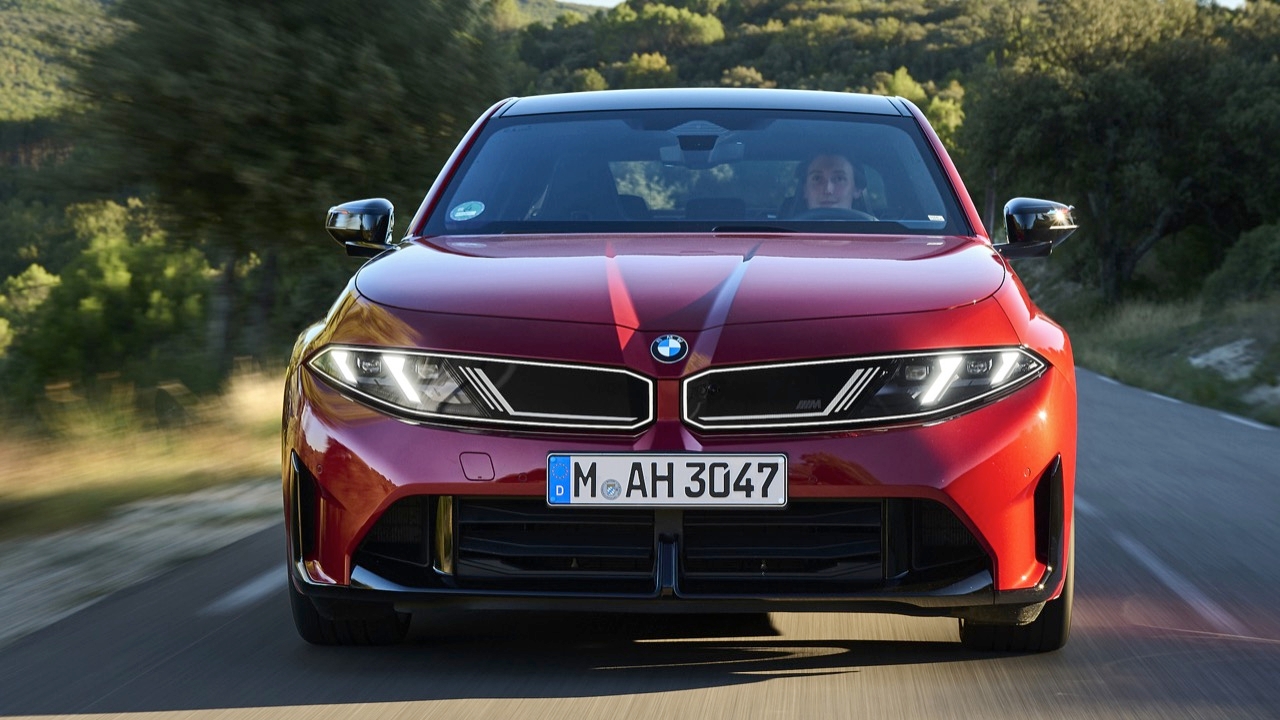
The front is tidy and orderly. The sedan’s kidney grille is horizontal, resembling a front bumper enhanced with LED graphic lighting for vitality. The round BMW logo has moved to the edge of the hood in a groove along the hood seam, creating a unique look. The M350 features the new M Yellow light pattern consistent with all new BMW models. Choosing the Iconic Glow option, even on M Performance models, includes this lighting as standard.


The headlights feature animated welcome and farewell lighting with modes called Balanced, Relaxed, and Excited. Classic quad exhaust tips emphasize the aggressive character. The M350 also has a rear spoiler. The petrol 3 Series offers 19- and 20-inch alloy wheels; wheels smaller than 19 inches are not recommended. The standard wheels are M two-tone Jet Black alloys. This body style needs large, standout wheels to fill the arches.


Like modern BMWs, the new 3 Series looks better with time. Head of design Adrian van Hooydonk said they aim to keep the flame alive rather than worship fading ashes. Therefore, a retro vibe is definitely not part of the plan.
At launch, the BMW 3 Series offers 11 body colors. The Le Castellet Blue looks strong, and the Frozen Matte colors are solemn and mysterious. This particular shade is among the pricier options from BMW Individual.
Inside, the new model features the Panoramic iDrive system with a thin, customizable display stretching across the dashboard base. There’s also a new central touchscreen, a redesigned steering wheel, interesting materials, and an overall futuristic atmosphere.


The M350 xDrive approaches two-thirds of the full M3’s performance. For those not ready to move to the all-electric M3 arriving next year, investing in this model is a fine choice. Experiencing BMW’s inline-6 again is delightful. The B58 engine is newly tuned for smoothness and excitement, with the same pleasing exhaust note, and remains relatively fuel-efficient compared to competitors.

The 3 Series stands at a crossroads where BMW must fully commit to the rapidly growing EV market while still providing combustion engines for regions worldwide that are not yet ready or willing to switch to electric vehicles.
Even as an M Sport, this new model is understated in speech but holds a metaphorical baseball bat, ready to challenge anyone doubting its speed. The M350 is superbly crafted—a single car that fulfills all your needs: technology, power, speed, fuel efficiency, and sharp handling.