

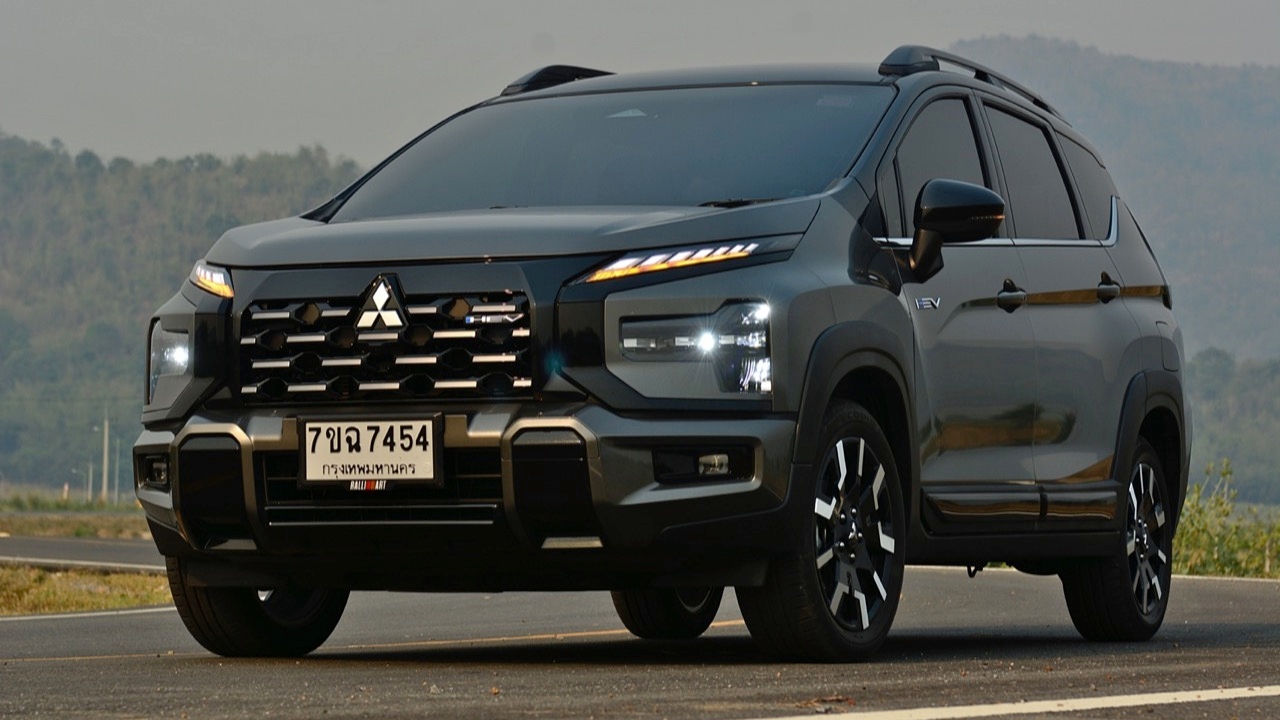
Despite facing a difficult situation, the Mitsubishi Xpander Cross HEV (2026 model) is still holding its own. Over the past 2-3 years, we have all seen Japanese cars overwhelmed by Chinese vehicles flooding the market, forcing most Japanese brands to struggle to keep up. The issue of fair taxation for market-leading brands should consider the country's major industries that contribute significantly to GDP. Indeed, in the past, it was as if we were naïvely welcoming foreigners to sell goods without import taxes, hastily pushing changes in drivetrain systems while neglecting longstanding partners. This has disadvantaged long-time automotive alliances in pricing competitiveness, causing Thai parts suppliers to struggle as Japanese car sales have lost substantial market share to Chinese brands.
In short, once the government adjusts taxes on Chinese cars, established Japanese brands should elevate their vehicles beyond current standards. They need to produce new models with full-featured interiors without cutting costs. Suppliers must also adapt, collaborating closely with Japanese parts manufacturers to provide high-quality, attractive components that appeal to buyers looking for new cars. Fairer import tax rates for electric vehicles, not overly favoring China, would foster more balanced competition. This would encourage building better cars at reasonable prices, benefiting consumers. If Japanese makers reduce costs due to less favorable taxes compared to China, Chinese brands, which have only recently entered the market, might leverage their advantages to capture even more market share.


The 2026 Mitsubishi Xpander Cross HEV upgrades the crossover/MPV line from the previous internal combustion engine model by introducing a 1.6-liter engine connected to the Full Hybrid e:Motion system and retuned suspension. Its exterior has a modern, futuristic look characteristic of the brand, retaining the Dynamic Shield identity. Hybrid and crossover toughness are emphasized with a taller stance than sedans. HEV badges are placed on the front grille, front doors, and rear hatch. Blue accents highlight clean energy, trimming the front and rear bumpers, side skirts, and alloy wheels. The lighting system includes smoked chrome LED headlights and taillights. The 17-inch alloy wheels have a unique Cross model two-tone design with blue trim. Roof rails come standard, enhancing versatility for cargo.
The Mitsubishi Xpander HEV and Xpander Cross HEV models from 2024 to 2026 are offered in various trims with official pricing in Thailand.
Official Pricing
Xpander HEV (base model) priced at 939,000 baht.
Xpander Cross HEV (top rugged trim) priced at 969,000 baht (test vehicle).
Body color options and additional costs
The Xpander Cross HEV offers special two-tone roof color options that come with an extra charge.
Two-tone colors: White Diamond with Black Roof and Green Bronze with Black Roof incur an additional 15,000 baht.
Monotone colors Graphite Grey and Jet Black Mica have no extra charge.
Mitsubishi Xpander Cross HEV priced at 969,000 baht.


Latest version of the DYNAMIC SHIELD design with a front grille featuring geometric lines on the bumper and grille, vertical guard front bumper, LED headlights, large LED fog lights, and a front width increased by 50 mm. Side door trims, black wheel arches, black exterior door handles, black roof, black side mirrors, black window trim, and a black shark fin antenna. The exclusive 17-inch two-tone alloy wheels with blue accents come with Bridgestone Ecopia EP150 tires sized 205/55 R17. Roof rails add versatility for carrying loads. The rear hatch features a new design with piano black trim, a shark fin antenna, and a larger rear bumper impact panel.


The Cross HEV model’s body dimensions are slightly wider and taller than the regular Xpander HEV due to added styling and increased ground clearance. It measures 4,595 mm long, 1,790 mm wide, and 1,750 mm tall, with a 2,775 mm wheelbase and 205 mm ground clearance. The minimum turning radius is 5.2 meters. Despite the addition of the hybrid battery, Mitsubishi maintains the 205 mm ground clearance, sufficient for urban flood conditions and rough roads. The fuel tank capacity is reduced from the previous 45 liters in the 1.5-liter gasoline model to 40 liters to accommodate the hybrid battery. It supports unleaded gasoline, Gasohol 91, 95, and E20 fuels.


Inside, the Mitsubishi Xpander Cross HEV cabin features silver and piano black materials, with a two-tone brown dashboard and seats. The new three-spoke steering wheel is leather-wrapped and equipped with multifunction buttons. The gear shift and handbrake are leather-covered. The interior accommodates up to seven passengers.


The second-row seats fold in a 60:40 split, and the third-row seats fold 50:50, both capable of flattening to create a larger cargo area. The control panel has been arranged to enhance forward visibility. Noise is reduced by sound-absorbing materials. Air conditioning controls and rear air vents are installed for second-row passengers, with 12-volt power outlets available for all rows.


The vehicle includes a multifunction information display, an 8-inch TFT LCD driver’s instrument cluster, a steering wheel with audio control buttons, phone call controls, and cruise control. It has a KOS key with push start, Bluetooth connectivity, a 2DIN audio system supporting Apple CarPlay and Android Auto, a 10-inch touchscreen, a full-view surround camera, and an air filter in the air conditioning system.

Mitsubishi Xpander Cross HEV model years 2024–2026.
Technical specifications.
The vehicle uses Mitsubishi’s e:MOTION full hybrid system combining a 1.6-liter 4-cylinder MIVEC gasoline engine (code 4A92) with a single permanent magnet synchronous electric motor. The engine produces 95 PS and 134 Nm torque. The electric motor delivers 116 PS and 255 Nm torque. A 1.1 kWh lithium-ion battery is mounted under the front seats. The drivetrain is front-wheel drive with Active Yaw Control (AYC) for torque distribution in corners.

Transmission and performance.
The vehicle uses an electric continuously variable transmission (e-CVT). Seven driving modes are available, including EV, Normal, Wet, Gravel, Tarmac, and Mud. Fuel consumption averages about 19.2 km/liter (Eco Sticker standard). Acceleration from 0 to 100 km/h takes approximately 9.7 seconds.


Suspension, wheels, and tires.
The front suspension is an independent MacPherson strut with coil springs and stabilizer bar, retuned to support the hybrid system's additional weight. The rear suspension is a torsion beam. Braking is upgraded to 4-wheel disc brakes, an improvement over the previous combustion engine model. The 17-inch alloy wheels have a unique Cross design, fitted with 205/55 R17 Bridgestone Ecopia EP150 tires. Ground clearance is 205 mm for the Cross HEV. The Active Yaw Control (AYC) system enhances stability and balance when cornering. The full digital 8-inch display allows customizable instrument cluster views.
Safety features of the 2026 Mitsubishi Xpander Cross HEV.
Anti-lock Braking System (ABS).
Electronic Brakeforce Distribution (EBD).
Brake Assist (BA).
Active Stability Control (ASC).
Traction Control System (TCL).
Hill Start Assist (HSA).
Emergency Stop Signal (ESS) during sudden braking.
Dual front airbags.
Rearview camera for parking.
Three-point ELR seat belts for all seven seats.
ISOFIX child seat anchors.
Immobilizer key system.
Security alarm system.
Speed-sensitive automatic door locking.
Child protection locks on rear doors.
Front seat belt reminder system.
Welcome & Coming Home automatic lighting.


Testing the Mitsubishi Xpander Cross HEV in urban daily use for 2-3 days, followed by a trip to Dan Chang District, Suphanburi. The driving experience still appeals to many Thais who prefer this style. The Cross HEV shows clear improvements over the previous gasoline model, especially in agility and the hybrid e:Motion powertrain response. In city driving, the electric motor delivers instant torque without waiting, enabling nimble movement.


The electric motor’s 255 Nm torque allows smooth and quick starts from traffic lights and short overtaking maneuvers, eliminating the need to wait for engine revs. The EV Priority mode can be activated in slow traffic or narrow lanes to run on 100% electric power, resulting in a quiet cabin and real fuel savings. The SUV-style high seating position aids all-around visibility. A tight turning radius of 5.2 meters makes U-turns and parking in malls easier than with large pickups. Overall, it is quite maneuverable in urban settings, with easier parking and less risk of door dings.


For long-distance driving, the newly tuned suspension with revised shock absorbers and springs accommodates the hybrid battery's weight, resulting in improved high-speed stability. On mountain roads with small hills, the suspension reduces body roll during lane changes. Seven driving modes include Normal, which manages power automatically, and Wet, which enhances torque control and Active Yaw Control (AYC) for confident cornering. However, caution is advised due to the vehicle and tire design.Noise insulation benefits from the electric motor reducing engine load, making engine noise at cruising speeds around 2000 rpm noticeably quieter than the previous 1.5-liter model. However, wind and tire noise are still audible at speeds of 90-110 km/h.
Active Yaw Control (AYC) aids cornering by modulating front wheel braking to reduce understeer, making the seven-seat vehicle steer more sharply and precisely. The upgrade to four-wheel disc brakes, including rear discs, provides more confident braking, shorter stopping distances, and easier pedal modulation. The electric power steering has a balanced feel with a neutral center. Although designed as a practical family car, the steering responsiveness is respectable.


For versatility and real-world use, rear air conditioning remains a strong point in Thailand's hot climate, keeping second and third-row passengers comfortable. The 205 mm ground clearance helps the vehicle navigate potholes and flooded roads in Bangkok without risking damage to the undercarriage or hybrid battery.


For daily use, the 40-liter fuel tank limits driving range despite improved fuel efficiency (about 13-15 km/liter in real conditions). Unfortunately, advanced driver-assistance systems (ADAS) like Adaptive Cruise Control or automatic emergency braking are not offered, meaning long-distance driving still relies heavily on driver attention. Overall, the Xpander Cross HEV is a more enjoyable and economical vehicle, well suited as a single family car for both urban school runs and weekend trips.
Summary.
Distinctive Dynamic Shield design enhanced with blue accents on the grille, front and rear bumpers, side skirts, and alloy wheels to emphasize clean energy.
High-riding body with ample space; Cross HEV measures 1,790 mm wide, 4,595 mm long, and 1,750 mm tall, with a front width increased by 50 mm. Features smoked LED headlights and taillights, black front and rear bumpers, black wheel arches, roof rails, and two-tone 17-inch alloy wheels fitted with Bridgestone Ecopia EP150 tires sized 205/55 R17.
Pricing.
Xpander HEV (base model) priced at 939,000 baht.
Xpander Cross HEV (top rugged trim) priced at 969,000 baht.
Two-tone body colors with black roofs include White Diamond and Green Bronze for an additional 15,000 baht; monotone Grey and Black have no extra charge.
e:MOTION Full Hybrid powertrain.
1.6-liter 4-cylinder MIVEC gasoline engine (code 4A92) producing 95 PS and 134 Nm torque.
Single electric motor delivering 116 PS and 255 Nm torque.
1.1 kWh lithium-ion battery located under the front seats.
Electric continuously variable transmission (e-CVT) with front-wheel drive.
Fuel consumption and performance figures:
Eco Sticker-rated average fuel consumption is 19.2 km/liter (real-world use about 13–15 km/liter).
Acceleration from 0 to 100 km/h is approximately 9.7 seconds.
Fuel tank capacity reduced to 40 liters (down 5 liters to accommodate battery).
Seven driving modes available, including EV, Normal, Wet, Gravel, Tarmac, and Mud.
Interior comfort and safety features.
Versatile 7-seat cabin with two-tone brown dashboard and seats. Second-row seats fold 60:40 and third-row 50:50, both flattening to expand cargo space. Rear air conditioning is highly effective for Thailand's climate, and sound-absorbing materials reduce cabin noise.
Technology and displays include an 8-inch TFT LCD instrument cluster, 10-inch touchscreen supporting Apple CarPlay and Android Auto, KOS key with push start, and surround-view camera.
Suspension and safety systems:
Upgraded to 4-wheel disc brakes, providing shorter stopping distances and increased confidence.
Revised springs and shock absorbers improve stability and reduce body roll at high speeds. Ground clearance remains at 205 mm, allowing comfortable navigation of floods and rough terrain.
Equipped with Active Yaw Control (AYC) to control braking during cornering, reducing understeer and enhancing cornering precision for this 7-seat vehicle.
Comprehensive basic safety systems including ABS, EBD, BA, ASC, TCL, HSA, dual front airbags, and more.
Highlights: fun to drive, responsive acceleration thanks to 255 Nm torque, smooth starts, noticeably quieter and more fuel-efficient in the city using EV mode, tight 5.2-meter turning radius for easy maneuvering, stable suspension, and AYC for precise cornering.


Considerations: the 40-liter fuel tank limits driving range compared to previous models, and absence of advanced driver-assistance systems (ADAS) like Adaptive Cruise Control or automatic emergency braking. Overall, the Xpander Cross HEV is a product upgrade that fits well as a single family vehicle for long-term use of around 10 years, suitable for urban driving and family trips for those not ready to fully switch to electric vehicles.