

Lepas, a new brand under the Chery Group, is the latest fresh entrant stepping into Thailand's electric vehicle market, aiming to establish a distinctive premium-mass identity. After debuting at the 2026 Bangkok International Motor Show, this automaker has become the newest brand within Chery Group to expand its portfolio in Thailand, following Omoda, Jaecoo, and iCaur.


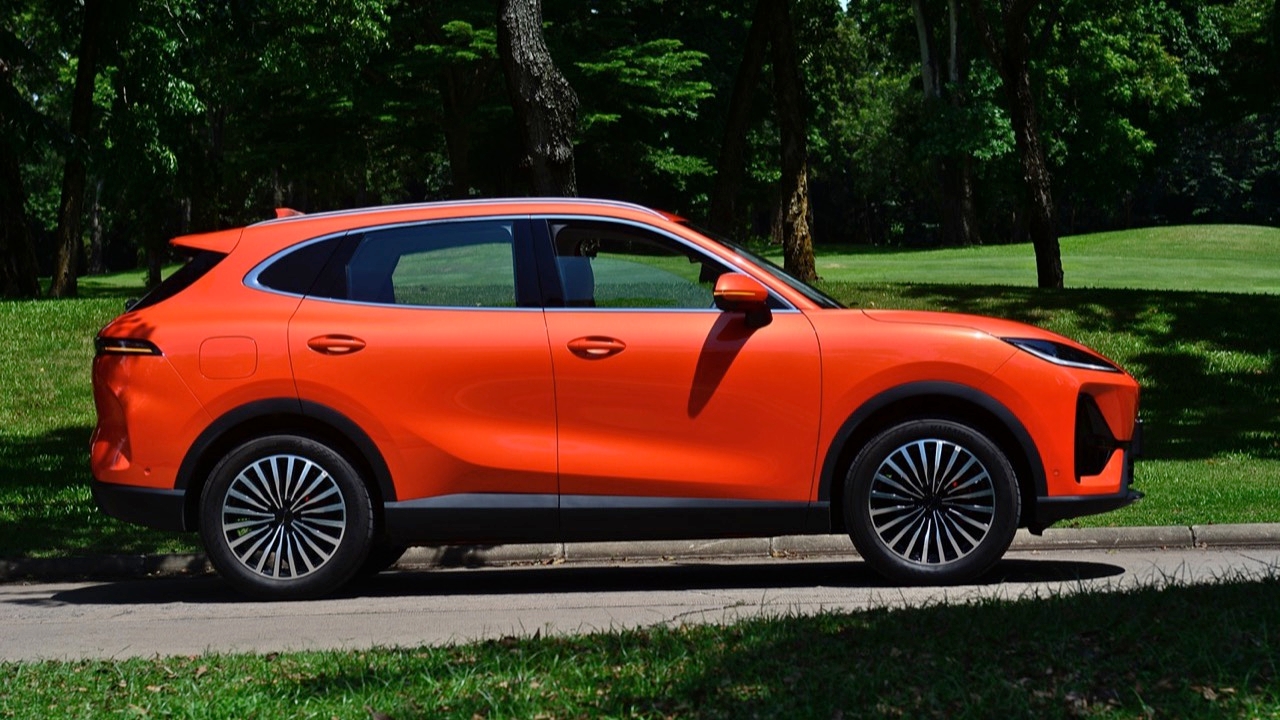
Chery hopes the addition of sub-brands will not cause customer conflicts. In reality, the four brands compete to generate sales figures, each with distinct styles and vehicle compositions. At the heart of Lepas's design work is the effort to blend speed, power, and beauty into a unified design language. This philosophy is expressed in the surfaces, details, and proportions of Lepas vehicles. The debut L6 model clearly embodies this concept with LED headlights shaped like leopard eyes—‘Leopard-Predator Eyes’—that connect visually with sharp shoulder lines, creating a striking and instantly recognizable street presence. Lepas's design work is led by Ivan Dulanovic, Global Chief Designer, who oversees studios in Wuhu, the company’s headquarters, and Shanghai. He plans to open a Lepas design studio in Europe in the future but says it is too early to reveal details about the European design office.
Lepas L6 EV Comfort FWD priced at 769,900 baht.
Lepas L6 EV Premium FWD priced at 829,900 baht (test unit).


Design and Body Style.
The Lepas L6 is a C-segment electric SUV/crossover with a 5-door, 5-seat body. According to official information, it is built on the LEX Next-generation Intelligent Platform. The body is aerodynamically designed to reduce air resistance, achieving a drag coefficient of 0.28 (cd 0.28). The 'Leopard Aesthetics' design concept draws inspiration from the structure, agility, and power of a leopard, blending sporty body lines with a sleek premium-mass style. Exterior design elements include a short front overhang with sharp angles for a crisp profile, dual projector lens LED headlights with signature Leopard-Eye DRLs, ultra-red LED tail lights spanning the rear in a light bar style, panoramic glass roof with electrically controlled sunshade—quite generous for a car priced around 800,000 baht. Additional features include a rear spoiler with silver roof rails, electrically folding and adjustable side mirrors with defogging, chrome trim on the body and windows, and door handles designed aerodynamically for ease of use, compliant with Chinese government safety policies.

The brand’s chief designer, Ivan Dulanovic, serves as Lepas’s Global Chief Designer within Chery Group. He leads the creative team developing the Leopard Aesthetics design language and the Natural Energy concept.
Dulanovic began his design career studying Industrial Design in Serbia before shifting to automotive design at Scuola Politecnica di Design in Italy. After graduation, he worked closely with Lamborghini and Audi, gaining valuable experience from senior designers and design executives that continue to influence his work today.
A turning point came when Dulanovic visited the clay modeling studio at Italdesign, where he met Filippo Perini, one of his favorite designers, who later invited him to join their studio. During two years at Italdesign, Dulanovic contributed to projects ranging from sports cars to passenger vehicles and Chinese automaker initiatives. This experience sparked his interest in China's rapidly developing automotive industry. His collaboration with Chery confirmed the fast development pace he had heard about in the Chinese market.

In an interview, Dulanovic elaborated on the design philosophy and the importance of aerodynamics and structure in Lepas vehicles.The concept is 'Powerful, Natural Energy,' symbolized clearly to communicate with customers. The headlights resemble eyes, and the shoulder lines of the Lepas L6 draw direct inspiration from a leopard’s gaze and physique. All Lepas vehicles share these signature features.


The L6 has a unique DNA, a clear electric vehicle design not created for other designers’ admiration or personal preferences, but for everyday customers who may not have deep design knowledge. Seeing the leopard eyes almost eliminates the need to explain the design concept, making it a powerful and effective approach. The L6 measures 4,570 mm long, 1,852 mm wide, and 1,683 mm high, with a 2,700 mm wheelbase. It can ford water up to 500 mm deep. The cargo space is 323 liters, expandable to 1,255 liters with the 60:40 split rear seats folded. The underfloor cargo compartment offers 99 liters, and the front trunk (frunk) provides 38 liters.


The top model Lepas L6 features 19-inch alloy wheels with a dense spoke, sporty wind-cutting design. This is an upgrade from the Comfort model’s 18-inch wheels. Tire size is 255/55 R19.
Red-painted brake calipers add a sporty touch from the factory. An emergency tire repair kit is also provided.


Inside, I appreciate the L6 EV’s interior theme—soft light tones and the tasteful use of light brown faux wood. The dashboard is covered in synthetic foam vinyl, which offers better sound insulation than injection-molded plastic. Despite being an electric vehicle that’s already quiet, the L6 EV includes enhanced soundproofing measures, featuring privacy glass on the rear windows and acoustic laminated side windows.


A 13.2-inch touchscreen handles infotainment, settings, connectivity, and serves as a monitor for the 560-degree camera system. The panoramic sunroof includes an electric sunshade, which is commendable at this price point. Features include dual-zone automatic climate control, wireless phone charging, a multifunction steering wheel, front and rear parking sensors, a 540-degree surround-view camera, plus numerous safety systems such as adaptive cruise control and lane keep assist.


Seats are fully covered in synthetic leather, with front seats equipped with ventilation. The tailgate opens and closes electrically. Ambient lighting with 256 color options enhances the cabin atmosphere. Remote parking assist is included along with a Sony sound system featuring eight speakers. All Lepas L6 trims provide 410 liters of rear cargo space plus a 99-liter front trunk. The L6 is specially tuned for taller drivers, offering responsive yet comfortable driving dynamics. The suspension has a slight bounciness but is generally acceptable, absorbing road impacts well.
The cabin draws inspiration from nature, blending refined luxury with an exquisite space and technology designed to enhance daily life. The 13.2-inch waterfall screen powered by the 8155 chip delivers fast, smooth performance comparable to a smartphone.


Turning to the drivetrain, the Lepas L6 EV uses a single front-mounted electric motor driving the front wheels, delivering a peak 242 hp and 275 Nm torque. When accelerating fully, torque steer is noticeable at the steering wheel, reflecting the high torque output. The L6 EV accelerates from 0 to 100 km/h in 7.9 seconds. It uses a 67.08 kWh lithium iron phosphate (LFP) battery, with a claimed maximum range of 440 km (NEDC) and a real-world range around 380 km at speeds of 90-100 km/h.(Range varies depending on route conditions and driving style.)
Charging and V2L: The vehicle supports DC fast charging at up to 120 kW, allowing charging from 30% to 80% in about 20 minutes. AC charging supports standard home wallbox chargers.
The Lepas L6 is built on a 400-volt electric platform supporting both AC and DC charging at current standard speeds. AC charging (normal/home charging) supports up to 6.6 to 7 kW on a single phase, suitable for overnight home charging, taking about 9 to 10 hours for a full 0-100% charge.
Vehicle-to-load (V2L) functionality supplies up to 3.3 kW power to external appliances, useful for camping or outdoor activities.


The Lepas L6 EV offers three driving modes: Eco, Normal, and Sport. Each mode affects battery power usage and driving performance differently.
Eco mode prioritizes maximum energy efficiency to extend driving range close to the claimed maximum (540 km per NEDC). The vehicle gradually controls power delivery to the motor.
Normal mode balances energy conservation and throttle responsiveness, suitable for everyday driving.
Sport mode focuses on maximum performance by drawing full power of 218 hp and 275 Nm torque, achieving 0-100 km/h in 7.9 seconds. This mode consumes battery power most rapidly, reducing overall range.


The Lepas L6 EV features a Bosch IPB 2.0 Brake-by-Wire system integrated with Cooperative Regenerative Braking System (CRBS), which recovers kinetic energy to recharge the battery. The braking system automatically adjusts responsiveness and feel according to the selected driving mode.
Seating position is well executed: the driver’s seat adjusts in six directions, the front passenger seat adjusts electrically in four directions. Rear legroom and headroom are ample, though the rear seat is more comfortable for two rather than three passengers. The center rear armrest includes cup holders. Rear seats fold in multiple configurations to expand cargo capacity. The rear cargo area includes a sliding cover, demonstrating Lepas’s attention to detail.


The steering is light and responsive at low speeds, requiring some adjustment for drivers transitioning from combustion vehicles. Driving an EV demands a change in driving style and charging planning. I appreciate its straightforward nature. In urban settings, despite a size comparable to the Honda CR-V, the L6 EV feels agile. The electric motor provides solid performance with quick takeoffs at traffic lights. Torque steer is present due to the front-wheel-drive layout with over 260 Nm torque but is manageable by avoiding aggressive throttle input. The torque steer reminded me somewhat of a MINI Cooper S.


The suspension is neither excellent nor poor, comparable to competitors in the 800,000 baht price range. The shocks and springs seem to oscillate somewhat excessively but absorb rough road surfaces well. Body roll occurs but is moderate and not unpleasant. The electric power steering lightens at low speeds and firms up as speed increases. The steering has a slightly small dead zone, making it somewhat sensitive. On smooth roads, the Lepas L6 EV performs adorably for its price. In heavy rain, it demonstrates EV capability by running through strong downpours without issues. The 225 tires provide good grip and stability. Driving at 100 km/h in rain is feasible, though caution is advised over puddles to prevent hydroplaning.


On a long drive near Dan Noen Hom and Khao Yai National Park before returning, the 67.08 kWh lithium iron phosphate battery powering the front motor with 242 hp and 275 Nm torque proved sufficient for daily use. The 7.9-second 0-100 km/h acceleration is not flashy by modern Chinese EV standards but adequate and easy to control without fishtailing from excessive power. For daily use, it is a practical vehicle, especially considering its shape, space, comfort, and importantly, a claimed max range of about 440 km with a real-world range near 380 km using gentle throttle. Aggressive acceleration shortens range quickly. I tested high-speed stability; without crosswinds, the L6 EV maintained near-top speeds well. Battery drain forced slower travel. Energy consumption was 17.2 kWh/100 km at high speed, dropping to 13.7 kWh/100 km during slower 70-80 km/h driving.
The 120 kW DC fast charger is satisfactory though not class-leading, charging from 30% to 80% in about 22 minutes. The vehicle-to-load (V2L) system is standard, allowing the battery to power external electrical devices immediately during outdoor activities.


Areas needing improvement include the spring oscillation, though it balances out with a comfortable ride over rough surfaces. The remote key sometimes loses connection when placed in the door side compartment. Positives include the exterior design, interior finishing, good seating position, and clear evidence of Western design influence. The Sony audio system with eight speakers is impressive for an 800,000 baht car. Connectivity is stable and quick to reconnect phones. I wish I had more time to explore all features, but with only five days of testing, real daily use impressions are limited. Overall, the Lepas L6 EV top model is acceptable at this price point. Body and interior build quality are good, with neat panel gaps. The light interior color requires care against dirt but cleaning products are available. It is not outstanding in any single aspect but, when combined, creates a surprisingly desirable package.