

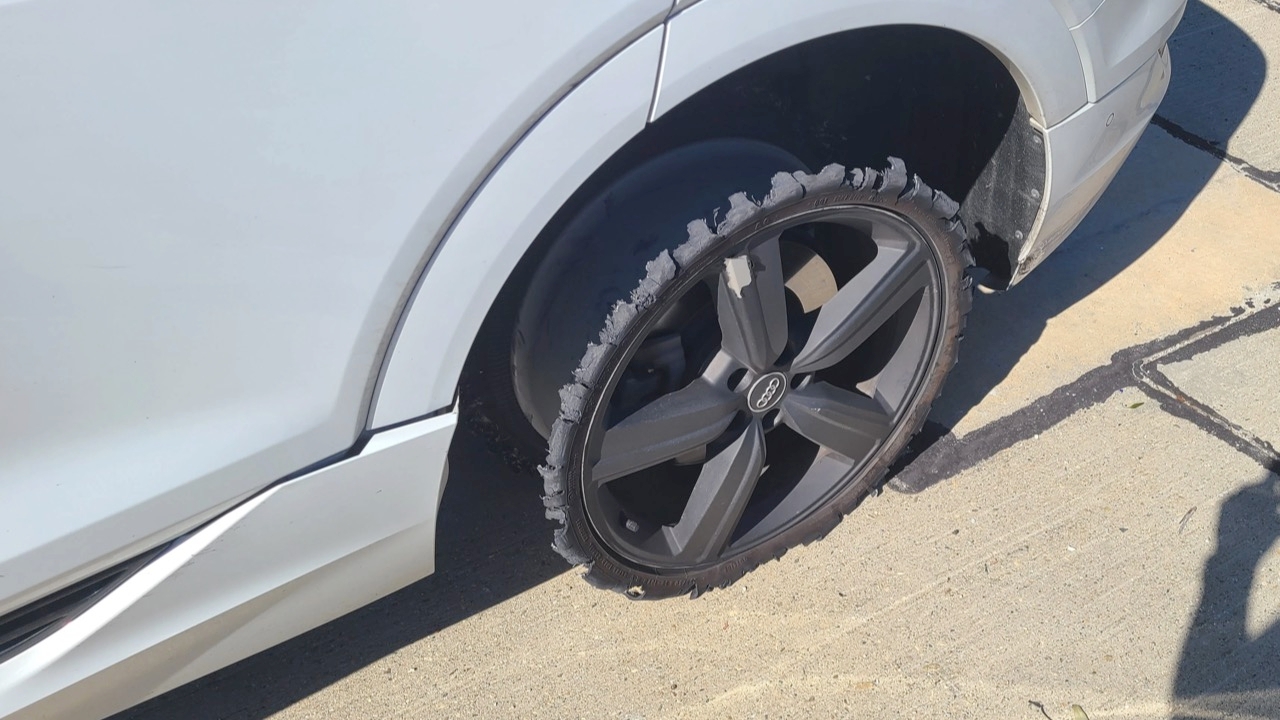
When driving on the road, nothing is more frightening or dangerous than a tire blowout at high speed. Although modern vehicles meet safety standards and use advanced tire technology, tire blowouts remain a significant safety concern with serious consequences. Nowadays, blowouts are much less common, but when they do occur, drivers’ preparedness and reactions may not suffice to handle the severity of losing control. It takes about a quarter of a second after a blowout before the vehicle becomes difficult or nearly impossible to control at high speed. Each driver's reaction to such sudden events, their experience, and concentration greatly affect how well they manage the situation.

When a tire blows out while driving—whether the front or rear tire—the immediate result is loss of control and potential accidents, ranging from minor to severe depending on speed. Driving at moderate speed causes less severe skidding compared to a blowout at high speed. The chance to stabilize the vehicle and pull over safely when driving fast is very slim. It is well known that speed determines accident severity; slower speeds allow better control and milder consequences, while very high speeds drastically reduce survival chances. Causes of tire blowouts include old or expired tires, sidewall cracks resembling a herringbone pattern, bulges, tears, worn tread, driving above the tire's speed rating, overloading, incorrect tire pressure—either too low or too high—reusing old valve stems, and excessive heat buildup from brake issues.

Why is a sidewall tire blowout particularly dangerous?
The most frightening type of tire blowout occurs at the sidewall, creating a harrowing experience as the vehicle may lose control and cause an accident. A sidewall blowout causes the tire carcass to collapse rapidly, releasing air pressure violently outward, damaging the sidewall layers. The tire deflates quickly, causing the vehicle to veer off course and the steering wheel to pull sharply to one side where the blowout occurred. This sudden pull can startle the driver, increasing accident risk. The faster the speed, the worse the outcome—drivers may lose directional control entirely and risk rollover accidents when panicking attempts to steer back onto the road fail.
Tire blowouts often occur at high speeds, especially during sustained high-speed driving on interprovincial highways. Heat buildup in the tire increases at high speeds. Regular tire inspections, checking and maintaining correct tire pressure as specified in the vehicle manual, help prevent blowouts. A tire blowout serves as a reminder of the importance of tire maintenance, an aspect many car owners neglect until it is too late.

When a tire blows out while driving
The sound of a tire blowout varies by situation. You may hear a loud bang or a resonant popping noise, followed by the hissing of rapidly escaping air and the repeated thudding sound of the deflated tire hitting the road surface.
Tire blowout while driving
When a tire blows out while driving, the first sensation is the vehicle slowing down, and the steering wheel pulling sharply left or right depending on which tire failed. If a front tire blows out, the driver mainly feels the impact through the steering wheel. If a rear tire blows, the jolts are felt more through the seat or vehicle body.


How to control your car during a tire blowout
Hold the steering wheel firmly.
Do not brake hard or panic by slamming on the brakes.
If the steering wheel pulls to one side, steady it and keep the car on its path.
Allow the car to slow naturally. If braking is necessary, apply gentle pressure only. Heavy braking can cause loss of control or spinning.
Slow the vehicle down gradually by easing off the accelerator.
Pull over safely to the roadside once speed is reduced to a safe level.
Turn on the hazard lights.
For manual transmission cars, do not press the clutch, as this makes control more difficult.

What to do after a tire blowout
After a tire blowout, only exit the vehicle when you are certain you are safely off the road and away from danger. Turn on hazard lights to alert other drivers. If safe, place warning cones or reflective triangles if available. If it is unsafe to change the tire on site or you are unsure how, call roadside emergency assistance.
Remember that spare tires are for emergency use only. Do not drive long distances or at high speeds on a spare. Ensure the spare tire is fully inflated before driving. Regularly check the condition and pressure of all four tires while they are cold to reduce inaccuracies caused by tire temperature during driving.
How to prevent tire blowouts
Tire blowouts can be prevented through care and attention. Most blowouts result from neglecting tire inspections and pressure checks before travel. They frequently occur in summer when road surfaces are hottest. Key causes include underinflated tires, excessively worn tread beyond safe limits, and overloading combined with high speed. Regular tire inspections for leaks, wear, and correct pressure are essential. Keeping vehicle load within manufacturer recommendations (noted alongside recommended tire pressure) also reduces blowout risk. Replace worn tires promptly before they cause serious accidents.