

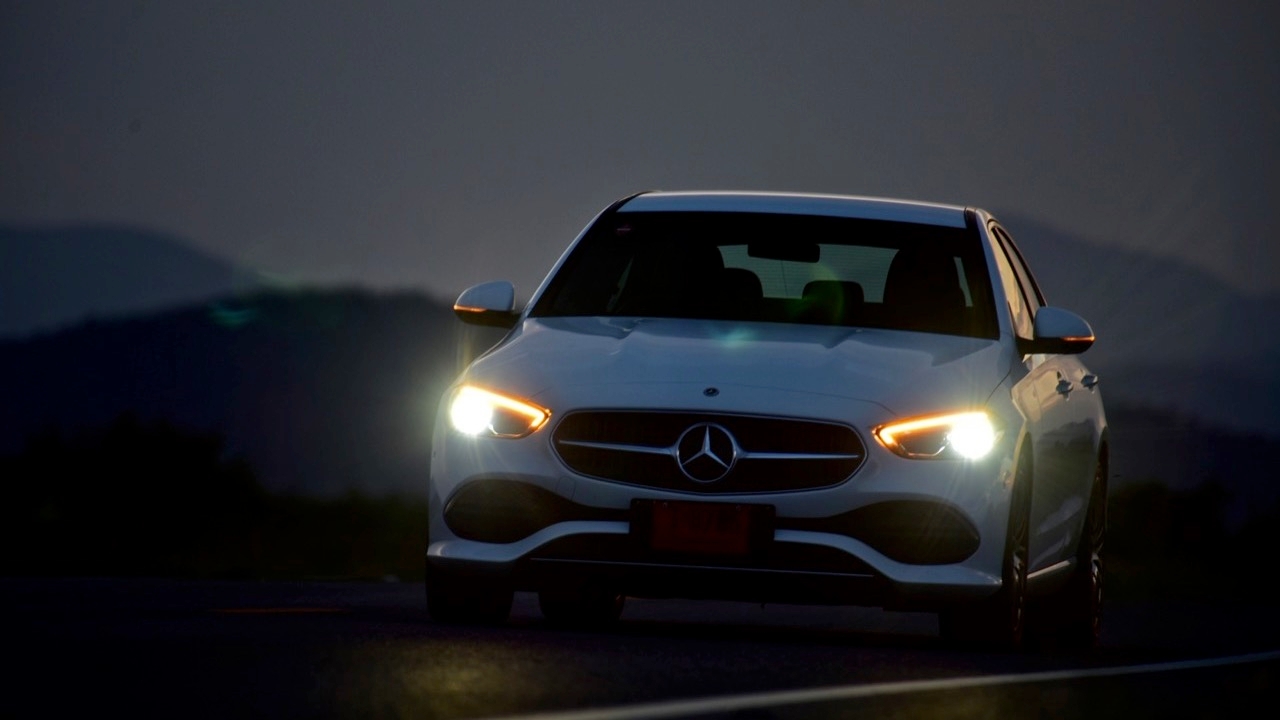
Driving in complete darkness at night on roads without street lighting reduces visibility and awareness compared to daytime driving. Numerous hazards and variables may cause accidents, including physical fatigue, eye conditions, limited headlight range, and dangers from other drivers. New drivers with little experience should exercise extra caution when driving at night.

High-quality window tinting improves visibility by reducing glare and UV rays. However, choosing tint that is too dark (e.g., over 60-80%) significantly impairs night or low-light visibility, causing blurry or hazy images. Appropriate tint levels should balance protection and visibility, with recommended 40% tint for the windshield and no more than 60% for other windows for frequent night drivers.
Effects of window tinting on night vision:
Excessively dark tint: reduces the ability to see road conditions, especially in unlit areas or curves.
Low-quality or degraded tint: causes blurred, hazy, or double images, straining the eyes and increasing accident risk.
Choosing the right tint level:
For mostly daytime driving or occasional night use with a focus on privacy: 60%-80% tint is advisable.
For driving both day and night or with poor eyesight: 40% tint for the windshield and 60% for other windows, or no tint, to ensure the clearest visibility.
Advantages at night: good quality tint reduces glare from other vehicles’ lights.


More than 50% of road accidents occur at night on intersections, junctions without traffic lights, and straight roads. Collisions tend to be severe due to high speeds on clear roads. Twilight, when light fades, drastically reduces visibility—often unnoticed by drivers who still speed. Driving in heavy rain or dense fog at night further strains the eyes, which work harder than during daytime.

1- Variables that may cause nighttime accidents
When driving at night on interprovincial highways, hidden dangers can lead to accidents caused by yourself or other drivers. Risks include fast-moving trucks, hurried buses, motorcycles without tail lights, intoxicated drivers, and physical unpreparedness. Road conditions, weather, vehicle performance—such as lighting systems and safety aids—along with tires, brakes, alertness, and quick decision-making, all contribute to safety on unlit roads at night.

2- High beams
High beams are used to flash warnings to slow vehicles in the right lane to allow overtaking and to illuminate dark roads without streetlights to assess conditions ahead. They also signal vehicles in front. Drivers should avoid excessive speed, as stopping at 100 km/h requires up to 80 meters. Higher speeds increase braking distance proportionally. Using high beams carelessly on two-lane roads can blind oncoming traffic. Avoid shining high beams directly at oncoming vehicles.

3- Motorcycles without tail lights and large vehicles parked on road shoulders
Multi-axle trucks often break down on shoulders, and their heavy weight prevents quick removal, making these areas dangerous. Drivers must be especially cautious on uphill, downhill, winding, or curved roads where headlights don’t reach. Broken-down vehicles often neglect hazard lights, sometimes only placing branches, which offers no real safety. Alternating between high and low beams helps monitor the road ahead but avoid leaving high beams on continuously to prevent blinding oncoming drivers.

4- Maintaining distance from the vehicle ahead
Keeping a safe distance from the car in front and avoiding tailgating by vehicles behind provides ample braking space. If a driver tailgates, it’s best to let them pass rather than blocking their way. Limited lighting and possibly non-functioning brake lights of the vehicle ahead increase rear-end collision risk. Greater following distance enhances safety. Wet roads at night increase braking distances further. Hesitation or indecision combined with high speed are major accident causes.

5- Community areas at night
Dogs, motorcycles, or local vehicles can suddenly cross your path when driving through communities at night. Always reduce speed in such areas. Advertising lights, blinking yellow traffic signals, and vehicle lights add to eye fatigue over time. Pedestrians crossing in darkness or amid conflicting vehicle lights, drivers who forget to turn on headlights, or vehicles lacking tail lights increase hazards. Night driving in urban areas causes greater fatigue and stress than highway driving.

6- All vehicle lights must function optimally
All lights—low beam, high beam, brake lights, tail lights, turn signals, interior lights, and hazard lights—should be checked regularly to ensure proper operation. Carry a flashlight in case you need to stop in dark areas. Side mirrors and all-around windshields must be clean for full visibility. Drivers with dark window tint should be especially cautious, signaling clearly and early when changing direction. Driving with dark tint in heavy rain at night worsens already poor visibility, increasing hidden dangers. Drive safely, calmly, obey traffic laws, and be considerate of fellow travelers returning home or going on trips with their families.