

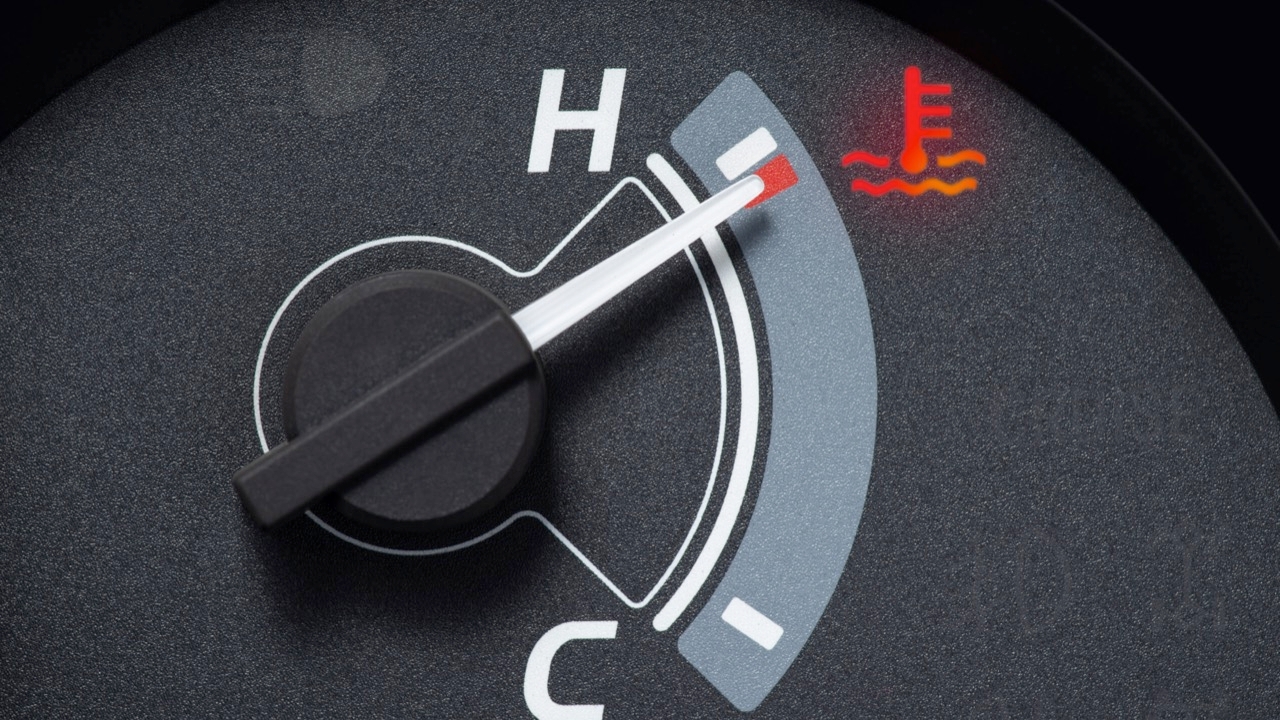
One frustrating issue during extreme heat is when the car you are driving suddenly overheats: the temperature gauge shoots up to the red zone, followed by engine failure or sudden shutdown, refusing to start no matter how much you try. Even after waiting for it to cool and adding water, it overheats again quickly. This problem affects not only old vehicles but also brand-new cars if their cooling systems malfunction. Modern cars often lack temperature gauges, so users may neglect checking coolant levels. Before you know it, a warning about engine temperature appears on the dashboard, risking serious damage as the coolant runs dry, the engine overheats, steam billows, and the car is forced to stop for a long time.

While driving, the temperature gauge rapidly rises beyond the normal 90 degrees Celsius and reaches 100 degrees in a high-pressure closed cooling system. Boiling coolant may spray from the radiator cap or cooling system hose joints. The engine overheats severely until it stops functioning, leaving you stranded as it refuses to start.

When the engine overheats, it is crucial to find a safe place to park, open the hood, and let the engine cool for about 15–30 minutes before carefully opening the radiator cap (using a thick cloth to protect your hand). Then, add coolant or clean water little by little while starting the engine to allow circulation and prevent warping of the cylinder head.
Steps to take when the engine overheats
Park safely: As soon as the temperature gauge rises sharply, stop the car and turn off the engine immediately to prevent serious damage.
Open the hood: This helps dissipate heat more quickly.
Do not open the radiator cap immediately: Wait at least 15–30 minutes for the engine to cool because the coolant is under high pressure and very hot, which could cause it to spray out dangerously.
Add water gradually while the engine is running: Once the engine has cooled, start it and carefully add coolant or clean water into the radiator and overflow tank to allow the water pump to circulate it.
Check for leaks: Inspect hoses and the radiator for cracks or leaks. If coolant loss or overheating continues, call a professional mechanic.
Things strictly prohibited
Never open the radiator cap while the engine is hot.
Do not pour cold water directly onto the hot engine, as sudden temperature changes can cause damage.
Common causes of engine overheating


Rust in the cooling system
Rust or scale buildup can clog parts of the cooling system, including aluminum or steel coolant passages, radiator, water jackets in the cylinder block, or water pump. Rust accumulation and damage to water pump impellers can reduce coolant flow.

Coolant level
Low coolant level below the recommended threshold, radiator leaks, or cracked brittle hoses are common causes. Check coolant levels every 3–4 days or at least weekly by inspecting the radiator cap and overflow tank. If coolant decreases slightly, top up with a mixture of coolant and water to the indicated max level. Significant loss requires a mechanic to locate and fix the leak.

Water pump belt
The belt driving the water pump pulley may become loose, break, or slip due to wear, causing the water pump to stop working. Without circulation, the engine overheats.

Electric fan
If the fan does not work, has broken blades, or runs slowly, it cannot provide enough airflow to cool the radiator. A blown fuse may cause fan failure. A faulty electric fan can also lead to overheating.

Thermostat
The thermostat controls the opening and closing of the coolant valve. If it malfunctions or is broken, the engine can overheat rapidly because coolant does not circulate to reduce engine temperature.

Radiator cap
The radiator cap operates under pressure and high temperature. Damage or rust can prevent the vacuum system from working, stopping coolant circulation and causing the temperature to rise to boiling point.

Head gasket
An intact head gasket maintains compression. A blown head gasket reduces compression and allows coolant to leak into the combustion chamber, causing severe engine damage.

Engine oil
Engine oil lubricates moving parts and helps dissipate heat. Low oil levels due to leakage reduce lubrication and cooling efficiency, causing heat build-up, crankshaft damage, and severe wear such as melted gasket deposits on the crankshaft.

Closed cooling system
In a closed cooling system, faults can cause rapid temperature increases and air leaks into the radiator, impairing coolant circulation.


Overheating problems caused by insufficient coolant can lead to severe engine damage like warped or cracked cylinder heads and blocks, requiring major repairs or engine replacement. Oil shortage can cause internal parts to overheat, resulting in severe damage such as melted gaskets and seized camshafts.
Arkom Rumsuwan
E-Mailchang.arcom@thairath.co.th
Facebookhttps://www.facebook.com/chang.arcom
https://www.facebook.com/ARCOM-CHANG-Thairath-Online-525369247505358/