

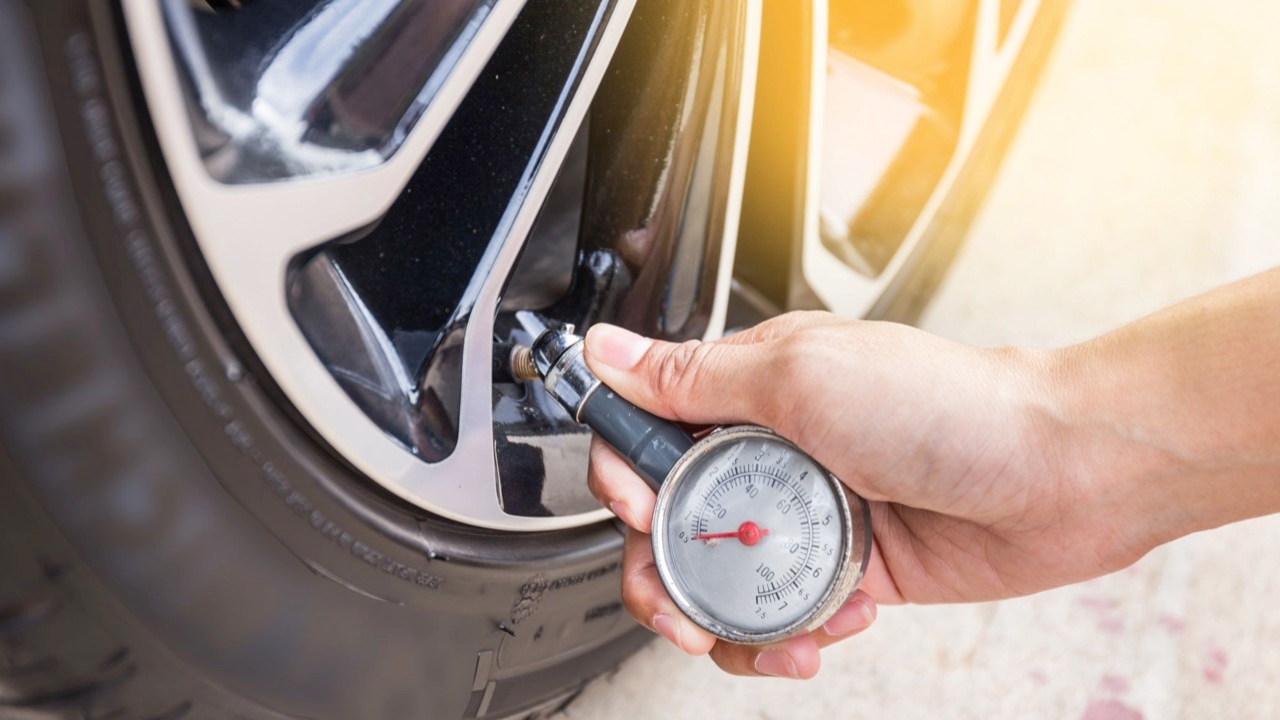
Regularly checking and inflating tires to the proper pressure is not merely routine maintenance but a key factor affecting both safety and vehicle operating costs.


Enhances driving safety
Shorter braking distance Proper tire pressure allows the tire tread to fully contact the road surface, enabling quicker stops in emergencies.
Improved road grip and control It ensures stable cornering and vehicle stability without feeling too soft or overly stiff.
Reduces the risk of tire blowouts Underinflated tires generate excessive heat during driving, which is a primary cause of structural damage leading to blowouts.
Fuel savings
Reduces rolling resistance When tire pressure is low, tires flatten and have excessive road contact, forcing the engine to work harder to move the vehicle.
Saves money Maintaining correct tire pressure can improve fuel efficiency by up to 3%.
Extends tire lifespan
Prevents abnormal wear Properly inflated tires distribute weight evenly, leading to uniform tread wear across the tire.

Underinflation causes faster wear on the tire sidewalls.
Overinflation causes faster wear in the center tread area.
Protects suspension Proper tire pressure helps absorb shocks as designed, reducing strain on the suspension system.
Comfort and smoothness
Promotes a smoother ride and reduces vibrations transmitted from the road surface into the cabin.

Additional recommendations
How often should you check tire pressure?
At least once a month or before long-distance travel.
When is the best time to check?
Measure when the tires are "cold" (vehicle parked for over 3 hours or driven less than 1-2 km) to get the most accurate pressure reading.
Where to find the correct pressure values?

You can find this information on the sticker inside the driver’s door or in the vehicle’s manual.
Recommended standard tire pressures by vehicle type (units in PSI or pounds per square inch)
Small cars (Eco Cars / City Cars): approximately 30–32 PSI
Mid-size sedans (C-Segment / D-Segment): approximately 32–35 PSI
SUVs / Crossovers / MPVs: approximately 34–38 PSI
Pickup trucks:
Empty or lightly loaded: approximately 35–40 PSI
Heavily loaded: may need to increase to 50–65 PSI (depending on actual load weight).

How to find the "most accurate" tire pressure for your vehicle
The above values are averages. For the most accurate information for your vehicle model, check:
Door sticker: Open the driver’s side door and look at the B-pillar or door edge for a sticker indicating the factory-recommended tire pressure.
Fuel tank flap: Some models may have this information on the inside of the fuel tank flap.
Owner's manual: Provides comprehensive details on tire inflation under various conditions.

Do not rely on the numbers on the tire sidewall The numbers (e.g., Max Press 50 PSI) indicate the "maximum pressure the tire can withstand," not the recommended operating pressure.
Increase pressure when heavily loaded If the vehicle is fully occupied or carrying heavy loads, increase tire pressure by about 2–3 PSI above normal to prevent excessive tread distortion.
Measure when tires are cold Check tire pressure in the morning or after the vehicle has been parked for over 3 hours to obtain the most stable readings.