

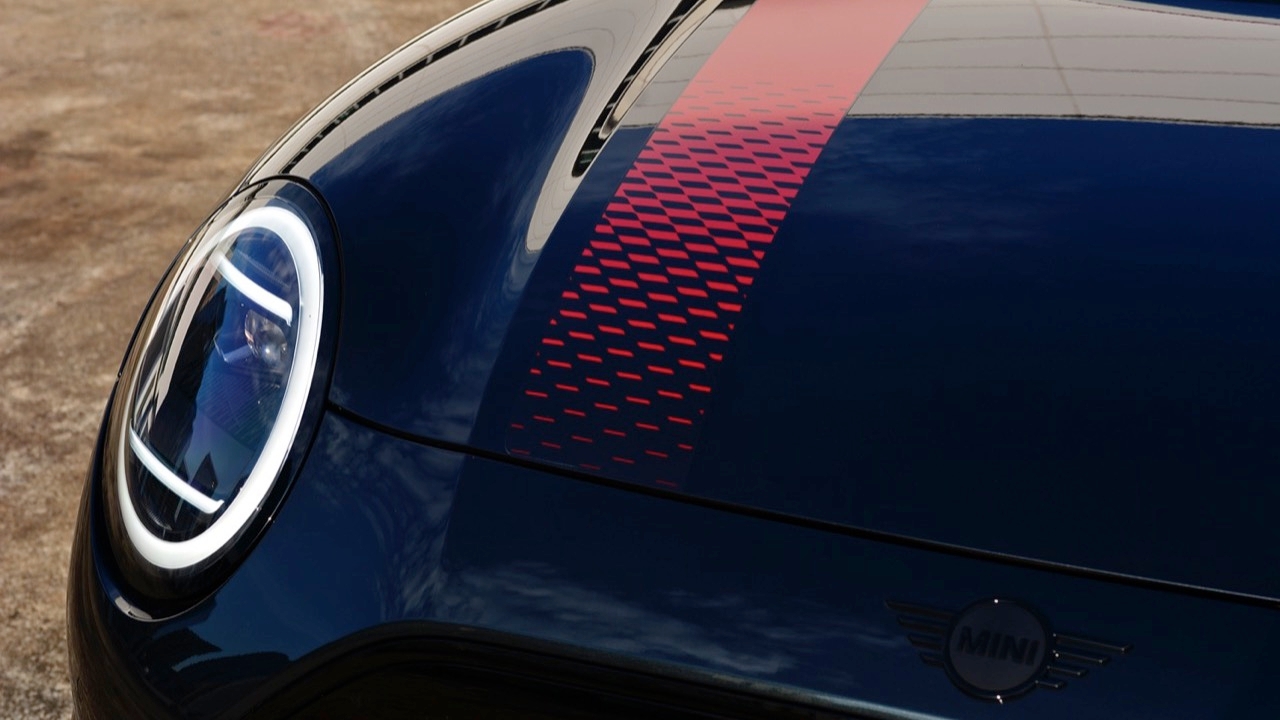
Where do swirl marks on black cars come from? Swirl marks are not caused by black lacquer being weaker than other colors, but by dirt and tiny gravel particles rubbed back and forth on the body during improper washing or drying. Since black paint has very high contrast with sunlight, scratches only a few microns deep reflect light like a "disco ball." Fixing swirl marks on black paint requires the principle of "gentle care starting from light to heavy" to preserve the lacquer layer as much as possible.


Step-by-step process to fix swirl marks on black car bodies (from light to heavy).
Level 1: Light swirl marks can be fixed by gentle polishing. If the marks are not deep and only visible in strong sunlight, you can do it yourself without going to a car care center. First, thoroughly clean the surface by washing the car using the Two-Bucket Method, then gently use a clay bar with lubricant to remove tar, overspray, and iron particles from the lacquer layer. Polishing dirty surfaces can cause new scratches immediately. Use a fine finishing polish without silicone to hide marks.


Polishing by hand or machine.
If polishing by hand, use a soft polishing sponge, apply polish in gentle circular motions over small areas (about 40x40 cm), then quickly wipe off with a clean microfiber cloth. If using a Dual-Action (DA) polisher, set it to low to medium speed and use an orange or black polishing pad, polishing in parallel and alternating vertical strokes.

Level 2: Deep or stubborn swirl marks require coarse compound polishing. If the swirl marks are clearly visible lines or remain after fine polishing, it means the scratches penetrate deeper into the lacquer beyond what fine polish can fix.
Start with medium or heavy cut compound polish using a wool pad or medium-level polishing sponge. Work patiently on one section at a time, adjusting the DA polisher speed appropriately. Avoid pressing too hard on the black body, as black paint accumulates heat easily; excessive heat can burn or wrinkle the lacquer.
Finish with fine polish. After coarse polishing, black paint usually has haze left from the compound. Switch to a soft foam pad and fine polish for another round to restore deep mirror-like gloss.

Warning: Using coarse compound polish removes thin layers of lacquer gradually. On black paint, do not coarse polish more than 1-2 times per year. If scratches catch your nail, they have penetrated the lacquer. Further polishing will reach the base coat (actual paint), and the only solution is repainting.

Post-polishing step: Immediately apply a gloss lock coating.
Once the surface is smooth and polished, the lacquer layer is exposed and highly vulnerable to new scratches. Protect it immediately by rinsing off polish residue and wiping with diluted Isopropyl Alcohol spray to remove leftover oils.


Choose the appropriate protective coating.
Ceramic or graphene coating is the best option for newly bought black cars. The SiO2 ingredient forms a hard, smooth film that beads water well, reducing water spots and the chance of new swirl marks.

Synthetic sealants are easier to apply and provide UV and heat protection for 3-6 months.
Prevention techniques to avoid swirl marks returning.
Avoid car care centers that do not properly clean drying cloths or washing black cars with automatic brush systems. Automatic rotating brushes are the top cause of damage to black paint. Use the Two-Bucket Method: one bucket for shampoo and one bucket with clean water for rinsing gloves, with a grit guard basket to trap grit. Use premium microfiber towels without edges, at least 1,000 GSM thickness, and blot dry instead of rubbing to prevent new swirl marks.
Never wipe the car when dry. If dust is on the surface, never use a dry cloth or feather duster to brush it off, as that drags dust directly over the lacquer. Always spray Quick Detailer or rinse with water before drying.