

It is well known that electric vehicles (EVs) tend to weigh more than internal combustion engine (ICE) cars of similar size or class—typically 20% to 30% heavier. A typical mid-size gasoline car weighs about 1,300 to 1,700 kilograms, while larger SUVs can reach 2,200 kilograms. Comparable EVs, however, often weigh between 1,800 and 2,600 kilograms or more, depending on body size and battery capacity. The main reason EVs are much heavier is the large lithium-ion battery pack mounted under the vehicle floor. In contrast, gasoline cars store fuel in a relatively light tank. The larger the battery needed to extend EV driving range, the greater the battery's size and weight become.

The reason EV brakes can feel unfamiliar or less responsive than those of internal combustion cars is largely due to the greater vehicle weight. EVs have large batteries that add substantial mass compared to similarly sized gasoline cars. At higher speeds, the heavier mass results in greater momentum, requiring longer stopping distances for the same brake pedal force. Failing to allow adequate braking distance is a common cause of accidents, as many EV drivers do not fully account for the increased vehicle weight and the need to adjust braking space accordingly for safety.

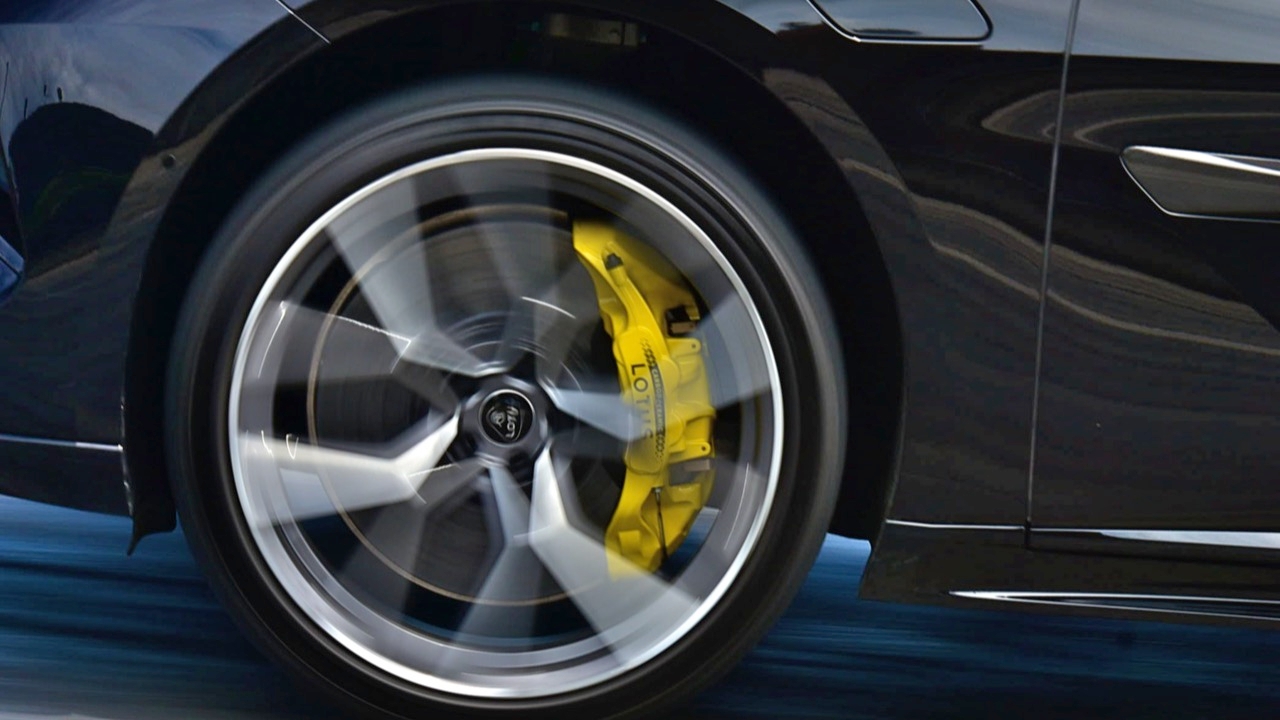
EVs use regenerative braking systems, which automatically slow the vehicle when the accelerator is released, creating a sensation of deceleration before the brake pedal is pressed. Many EV models have brake pedals calibrated with a softer or more gradual initial feel compared to gasoline cars, which can make the brakes feel less immediate or slippery at first. Factory-installed brake pads and tires also play a role; EVs prioritize energy efficiency and regenerative braking, so factory brake pads may not provide instant grip like sporty pads. Additionally, EV tires are often designed to reduce rolling resistance, which can compromise emergency braking traction. To keep prices competitive, high-powered EVs sometimes have brake calipers that are undersized or insufficiently powerful to counter the motor's torque. Ideally, EV brakes should be larger and more capable given their 0–100 km/h acceleration, but often they're too small or not sufficiently effective for sudden deceleration.

The heavy battery weight also contributes to pronounced understeer, increasing the vehicle's inertia and placing ongoing stress on the suspension system. Vehicle weight directly affects driving range as well; the heavier the car, the more energy it consumes, making braking more difficult and energy use less efficient.
Heavier vehicles require more energy to move and stop, which impacts driving range due to increased power demand. This leads to faster battery depletion and more frequent charging stops. For example, the BMW iX1 xDrive30 weighs 2,010 kilograms and has a 64.7 kWh battery pack, allowing a maximum driving range of about 380 kilometers per full charge.
Notably, vehicle weight and driving range tend to vary proportionally, as automotive engineers typically size battery capacity to match vehicle size. Large vehicles like the Lotus Eletre R use a massive 112 kWh battery pack to power dual electric motors, enabling this 2,640-kilogram giant to accelerate quickly despite its size.

Understeer and extended braking distances in EVs are linked to battery weight and weight distribution differences compared to ICE vehicles. Vehicle mass greatly influences handling, especially when cornering. For instance, the BMW i4 M50, weighing 2,215 kilograms, exhibits clear understeer well before tire grip limits are reached during testing.
The disadvantages of EVs being heavier than internal combustion cars include:

Increased inertia: Heavier vehicles require longer stopping distances, meaning heavier EVs need more space to brake safely, which raises safety risks in emergencies. Greater inertia also accelerates wear on components like brake pads and tires. Although modern EVs include active and passive safety systems, accidents still occur when drivers are not cautious. In fact, every additional 450 kilograms in vehicle weight raises the risk of fatal accidents by up to 47%.
Furthermore, the increased weight poses greater danger to vulnerable road users such as pedestrians, bicyclists, and motorcyclists, causing more severe injuries in collisions. The added mass also imposes extra stress on suspension, tires, and brake pads, negatively affecting performance and durability over time.

Do EV brake pads wear out faster, or do they last longer?
Under typical driving conditions, EV brake pads last significantly longer. However, when braking suddenly or dealing with rusty brake discs, brake pads and rotors can wear heavily.
The regenerative braking system helps by using the electric motor as a generator when the accelerator is released, slowing the vehicle and recharging the battery. Approximately 70–80% of daily deceleration is handled without using friction brakes (brake pads pressing rotors), extending brake pad lifespan by 2 to 3 times compared to gasoline cars. But when driving faster or braking hard, braking distances change, and combining heavy braking with regenerative braking requires drivers to allow extra stopping distance for safety.

The most demanding braking scenarios occur when the vehicle weighs 2.5 to 2.7 tons.
Kinetic energy: The 20–30% additional weight from large batteries means that during sudden high-speed braking or on continuous steep descents, the motor cannot recuperate energy fast enough. The system switches to 100% friction braking, where brake pads endure extreme pressure and heat to stop a 2.5-ton mass. This causes brake pad wear rates to be noticeably higher than typical gasoline cars during each heavy brake application.
Side effects include:
Due to infrequent brake pad use, in humid areas rust can form on brake discs (corrosion), or brake pads can develop glazing (burnt surfaces) because they are rarely pressed forcefully until sudden braking events occur.
Suspension: The constant heavy load it must bear.
The suspension system endures the greatest strain in a 2.5-ton EV, as it must handle both vertical weight loads and lateral dynamic forces.
Continuous compression accelerates wear of rubber bushings, ball joints, and shock absorbers. Medium-to-large EV SUVs weighing 2.5 tons compress springs, shocks, and rubber bushings, causing bushings to deteriorate and crack sooner.
Impact loads from hitting potholes or speed bumps further stress shock absorbers, requiring them to absorb large forces to prevent the vehicle from bottoming out. This causes shocks and internal valves to degrade faster than normal.
Massive torque forces.
EVs deliver instant torque upon accelerator input. Rapid acceleration or deceleration causes intense weight transfer between front and rear axles. Control arms, ball joints, and mounts must withstand high tensile and compressive forces.
Additional factor: Tires.
With suspension and brakes under heavy load, all forces pass through the tires. EV tires wear out 20–30% faster than those on gasoline cars.
Weight pressing down: 2.5 tons.
Massive torque during acceleration.
Continuous deceleration from regenerative braking.
Brake pads last longer with smooth, moderate driving but are prone to rust on brake discs. Aggressive driving with hard braking causes brake pads to wear out faster and burn more readily.
Suspension components (shocks, bushings, ball joints) degrade noticeably faster than in gasoline cars. Manufacturers respond by using aluminum alloy parts, stiffer springs (higher K value), or air suspension systems to better support and stabilize the 2.5-ton mass.

Why are electric vehicles heavier?
The primary reason EVs weigh more is their battery weight. Unlike gasoline or diesel cars that store fuel in relatively light tanks, EVs rely on large lithium-ion battery packs to store energy. These batteries are the main weight component of the vehicle. In ICE vehicles, most weight comes from the engine, transmission, exhaust, and fuel system. EVs replace these with electric motors and large battery packs mounted under the floor.
Batteries required for longer driving range are massive. The bigger the battery pack, the farther the vehicle can travel on a single charge. This explains why long-range electric SUVs or family EVs usually weigh more than their gasoline or diesel counterparts.
Of course, many modern gasoline and diesel vehicles have also grown heavier over time due to added safety features, technological options, and larger body dimensions.

How much heavier are electric vehicles compared to gasoline cars?
On average, electric vehicles weigh about 20–30% more than comparable internal combustion engine vehicles.
For example, a typical mid-size gasoline car weighs between 1,300 and 1,700 kilograms, while a similarly sized electric vehicle may weigh from 1,800 to 2,600 kilograms, depending on battery size.
The added weight mainly comes from lithium-ion battery systems. Additionally, SUVs naturally weigh more than small hatchbacks regardless of drivetrain. The increased weight distribution in EVs enhances stability and smoothness because battery packs are mounted low in the chassis, lowering the center of gravity compared to gasoline or diesel cars. A lower center of gravity reduces body roll, improves cornering stability, and provides a planted driving feel.

One advantage of electric motors is their instant torque delivery, unlike combustion engines. Electric motors can produce maximum torque almost immediately upon accelerator input, compensating for the increased vehicle weight. This allows EVs to accelerate rapidly despite their heavier mass. However, the higher weight inevitably affects braking, suspension, and tires.