

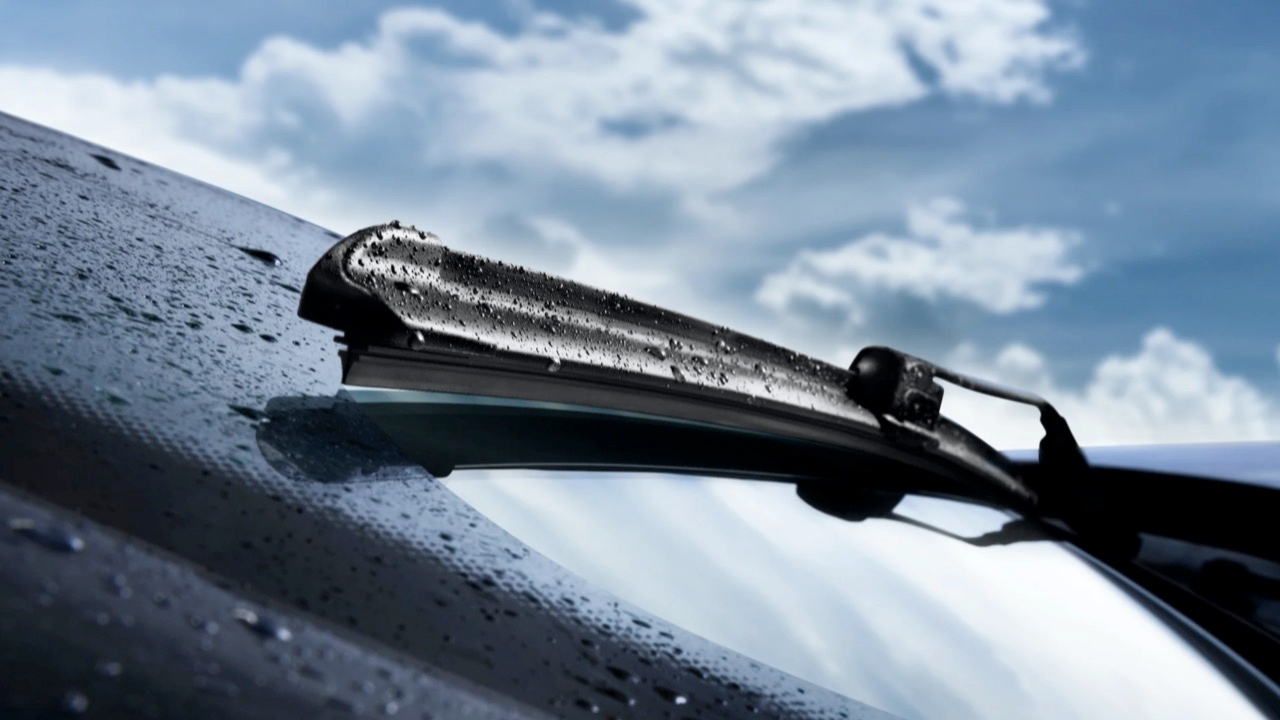
The problem of windshield wipers making squeaky or jumping noises causes annoyance and frustration during use. This can happen to any vehicle, whether cheap or expensive, if either the rubber blade or the glass surface becomes sticky or rough. Between the rubber and glass, there may be dust, dirt, chemicals carried by the road, or airborne impurities while driving. The method to fix the friction ranges from easy steps to those requiring more effort as follows:

1. Clean the windshield
Wash off dirt and grime using glass cleaner or dishwashing liquid. Wipe the windshield thoroughly with a sponge. If you have previously applied a thick waterproof glass coating, this often causes the rubber to stick and skip. You may need to use a clay bar to remove deeply embedded residues. When you rub your hand over the wet glass surface, it should feel smooth and seamless without any roughness or catching.

2. Clean the edges of the wiper rubber
Remove oxidation residues by wiping the rubber edge with a cloth dampened with soapy water or alcohol. Rub along the length of the rubber several times to remove dust and degraded rubber particles (black powder). Continue until no black residue transfers to the cloth. The rubber edge should have a consistent matte black color. Wiper rubber should be soft, not hard or stiff; if it is hard, replace it immediately.

3. Check and adjust the wiper arm angle
If the glass and rubber are clean but noise persists, it is often due to the metal wiper arm being bent, causing the blade to sweep the surface at an angle other than 90 degrees. Use pliers with a thick cloth to protect the metal from scratches and gently bend the arm back to a perpendicular position. Then spray water on the windshield and operate the wipers; the blade should sweep smoothly both up and down without noise or skipping.

4. Replace the wiper rubber
If the rubber feels hard and stiff after following all the above steps and noise remains, the rubber has hardened or deteriorated from heat exposure and should be replaced. To test if the rubber is old, gently scratch the rubber edge with your fingernail; if it is hard, inflexible, or cracked in a pattern like a snake’s skin, it has reached the end of its lifespan.
Glass coating products popular among car enthusiasts and testers are known for their high smoothness and do not cause wiper skipping or noise. There are 3–4 well-known products:

1. 3M Glass Coat Windshield (black/red bottle)
A standard product that is easy to find and affordable (around a hundred baht). Its key feature is a neutral pH that does not corrode the wiper rubber. Most users confirm that after applying, the wiper sweeps smoothly without skipping.

2. Soft99 Glaco Roll On (orange bottle)
A popular Japanese brand that is very easy to use—just apply and wipe off. It provides excellent water beading at speeds over 60 km/h. The only caution is to thoroughly wipe off all coating residue during application; if done properly, the wiper will definitely not make noise.

3. Meguiar's Perfect Clarity Glass Sealant G8504
An American hydrophobic formula focused on maximum smoothness on the glass surface. The brand specifies that its chemicals are safe and do not cause the wiper rubber to harden or stick.

4. Labocosmetica Aquavelox:
A premium Italian brand that is a bit niche but claims a smooth, thin film that prevents wiper skipping, though it is priced higher than other products on the market.

Most cases of wiper skipping after applying glass coating are not due to the coating brand but result from incomplete removal of coating residue, causing uneven friction on the glass. It is recommended to use a dry microfiber cloth to polish the glass again until it is clear and smoothly slippery to the touch.
Additionally, after applying glass coating, switching to silicone wiper blades will work better with the coating, providing smoother and quieter operation than natural rubber blades, as silicone resists chemicals and enhances slipperiness mutually.