

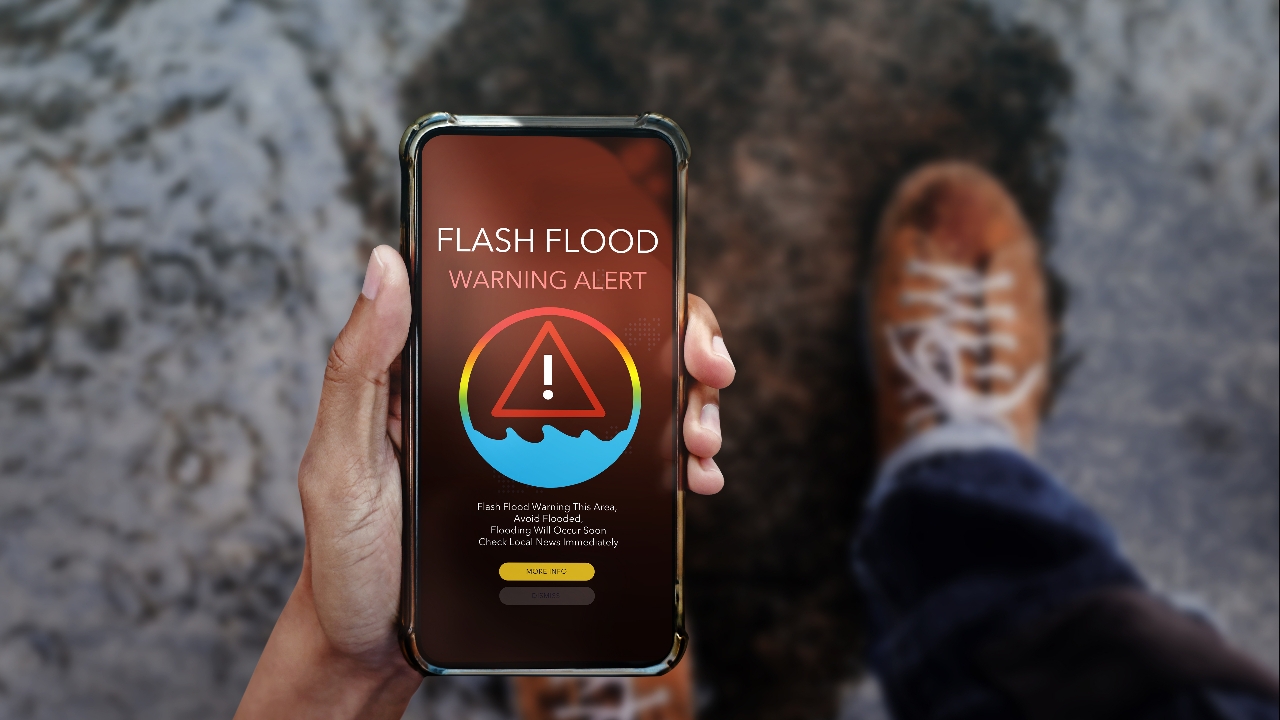
As floods have become severe disasters causing significant damage in many countries, new technologies have been rapidly developed to reduce harm and protect lives, with several countries already applying innovative solutions in practice.
The Global Risks Report 2024 by the World Economic Forum highlights extreme weather and flooding as top risks.
Meanwhile, numerous studies indicate that the global population exposed to flood risks is continuously increasing, especially in major coastal cities such as Tokyo, New York, and Mumbai.
Let's explore five cutting-edge technologies currently used worldwide that may inspire new flood management planning in Thailand.
1. Floating Houses — An innovation first implemented in the Netherlands.
The Netherlands, where most land lies below sea level, has developed floating houses that adapt to water levels instead of fighting the water. Designed by British architects in collaboration with Dutch manufacturers, these homes rest on floating platforms; when water rises, the houses float up accordingly, reducing flood risk. They use durable materials like concrete and glass and feature solar panels and heat exchange systems, allowing them to operate even during floods.
This technology is seen as a solution for riverside cities and low-lying areas worldwide, including Thailand, which faces recurring floods annually.

2. Vienna’s 21-Kilometer Flood Diversion Canal.
To protect the city from the Danube River’s potential overflow during rainy seasons, Vienna, Austria, built the New Danube diversion canal in 1969. This 21-kilometer secondary channel operates parallel to the main river. When water levels rise, a dam lifts to divert excess water into the canal, reducing pressure on the main river. During normal conditions, the canal remains closed and does not affect city life. This system has become the gold standard for urban water management.
3. China’s Sponge City — Using Nature to Manage Floods.
China pioneered the "Sponge City" concept, now adopted by many countries. The idea is to make urban areas absorb water like a sponge through permeable surfaces such as porous sidewalks, restored wetlands, canals, and natural water retention areas. Instead of rapidly draining water away, sponge cities store water to reduce flooding and reuse it during dry seasons.

4. Denmark’s Green Climate Screen — A Green Wall for Rainwater Management.
Denmark developed an eco-friendly, low-energy rainwater management system called the Green Climate Screen. This green wall captures water from building gutters and disperses it over a mineral wool-lined surface, where some water evaporates naturally. Excess water flows into pots or nearby reservoirs. During heavy rains, water is directed to large retention ponds, reducing floods without needing tunnels or energy-intensive pumps.

5. Texas’s Use of AI and Satellite Imagery for More Accurate Flood Forecasting.
AI technology is becoming a crucial tool for flood prediction and preparedness. Researchers at the University of Arizona use AI to analyze satellite images and create high-resolution flood maps. This technology supports solutions and fairness for those affected by floods and helps protect heavily impacted communities. The latest AI models are 10% more accurate than previous versions.
Additionally, Google Flood Hub is a platform developed by Google to forecast and provide seven-day flood warnings. It uses data analytics from multiple sources covering over 80 countries, updating daily at more than 1,800 locations worldwide. This helps at-risk communities prepare better for sudden floods.
Flood crises are becoming the new normal globally, including in Thailand. Combining technology with natural solutions may offer effective answers for flood disaster management and damage reduction. The sooner these efforts begin, the better cities can prepare for future floods and ensure sustainable safety for their populations.
Source:worldeconomicforum
Click to read news aboutFlooding