

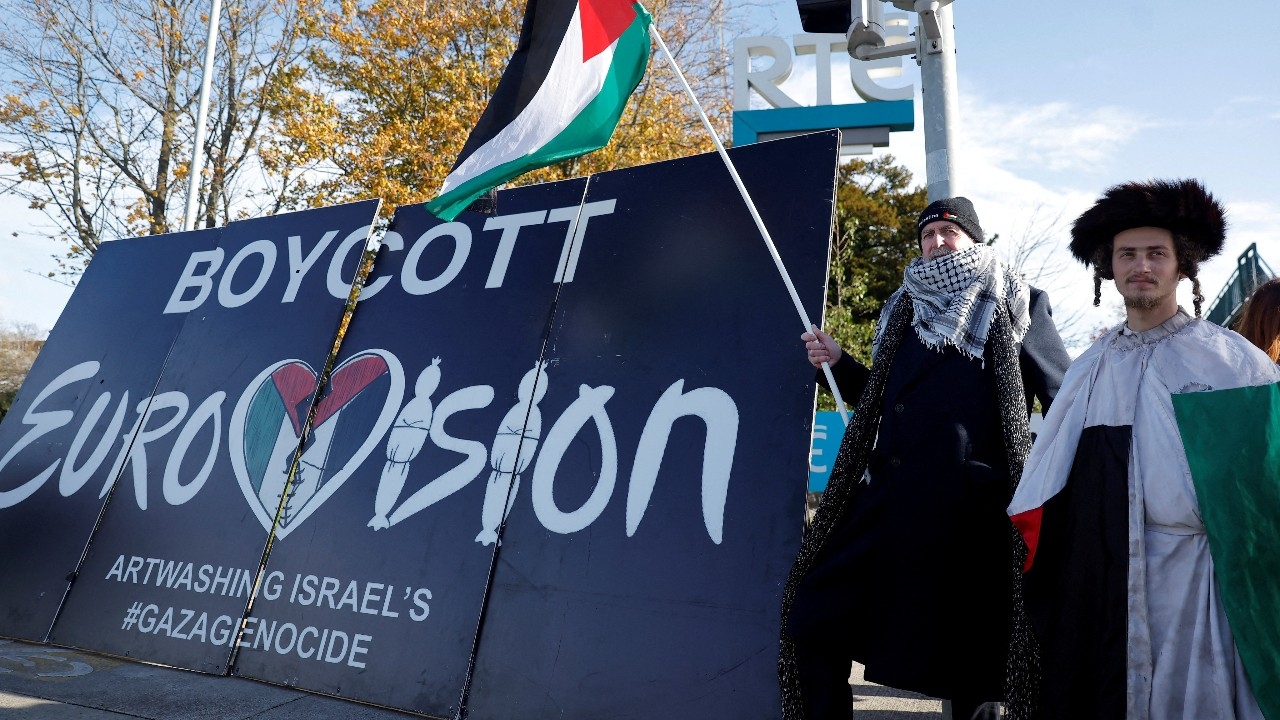
Ireland, Spain, the Netherlands, and Slovenia have officially announced their withdrawal from the 2026 Eurovision Song Contest in protest of the European Broadcasting Union's (EBU) decision to allow Israel to participate amid the Gaza war crisis and allegations of unfair voting.
The controversy over Israel's status in Eurovision 2026 escalated into a significant boycott following an EBU members' meeting on Thursday. Ireland stated, "Our participation remains unacceptable given the tragic loss of life in Gaza and the ongoing humanitarian crisis posing a threat to many civilians."
Spain called for a secret ballot on banning Israel but was denied, prompting Spain to declare that the decision "increases distrust in the contest's management." As one of the "Big Five" major financial supporters, Spain confirmed its withdrawal and refusal to broadcast the semi-finals and final.
The Netherlands said, "Participation under current circumstances conflicts with our essential public values," while Slovenia reaffirmed its unchanged position, stating that new rule changes have not altered their perspective on the situation.
At the EBU meeting, attended by about 50 organizations including the BBC, discussions focused on the future of the contest, which draws over 150 million viewers annually, emphasizing new rules to deter unfair voting campaigns amid allegations that Israel unfairly promoted its contestant this year.
Reports indicate the vote to adopt these new measures was tied to an agreement that members would not vote on Israel's participation status, allowing the EBU to confirm that members willing to comply with the new rules are eligible to compete in 2026.
Martin Green, Eurovision director, welcomed the members' "opportunity to debate" Israel's status, noting that the vote showed consensus that "Eurovision should not be used as a political platform but must remain neutral."
Israeli President Isaac Herzog praised the EBU's decision as "a symbol of victory over those trying to silence Israel and spread hatred," expressing hope the contest remains a stage celebrating friendship among peoples and cultures.
Golan Yosef Paz, CEO of KAN (Israel's public broadcaster), described attempts to exclude Israel as "understandable cultural boycott efforts," warning that "while the boycott may start with Israel, no one knows where it might end or who else it might harm."
Germany, which had threatened to withdraw if Israel was banned, welcomed the decision and looks forward to continued participation. The Nordic countries—Norway, Sweden, Finland, Denmark, and Iceland—issued a joint statement supporting EBU's efforts to "address significant weaknesses" in the voting system. However, Iceland has yet to make a final decision, expected next week, while Belgium said it will "announce its position in the coming days."
This EBU decision has revealed a major split in Eurovision between countries affirming participation to uphold cultural neutrality and those boycotting on humanitarian and ethical grounds.
,BBC