

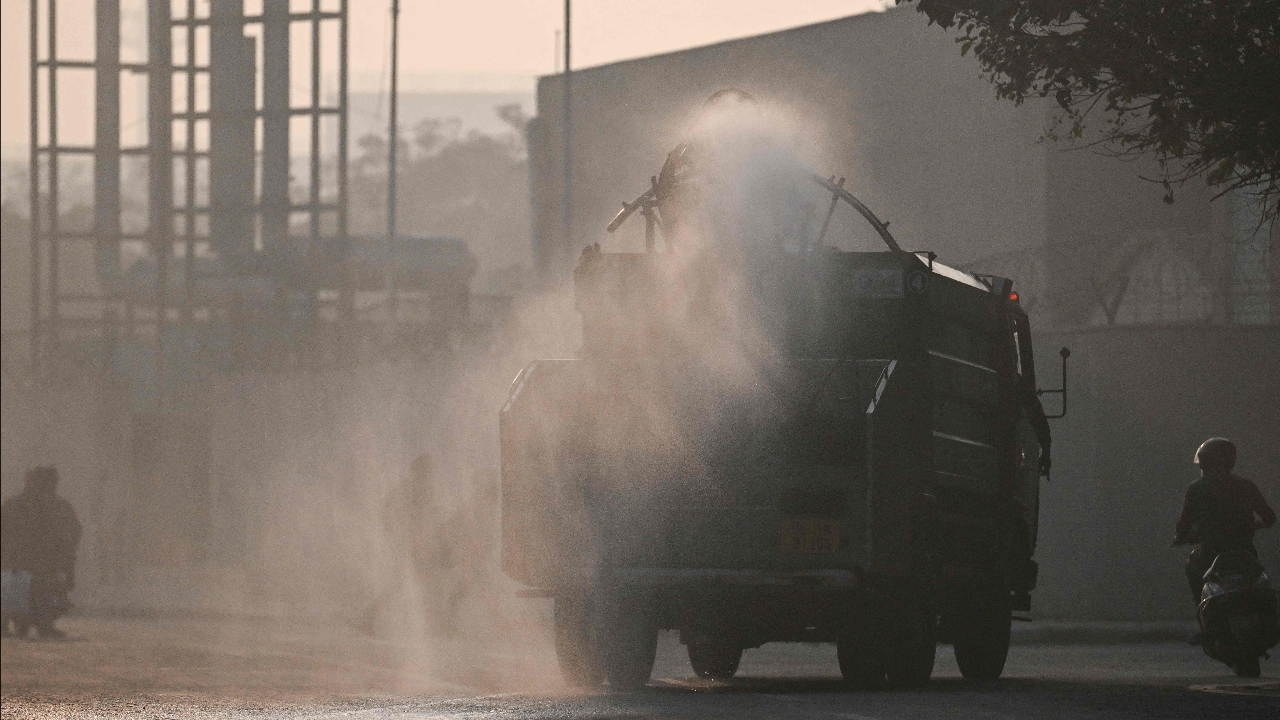
New Delhi, India, has introduced strict measures to address the escalating air pollution and toxic PM2.5 dust, banning vehicles that fail emission standards from entering the area and limiting office attendance for both government and private agencies.
On Wednesday, 17 December, New Delhi authorities imposed strict controls to combat worsening air pollution and toxic PM2.5 dust, announcing a ban on vehicles that do not meet the latest emission standards from entering the area, alongside restrictions on office attendance for both public and private sectors.
The Air Quality Index (AQI) in New Delhi, home to about 30 million people, has remained at a very severe level (Severe) for several days, often exceeding 450—far above the good air quality threshold of below 50. The situation has worsened due to smog in various areas, reducing visibility and disrupting flights and train travel.

This situation led the Air Quality Management Commission to enforce Level 4 of the Graded Response Action Plan (GRAP), the highest alert level, covering New Delhi and surrounding areas, starting last Saturday.
These measures include banning old diesel trucks from entering the city, suspending all types of construction work—including government projects—and implementing hybrid learning systems to reduce travel.
Kapil Mishra, a minister in New Delhi's local government, announced that starting Wednesday, both government and private offices will operate at only 50% on-site capacity, with the remainder working from home to reduce pollution caused by commuting.
Additionally, the government will provide compensation of 10,000 rupees to registered construction workers, most of whom are daily wage laborers, affected by the construction halt orders.
A day earlier, New Delhi authorities began enforcing strict vehicle controls by banning cars that do not meet the latest emission standards from operating on city roads.
Manjinder Singh Sirsa, Delhi's Environment Minister, said the government is seriously committed to addressing the toxic air problem and aims to make Delhi's air cleaner by continuing to enforce stringent measures in the coming days.
Air pollution in Delhi is a recurring problem every winter when cold, dense air traps pollutants from vehicles, construction sites, and crop burning in neighboring states, causing toxic dust levels to spike among the highest globally and posing serious respiratory health risks to residents.
This area, with more than 30 million people, is often shrouded in thick smog, with the Air Quality Index regularly exceeding 450, while a level below 50 is considered good air quality.
.source:channelnewsasia
Related news aboutair pollution