

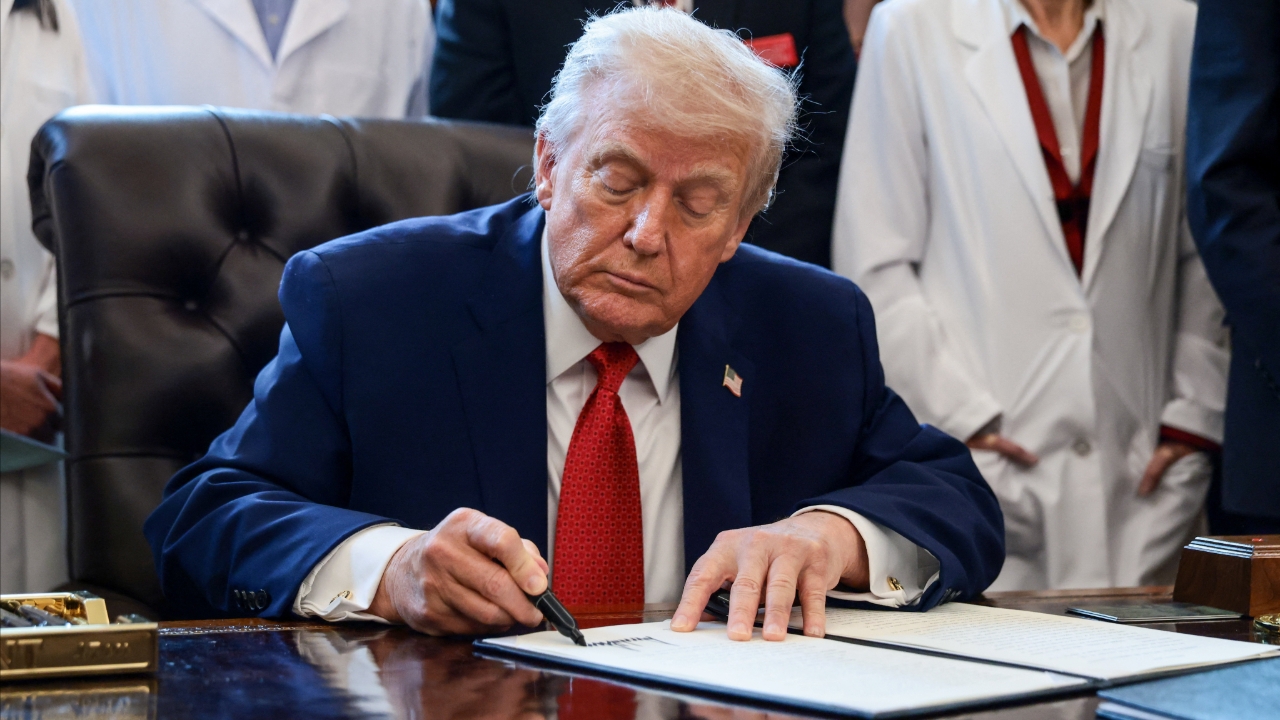
Donald Trump signed an executive order expanding cannabis access by reclassifying it as a Schedule III controlled substance, increasing the scope of research into its benefits.
On Thursday, 18 Dec 2025 GMT+7, U.S. President Donald Trump signed an executive order to expand access to cannabis, a move long anticipated by many and considered the most significant change in U.S. drug policy in decades.
The order directs the U.S. Attorney General to reclassify cannabis from a Schedule I controlled substance to Schedule III, placing it alongside drugs like Tylenol with codeine.
Although cannabis remains illegal under federal law, its new Schedule III status will enable expanded research into its potential benefits.
However, several Republican members warned that this change could normalize cannabis use in society.
The U.S. Drug Enforcement Administration (DEA) states that Schedule III drugs, which include ketamine and steroids, carry a moderate to low risk of physical and psychological addiction.
During the signing ceremony in the Oval Office on Thursday, Trump said many people have "pleaded" for this change, especially those suffering "severe pain" from illnesses such as cancer, epilepsy, and injured veterans.
Trump compared cannabis to prescription painkillers, which can be used properly but also cause irreversible harm.
This reclassification also has tax implications for state-licensed cannabis retailers, as current rules prevent them from deducting certain expenses when selling Schedule I substances.
Besides reclassifying cannabis, Trump ordered White House officials to work with Congress to allow certain Americans access to cannabidiol, commonly known as CBD.
Public health officials were also tasked to develop methods to assess the benefits and health risks of CBD use in real-world settings; some officials view this as a reasonable step to better understand and research cannabis and CBD.
In recent years, most U.S. states have approved medical cannabis use, and nearly half (24 states) have legalized recreational use. However, since 1971, cannabis has been classified as Schedule I, meaning no accepted medical use and a high potential for abuse.
Previously, the Biden administration proposed similar reclassification, and in April 2024, the DEA proposed regulatory changes but faced delays due to administrative and legal issues.
/news/internationalhttps://www.thairath.co.th/news/foreign
Source:bbc