

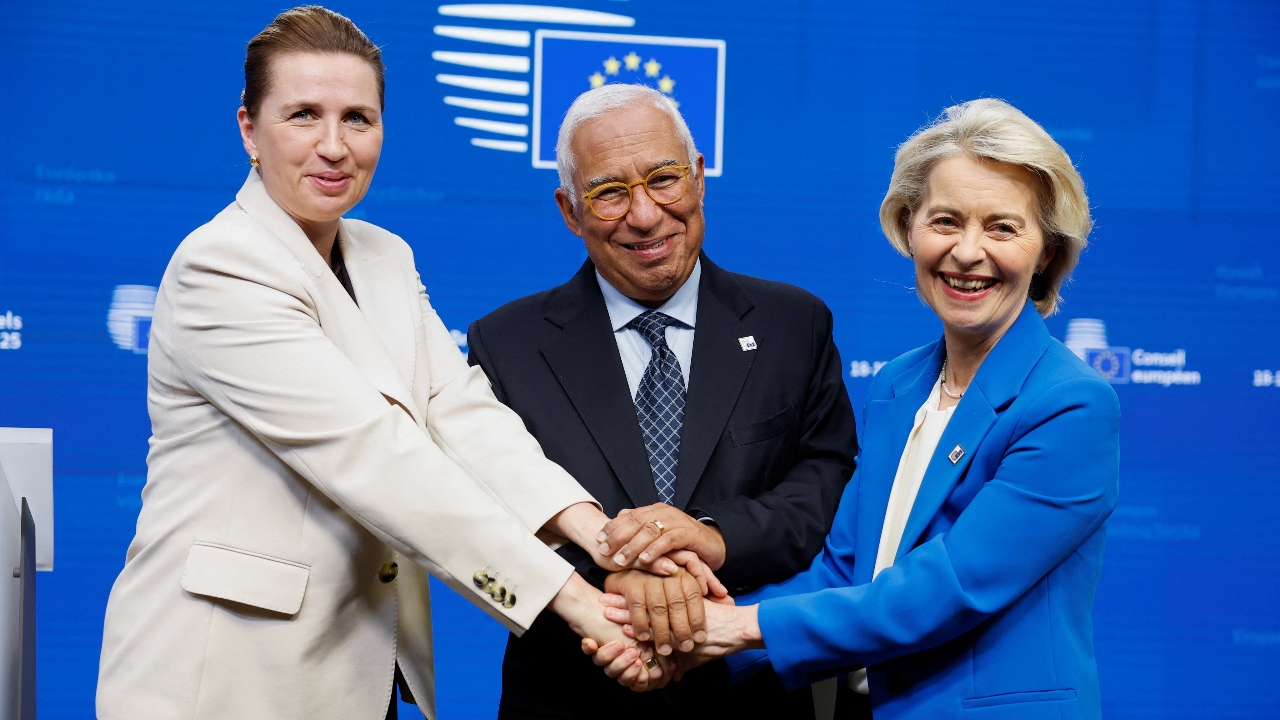
European Union (EU) leaders agreed to allocate a €90 billion loan (approximately 3.3 trillion baht) to Ukraine without using seized Russian assets. This came after more than a day of discussions at the summit in Brussels. The agreement aims to meet Ukraine’s military and economic needs over the next two years.
Although Ukrainian President Volodymyr Zelensky called for the EU to use over €200 billion in seized Russian assets, the proposal was rejected because Belgium, which holds most of those assets, demanded clear legal liability protections—something other member states were not ready to agree to.
Ultimately, the EU chose to borrow funds secured by the "group's central budget" instead, to avoid internal division. European Council President Antonio Costa stated, "We made a promise, and we have fulfilled that promise."
An interesting point was French President Emmanuel Macron's view that it is "necessary" for Europe to resume negotiations with Russian President Vladimir Putin. He believes this would benefit both Europe and Ukraine by finding an appropriate path to end the conflict, and this should begin within the next few weeks. Meanwhile, German Chancellor Friedrich Merz sees the loan agreement as a clear message to Putin that Europe remains steadfastly alongside Ukraine.
This aid acts as a lifeline because Ukraine is expected to face a budget shortfall within months. Without support by spring, Ukraine may have to reduce drone production, directly affecting the front lines. The EU estimates Ukraine requires up to €135 billion to keep its government operational over the next two years.
Amid European support, the United States under Donald Trump is accelerating a peace plan. Reports indicate senior US officials and Russian representatives will meet in Miami this weekend to seek a resolution to end the war.
Meanwhile, President Zelensky has sent a delegation to the US for talks on Friday and Saturday to request details on "security guarantees" that Washington will provide to prevent Russia from invading Ukraine again in the future.
/sourceBBC